Which plants have "dragon" in their names? A grand roundup of common varieties
Plants with the character "dragon" in their names are actually not that many. Toward the sacred dragon, flowers, grasses, and trees always carry a sense of being somewhat out of their league. Even when a "dragon" character is squeezed into their names, these plants usually cannot be associated with a complete dragon; at most, they merely resemble certain organs of a dragon in shape, or their way of spreading and threading through things faintly carries a bit of a dragon's posture.
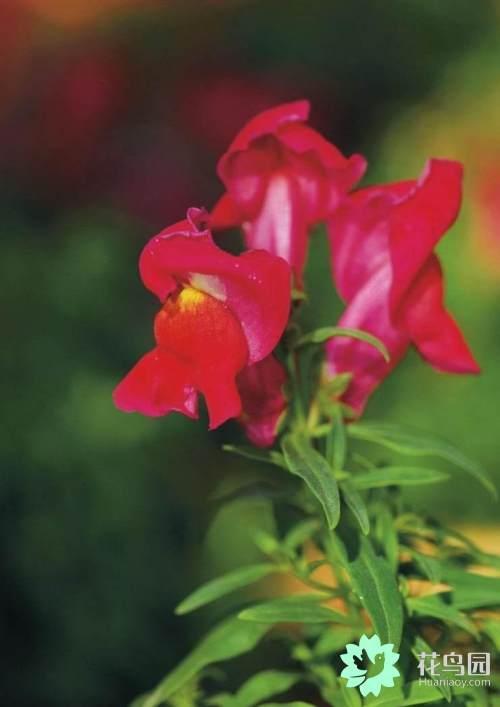
Dragon's head flower (Dracocephalum): resemblance in shape ★★★, resemblance in spirit ★★★★. A dragon's forehead is a bulging bump, just as the saying goes, "a full and prominent brow." The corolla of the dragon's head flower happens to have exactly this kind of noble-looking feature in its middle.
Dragon's beard vegetable (Asparagus schoberioides): resemblance in shape ★★, resemblance in spirit ★. The legendary dragon's beard combines hardness and softness, but look at dragon's beard vegetable: fluffy and soft, far too frail, truly undermining the dragon's mighty reputation.
Agave (Agave americana): resemblance in shape ★★, resemblance in spirit ★★★★★. Agave's hard, spiny leaves are quite domineering, and this plant can also grow huge and robust in dry, desolate environments, full of a dragon's overbearing spirit.
Longan (Dimocarpus longan): resemblance in shape ★★★, resemblance in spirit ★★. The longan fruit really does look like an eye, but its shell is dry and rough, and its flesh is juicy and cloyingly sweet, making it hard to find any dragon-like grandeur.
Dragon's tooth flower (Erythrina corallodendron): resemblance in shape ★★★, resemblance in spirit ★★★. The bright red color of the dragon's tooth flower seems to imitate the dragon teeth of a fight to the bloody end. But wait, would dragons really rely on biting with their teeth to win a fight?
Dragon scale grass (Desmodium?: actually "dragon scale grass" leaf-shaped bracts): resemblance in shape ★★★, resemblance in spirit ★★. The round leaf-like bracts of dragon scale grass do resemble dragon scales, but they are arranged so loosely that this dragon probably only ended up like this because it caught a skin disease. (Photography/Chen Liangjun)
Dragon's claw grass (Chloris?: actually "dragon claw grass"): resemblance in shape ★★★★★, resemblance in spirit ★★★. Dragon's claw grass really does look very similar to a dragon's claw, except that this inconspicuous weed on the ground can at most be the claw of an earth dragon with only the slightest bit of cultivation.
Dragon bone flower (Hylocereus undatus): resemblance in shape ★★★★, resemblance in spirit ★★★★
Dragon bone flower is also called "sky-measuring ruler." Its stem has ridges and spines, faintly carrying the unruly character of a dragon bone. This plant climbs upward as it grows, also carrying the splendid dream of "a flying dragon in the sky."
Stone dragon tail (Limnophila sessiliflora): resemblance in shape ★, resemblance in spirit ★★★
This plant, called "large-leaf stone dragon tail," has no dragon form at all, but it grows in wetlands or shallow water, and the way the plant breaks out of the water has somewhat of the splashing elegance of a divine dragon swishing its tail.
A divine dragon's limbs, the essence of vegetation
Flowers like a dragon's head, branches like a dragon's beard, leaves like a dragon's tail, fruit like a dragon's claw: this is perhaps the limit for plants. If some part really does resemble a dragon somewhat, people spare no effort in bestowing the name "dragon" on these plants, even if they possess none of a dragon's magic or majesty. Perhaps, if all these plants were pieced together, they could restore a green dragon with lush branches, abundant flowers, and plump fruit.
A lingering charm that faintly resembles a dragon's posture
The wild orchid "coiled dragon ginseng" that grows in wetlands, also called lady's tresses (Spiranthes sinensis), when it blooms, a string of small flowers is arranged in a spiral, as if a dragon's body were coiled around a pillar.
Dragon spits pearl (Clerodendrum thomsoniae)
Five-clawed golden dragon (Ipomoea cairica)
Some plants carry a bit of a dragon's charm in their forms, so having a "dragon" character added to their names by humans is not exactly putting sheep's clothing on a tiger. The wild orchid "coiled dragon ginseng" that grows in wetlands, also called lady's tresses (Spiranthes sinensis), when it blooms, a string of small flowers is arranged in a spiral, as if a dragon's body were coiled around a pillar. The invasive alien weed "five-clawed golden dragon" not only has leaves shaped like dragon claws, but also looks like a resting dragon when climbing high. "Dragon spits pearl" is a commonly cultivated flower in southern China; its deep red flowers stretch out from within white sepals, like a white dragon spitting out a dragon pearl, and the protruding stamens are also like dragon whiskers playing with the pearl. This name is truly wonderfully apt.
Traversing mountains and wading waters: the true nature of a dragon
Mountain-piercing dragon (Dioscorea nipponica)
Water dragon (Ludwigia adscendens)
River-crossing dragon (Entada phaseoloides)
Similarity in form is, after all, only imitation. Some plants are not only given the name "dragon," but truly harbor a temperament similar to a dragon's: crossing mountains and wading waters as if walking on flat ground, only then revealing a dragon's true colors. "Mountain-piercing dragon," also called Japanese yam (Dioscorea nipponica), is a twining vine that grows in the forests of northern China. Although it looks frail, its slender stems can climb through mountain forests and reach out in all directions. The "water dragon" commonly seen in southern ponds, also called pond-crossing dragon, can float on the water surface with its whole plant linked node by node, like a dragon floating on water, and also like a fleet of warships chained together like iron cables. The most majestic of all is the "river-crossing dragon." This plant, also called sea heart (Entada phaseoloides), grows in mountain streams or jungles of southern China. Its twisting woody stem is like a dragon writhing and turning its body, crossing rushing torrents as if walking on flat ground, and thus it earned the fine name "river-crossing."
Rare treasures like a dragon's soul
Dragon pearl fruit (Passiflora foetida)
A flower of a dipterocarp
Beautiful wild orchids grow as epiphytes on the tall trunk of a dipterocarp
The dragon itself is already magical enough, and as for the treasures that come from dragons, they are even more like the very soul of a dragon, inspiring human yearning. Among the treasures around dragons, the one people are most familiar with is the dragon pearl. The wild vine "dragon pearl fruit" of southern China already has an unusual form when it flowers, and its fruit is even shaped like a dragon pearl. Surrounded by fine feather-like sepals, it appears delicate and noble. Even rarer than the dragon pearl is probably "dragon brain fragrance" (dipterocarp): a dragon can do without a pearl, but cannot do without a brain. Today, the trees named dragon brain fragrance grow in the dense forests of tropical Asia and are famous for their fragrant and solid timber, a most precious wood produced in the rainforest.