Don't underestimate flowers and plants - they actually have a lot of heart.
Plant leaves have a lot of heart
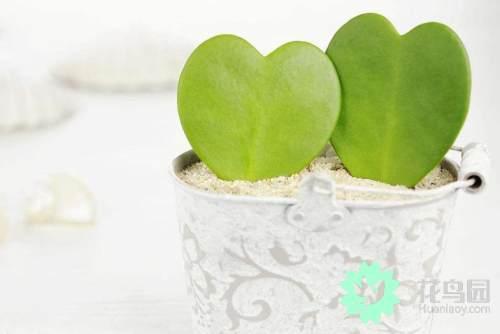
Heart-leaf hoya
Conveying love
Its flower meaning is to let love spread. The thick, fleshy leaves of the heart-leaf hoya have an almost perfect heart shape. Many leaves curve inward at the petiole to form a heart shape, but the heart-leaf hoya curves inward at the leaf tip instead, which is very rare.
Wood sorrel
Lucky heart
Perhaps you have always called it "fried sauce grass" - wood sorrel (pronounced "cu"), this most ordinary of grasses, with three heart-shaped leaflets forming a tiny propeller, so people also call it three-leaf grass. On a single petiole of wood sorrel, one or two extra small leaflets easily grow. If you cannot find a "lucky clover" - four-leaf white clover - then you might as well pick a four-leaf wood sorrel and give it to a female classmate.
String of hearts
A string of hearts
Heart-shaped leaves, in pairs, in strings, so people call it string of hearts. It is native to South Africa and Zimbabwe. Its English name, translated directly, means "string of hearts." "Two hearts beating as one" is its flower meaning.
Fern fiddleheads
Little fists of hope
Like a baby's tightly clenched little fist, with fine white fuzz on it, this is what the young leaves of ferns look like, so in ancient times people called ferns "fist vegetables." Two little fists placed together naturally curve into a heart shape. If you put your own fists together, you will see it is actually the same shape.
Conophytum
My heart blooms a flower
Dormant in summer and growing in winter, the succulent Conophytum originally comes from hot, arid places. Conophytum has diverse forms and richly colored flowers. Divided by different flowers, there are forty or fifty varieties. Most of them look like buttons, like inconspicuous little stones. In the heart-shaped Conophytum, when it blooms, the plant splits open at the sunken part of its plump body, that is, at the top of the heart, and a beautiful flower bud drills out.
Heart blooming with joy
Bleeding heart
Chinese-style longing
Leaves like peony leaves, flowers like pouches, so people call it bleeding heart. Bleeding heart has 4 petals in total. The outer pair of petals is heart-shaped, while the protruding white part is its other pair of petals. China is one of the places of origin of bleeding heart. Since ancient times, people have used it to express affection, so it can be called China's love flower.
Anthurium
A burning heart
A burning heart - this is the flower meaning of anthurium. This plant with exaggerated form originally grew in the rainforests of South America. Since being introduced to various continents, its heart-shaped "spathe" paired with passionate red has made it one of the most popular ornamental flowers at once. It is so eye-catching that you may not love it, but you cannot ignore it.
Fruit of the heart
Sterculia
Crackling all over the ground
Although its name contains the word "fragrant," this tree actually has a special foul odor - Sterculia is native to tropical regions, and it can also be seen in some cities in southern China. The most beautiful season for Sterculia is July and August, when abundant fruits are like red rubies on the branches. When the fruits fall to the ground and dry and split open, children will go under the tree to collect these tiny heart-shaped containers.
Chinese lantern
Exquisite heart
People call it lantern grass, and more affectionately call it "girl." What makes it appealing is not only its sweet-and-sour taste; its cute shape may be its greater selling point. That bright "lantern paper" is the persistent calyx of the Chinese lantern, with 5 lobes in total, tightly wrapping and protecting the gem-like fruit. The calyx of wild Chinese lantern is often eroded, leaving relatively hard veins, an exquisite heart of autumn.