How to grow Haworthia cooperi var. truncata 'Ice Lantern'? A complete guide to care methods
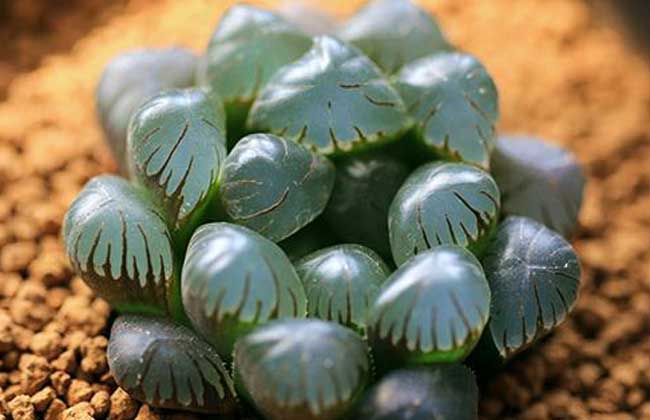
Haworthia cooperi var. truncata 'Ice Lantern' is the finest of the Haworthia cooperi varieties, named for its fleshy leaves that are crystal clear and bright, as transparent as an ice lantern. Next, we will introduce exactly how to grow Haworthia cooperi var. truncata 'Ice Lantern' and what issues to watch out for when cultivating it!
Ecological habits of Haworthia cooperi var. truncata 'Ice Lantern'
Haworthia cooperi var. truncata 'Ice Lantern' likes a well-ventilated environment with plenty of light, and can also tolerate partial shade. Water according to the "dry then wet" principle: water thoroughly each time, then wait until the soil dries out completely before watering again. To make the leaves fuller, you can use water-retaining pots made of plastic, porcelain, or similar materials to ensure the plant can fully absorb water.
How to grow Haworthia cooperi var. truncata 'Ice Lantern'
To get a Haworthia cooperi var. truncata 'Ice Lantern' with a perfect plant shape, root care is key. Healthy roots ensure the plant grows healthily and quickly. To make the roots deep and firm, it is recommended to use a granular soil that drains and breathes well and does not easily compact, with an appropriate amount of peat added (ratio: 4 parts granular, 1 part peat). You can add some base fertilizer at the bottom of the pot to supplement nutrients, making up for the granular soil's lack of nutrients, so that it is both breathable and moisture-retaining while also having sufficient nutrients.
The growing environment is also an issue that cannot be ignored. Insufficient light makes the leaves prone to leggy growth, while too much light easily reddens or scorches the window surface of the leaves. It can be placed in a spot with diffused light on the inner side of a south-facing balcony.
Plants have their own growth patterns, so do not expect Haworthia cooperi var. truncata 'Ice Lantern' to be in perfect condition all year round. 15°C~28°C is the most suitable temperature for plant growth, so the plant will show good growth in spring and autumn. In summer, when temperatures rise above 35°C, water control is needed; the Ice Lantern goes dormant, and at this time the leaf window surfaces appearing shrunken and dull due to lack of water is normal, and once the weather cools and water is replenished, it will immediately recover as good as new. In winter, as long as the temperature is kept at around 10°C, it can still grow normally, and it should not go below 5°C at the lowest.
To make the leaves have a translucent state like a light bulb, on the premise that the root system is good (do not try this in summer), you can use the method of enclosed growing. You can cover a transparent plastic cup over the Ice Lantern, using an enclosed approach to increase the humidity in the micro-environment. But do not keep it on for too long; remove the cover once every two days to let it breathe. Enclosing for too long will cause the leaf window surfaces to crack, seriously affecting its ornamental value.
Since Haworthia cooperi var. truncata 'Ice Lantern' basically does not produce side shoots, its propagation speed is extremely slow. To ensure the good traits of the mother plant, its propagation basically can only rely on beheading or leaf cuttings.
Four-season care for Haworthia cooperi var. truncata 'Ice Lantern'
In summer, when temperatures are high, the Haworthia cooperi var. truncata 'Ice Lantern' plant enters a dormant or semi-dormant state, growing slowly or completely stagnating. It can be placed in a ventilated, cool, dry place for care, to prevent the hot, humid environment from "steaming" the plant to death, and avoid scorching sun exposure. Do not water too much, and stop fertilizing.
After the weather cools in autumn, resume normal management. In winter, when the lowest nighttime temperature is around 8°C and the daytime temperature is above 15°C, the plant can continue to grow and should be watered normally; if watering is restricted to make the plant dormant, it can withstand low temperatures of 3°C~5°C, or even short-term low temperatures of 0°C. If kept for a long time in a low-temperature environment below 5°C, the plant will not die, but frost damage marks will remain on the leaves. Therefore, the overwintering temperature for Haworthia cooperi is best maintained above 5°C.
Precautions for growing Haworthia cooperi var. truncata 'Ice Lantern'
1. Soil: Haworthia cooperi var. truncata 'Ice Lantern' requires soil that drains and breathes well and does not easily clump. It can also be grown in artificial synthetic materials such as akadama soil, orchid stone, and kanuma soil, but an appropriate amount of peat soil should be added to increase the soil's organic matter content.
2. Water: Follow the "dry then wet" principle for watering, and water thoroughly. After watering, do not expose it to scorching sun; place it in a low-light, shady spot. Avoid waterlogging, and even more so avoid rain, especially long-term rain, to prevent root rot. But it should not be kept dry for a long time either, otherwise the plant will not die, but the leaves will shrivel and the leaf color will become dull. When the air is dry, you can often spray water on the plant and its surrounding environment.
3. Temperature: In winter, when the lowest nighttime temperature is around 8°C and the daytime temperature is above 20°C, the plant can continue to grow. 15~28°C is the most suitable, and 5~35°C is the plant's tolerance limit. If kept for a long time in an environment below 5°C, the plant will not die, but the leaves will suffer frost damage.
4. Fertilizing: During the growing season, for plants with vigorous growth, apply a decomposed, diluted liquid fertilizer or a low-nitrogen, high-phosphorus-potassium compound fertilizer once a month. Newly potted plants or plants with weaker growth do not need fertilizing. There is also no need to fertilize during the dormant period in summer's high temperatures or winter's lower temperatures. Fertilizing time is best chosen on a clear morning or evening.
5. Air: Ventilation is very important; in the hot, stuffy summer, strengthen ventilation at night. It needs to be kept in a dry place for care, and avoid scorching sun exposure and long-term rain.
6. Light: In summer, be careful of high temperatures and long periods of exposure; succulent plant tissue cells are thick and dissipate heat slowly, making leaves very prone to sunburn. In other seasons, full sunlight helps the plant grow. (There are many plants that need shade, such as Haworthia attenuata and similar tender green, transparent ones, which need to be careful of sunburn.)
7. Repotting: Since the roots of Haworthia cooperi secrete acidic substances that acidify the soil, and the roots age and become hollow, you can repot once every spring or autumn. During the growing season, if you find the plant's growth has stagnated and the leaves are shriveled, it is very likely the roots are damaged, and the seedling should be repotted promptly to tidy up the root system. When repotting, cut off the aged, hollow roots, shorten overly long roots, keep the thick, strong white new roots, and replant with fresh growing medium.