How to Grow Haworthia cooperi var. truncata? Detailed Guide to Cultivation Methods and Precautions
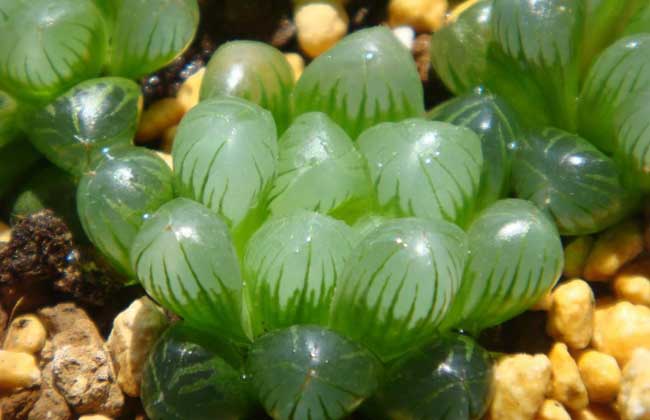
Haworthia cooperi var. truncata prefers a cool, semi-shaded environment. Its main growing season is during the cooler spring and autumn months. It requires a certain level of air humidity, is drought-tolerant, not cold-tolerant, and dislikes high temperatures, humidity, and scorching sun exposure. It is afraid of deep shade and waterlogged soil. In production, it is generally grown in pots in greenhouses or planted in beds in the ground. Now let's take a look at how to grow Haworthia cooperi var. truncata!
Cultivation Temperature for Haworthia cooperi var. truncata
Haworthia cooperi var. truncata is suitable for growing in an environment that is warm in winter and cool in summer. During high summer temperatures, the plant enters a dormant or semi-dormant state, growing slowly or completely stagnating. It can be placed in a ventilated, cool, and dry location for care, avoiding scorching sun exposure and prolonged rain. Do not water excessively and stop fertilizing. Wait until the weather cools in autumn before resuming normal care.
In winter, when the minimum nighttime temperature is around 8°C and daytime temperatures are above 20°C, the plant can continue to grow and should be watered normally. If watering is restricted, the plant will enter a dormant state. It can tolerate low temperatures of 3°C to 5°C, and even short-term temperatures of 0°C. If kept in an environment below 5°C for a long time, although the plant will not die, frost damage marks will remain on the leaf surface. The outer leaves of the plant are especially prone to frost damage, and the damaged leaves turn white and cannot recover to their original appearance.
Therefore, the overwintering temperature for Haworthia cooperi var. truncata should ideally be maintained above 5°C.
Light Regulation for Haworthia cooperi var. truncata
It is relatively sensitive to light. If the light is too intense, leaf growth will be poor, turning a light reddish-brown color. Sometimes strong direct light can even scorch the leaves, leaving unsightly marks. However, if the cultivation site is too shaded, the plant will become loose and less compact in form, with slender, elongated leaves and poor transparency of the "windows." Such plants are very difficult to restore to their original appearance; one can only wait for these etiolated leaves to gradually fall off and for healthy new leaves to grow.
In contrast, plants grown in semi-shaded conditions have thick, plump leaves with high transparency. Therefore, from May to September, a layer of shade netting can be added, and from October to April of the following year, the shade netting should be removed to provide full sunlight.
Selection of Growing Soil
Haworthia cooperi var. truncata is suitable for growing in loose, fertile, well-draining and aerated sandy soil that contains lime and has a relatively coarse particle size. A common mix is 2 parts leaf mold and 3 parts coarse sand or vermiculite, with a small amount of bone meal added. For premium varieties such as 'Haworthia cooperi var. truncata f. variegata' and 'Haworthia cooperi var. pilifera,' artificial materials such as akadama soil, orchid stone, and kanuma soil can also be used, but an appropriate amount of peat moss should be added to increase the soil's organic matter content.
How to Water Haworthia cooperi var. truncata
During the growing season, follow the principle of not watering until the soil is dry, and water thoroughly when you do. Avoid waterlogging, and never let the plant be rained on, especially not for prolonged periods, to prevent root rot. However, do not let it stay dry for too long either, otherwise although the plant will not die, the leaves will shrivel and the leaf color will become dull.
When the air is dry, you can frequently mist the plant and its surroundings. During the growing season, you can use a transparent, colorless beverage bottle with the top half cut off to cover the plant for care, allowing it to grow in a small environment with moist air. This can make the leaves plump and the "windows" more transparent.
However, during the hot summer months, the beverage bottle must be removed to prevent the plant from dying due to stuffy, humid conditions.
Fertilization Methods for Haworthia cooperi var. truncata
During the growing season, vigorously growing plants can be fertilized once a month with decomposed dilute liquid fertilizer or a low-nitrogen, high-phosphorus, high-potassium compound fertilizer. Newly potted plants or weaker-growing plants do not need fertilization. Fertilization is also unnecessary during dormancy in high summer temperatures or low winter temperatures. Fertilization should preferably be done on a clear morning or evening.
How to Repot Haworthia cooperi var. truncata
Because the roots of Haworthia cooperi var. truncata secrete acidic substances that cause soil acidification, leading to root aging and hollowing, the plant can be repotted once a year in spring or autumn. During the growing season, if the plant stops growing and the leaves shrivel, it is very likely that the roots are damaged, and the plant should be repotted promptly to tidy up the root system.
When repotting, cut off the aged and hollowed roots, shorten excessively long roots, and keep the thick, white new roots, then replant with fresh growing medium. Newly potted plants can be misted frequently but watered sparingly, which will help the plant recover growth as quickly as possible.
Since the flowers of Haworthia cooperi var. truncata have little ornamental value, if you do not intend to collect seeds, you can pull off the flower stalk from the base to avoid consuming too many nutrients. Note that the flower stalk should not be cut with scissors; instead, pull it off by hand while swaying it side to side. This prevents broken flower stems from remaining between the leaves and adversely affecting the growth of future new leaves.
Pest and Disease Control for Haworthia cooperi var. truncata
The main disease is root rot, caused by poor permeability of the growing material and long-term waterlogging of the soil. Therefore, the growing environment should be improved, and loose, well-aerated soil should be used for planting. Do not allow long-term waterlogging. In addition, if water accumulates in the center of the plant for a long time, it can cause heart rot.
If the soil is not changed for a long time, root aging and hollowing will cause physiological diseases in the plant, causing it to stop growing and the leaves to shrivel and lose plumpness. In such cases, the soil should be changed promptly. For pests, there is root mealybug, which can be controlled by heat-treating the soil before planting and adding insecticide to the soil.