How to prune jasmine? A step-by-step guide to pruning methods
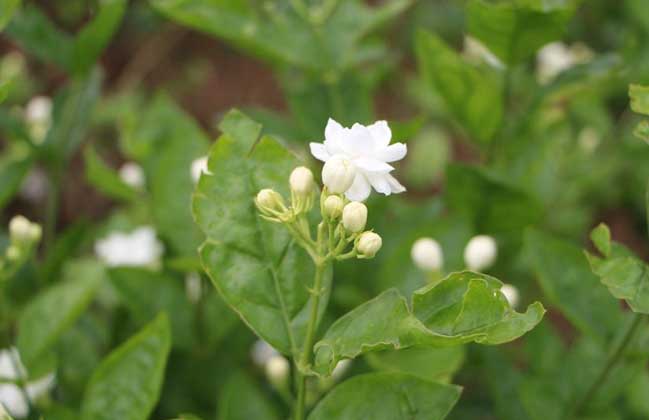
Jasmine has a long blooming season, flowering continuously from early summer to late autumn. It is pure and elegant, with a rich fragrance, and is deeply loved by people. However, many people prune jasmine improperly, causing the canopy to become congested, with small and few flowers and weak plants. Let's take a look at the pruning methods for jasmine below!
Gardening proverbs on pruning jasmine
If jasmine is not pruned, weak branches and few flowers are very obvious; prune the branches boldly, and blooming will be reliable.
Pruning methods for jasmine
1. Growing-season pruning: carried out from after spring bud break to before overwintering, to encourage new branches to be neat and thick. Blind branches (non-flowering branches), leggy branches, weak branches, diseased and pest-infested branches, etc. should be cut off as soon as they appear, to facilitate good ventilation and light penetration; after each bloom, promptly cut off the flower stalks and overly dense branches to encourage axillary buds to sprout, achieving the goal of more side branches, more buds, and more flowers.
2. Dormant-season pruning: carried out before spring bud break, to encourage the first flush of branches to grow neatly and thickly and to adjust the canopy well. Cut off diseased and pest-infested branches, dead branches, and thin weak branches; shorten the tips of one-year-old branches, keeping the base and 10—15 cm; remove all leaves from the plant. Generally, at the point where each jasmine leaf stalk joins the stem, there will definitely be a branching leaf bud (growth point). If it is not pruned, a new branch will grow from the growth point above the flowered branch (on the side facing upward), while artificial pruning greatly increases the probability of growing two branches, so the more branches there are, the more flower buds there will be. Another disadvantage of not pruning and letting it grow freely is that the stems and leaves grow too tall, and its new stems are of a softer, leggy type, making them very prone to lodging.
3. Management after the flowering season: after autumn begins (after the third flush of flowers finishes), stop pruning. After flowering, it will gradually enter a dormant-like state and stop growing new leaves, but the leaves will not fall off; the whole plant simply stops growing! However, the benefit of keeping the leaves is that if a spell of hot autumn weather or a warm winter occurs, the leaves can still carry out photosynthesis, and keeping the leaves also allows you to enjoy the foliage, rather than having an ugly set of bare dead branches over winter. Be sure to wait until early spring, when you observe the leaves just beginning to sprout, then first transplant and change the soil and do the first major pruning.
Care of jasmine during the flowering season
Jasmine greatly loves fertilizer. With proper care, a potted jasmine can bloom three times a year. If there is insufficient fertilizer and not enough nutrients, after blooming once it will no longer bloom. With proper management, it can bloom continuously from the end of May to the beginning of November. The key is pruning, sunlight, and the control of fertilizer and water. Jasmine begins blooming one after another from early summer, and with proper management, three peak bloom periods can occur.
1. In early June, jasmine gradually produces early flowers. The method of picking the flowers is to pick the flower together with the leafy young branch, encouraging new branches to grow again and the branches and leaves to flourish. At this time, apply dilute fertilizer water twice a week and keep the potting soil moist.
2. From late June to early July is the first peak bloom period. At this time, fertilizer and water management need to be strengthened, applying light fertilizer frequently, fertilizing once every 2 days with fully decomposed organic liquid fertilizer, with a fertilizer-to-water ratio of 1:4. Watering should be sufficient, generally once a day. Usually watering is best done in the morning, while fertilizing is best done in the evening. Continue this until late July; because of sufficient fertilizer and water, the flowers can be made larger and more numerous.
3. In early August, the second flush of flowers forms. At this time, fertilize slightly more concentratedly than before, generally with half fertilizer and half water. To encourage jasmine to bloom better, you can also spray the leaves with superphosphate solution. By late August, gradually reduce fertilization to once every 6-7 days, while watering still needs to be relatively frequent, keeping it once every 2 days.
4. From early September to early October, the third flush of flowers forms. At this time, stop fertilizing, and the amount of watering should also gradually decrease. Because the weather has gradually turned cooler, which affects the formation of flower buds, the number of flowers in this flush is relatively small. After mid-October, flowering ends, and it is only necessary to keep the potting soil slightly moist.