When Does Clivia Bloom? A Detailed Guide to Its Blooming Time
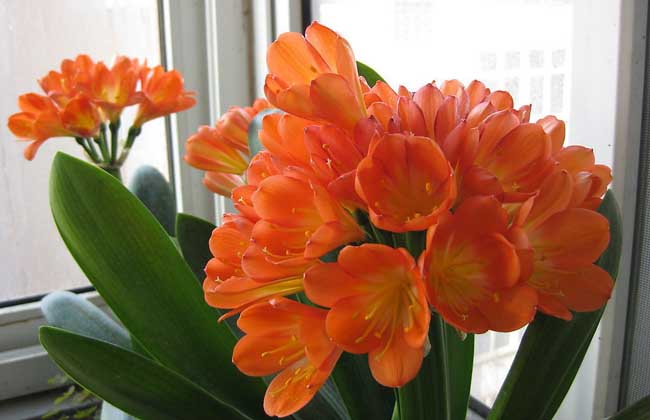
Clivia has a long growth cycle. It generally needs to be cultivated for four to five years and grow to 20 to 25 leaves before it can bloom. Well-cultivated plants may send up a flower stalk and bloom in two to three years, and some even send up a flower stalk and bloom in less than two years. The length of the Clivia blooming period can be controlled through people's cultivation techniques. Now let's take a look together at Clivia's blooming time and the methods for extending its blooming period!
Clivia's Blooming Time
Clivia's peak blooming period runs from New Year's Day to the Spring Festival, mainly in spring and summer, and it can bloom all year round. Sometimes it can also bloom in winter, and there are also cases of blooming in summer between June and July.
Methods for Extending Clivia's Blooming Period
If you want to extend Clivia's blooming period, you can place it in a dark spot when it is about to open, properly control watering, and keep the temperature at 8-12°C. In this way, the blooming period can be extended by 10-20 days.
What Is Clivia's Flower Meaning?
Clivia has the grace of a junzi, and its flowers resemble orchids, hence the name. The junzi is modest, gentle and courteous, talented but not arrogant, successful but not proud, and lives in a valley without feeling inferior. That is its flower meaning. In addition, Clivia also carries the flower meanings of wealth, nobility, loftiness, beauty, and the air of a junzi.
Clivia's thick, smooth leaves stand upright like swords, symbolizing strength, fortitude, and the noble character of being mighty and unyielding. Its full blooms and brilliant colors symbolize wealth and good fortune, prosperity, and happiness and fulfillment, so people cultivate it widely.
How to Care for Clivia During Its Blooming Period
Clivia's blooming period is generally from February to April. After it blooms, the blooming period can be extended by appropriately lowering the temperature, improving ventilation, and reducing light. The length of Clivia's blooming period can be controlled through people's cultivation techniques. Before and after Clivia's blooming period, the following measures should be taken in cultivation and management:
1. Fertilizing: Apply an additional dose of bone meal, well-fermented fish innards, and soybean cake water. This can make the flower colors vivid, the blooms larger, and the leaves thick. Otherwise, small blooms, few in number, and pale flower colors are likely to occur. At the same time, care should be taken to avoid applying too much nitrogen fertilizer and insufficient phosphorus and potassium fertilizer, which would lead to weak growth or leggy leaves and affect bud emergence and blooming.
2. Light: A certain amount of light should be provided to meet the requirements of photosynthesis and blooming for light. Under strong light, the blooming period is short and the flower colors are vivid. Under weak light, the flower colors are pale. Too long or too strong light, or long-term shade with insufficient light, will all affect the production and accumulation of nutrients, preventing bud emergence and blooming.
3. Temperature: Suitable temperature has a clear effect on the quality of blooming. If the temperature is too high, root hairs exist for an extremely short time, and their function of absorbing water and fertilizer is greatly reduced, causing Clivia to enter a semi-dormant state. A temperature below 10°C will also inhibit growth. During the growing period, it should be controlled at 15°C-25°C, and during the blooming period it should be 15°C-20°C. When root hairs exist for a long time and the function of absorbing water and fertilizer is good, the leaves grow short and wide, and the flowers flourish. Note also that Clivia should maintain a temperature difference of about 8°C between day and night, because the organic matter it produces under higher daytime temperatures needs to be stored and digested under lower nighttime temperatures.
4. Water: Clivia must not lack water throughout the plant's growing period. When it enters the blooming period, its water requirement is even greater, and the growing humidity should not be lower than 60%.