When Should You Water Succulents? Master the Right Watering Time
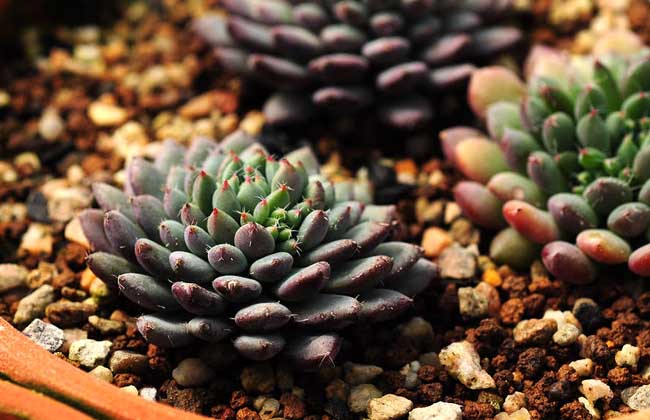
Succulents must be given water at the right time to meet the needs of their growth and development, and definitely not the "better dry than wet" approach that some people believe in. Of course, for plants grown in the ground, watering can be less frequent. For most succulents and own-rooted cactus varieties, watering is hard to get right, mainly in terms of timing it correctly. Let's take a look below at how often to water succulents and how to water them!
How often should you water succulents?
When it comes to how often to water succulents, of course we have to talk about grasping the "timing" of watering. It's impossible for us to repot and check every time we water. Besides needing to practice your feel and eye for it in daily life, there are actually tricks to it.
1. The weighing method: First decide on your soil mix, and try to use the same formula every time you pot up. At the same time, prepare an empty pot, fill it with thoroughly dry soil, then weigh it. Record the weight, water it thoroughly, weigh it again, and write down both figures. Next, weigh it once a day. Besides letting you check the water retention of your own mix, the ultimate goal is to see how many days it takes to return to the weight of the pot of dry soil. Subtract 1-2 days from that number of days, and that is your watering cycle. The above refers to Haworthia; for Mesembryanthemum types, you don't need to subtract days. Of course, this method ignores the roots' water uptake and transpiration. Generally, a pot with a growing plant will dry out faster, so if you can also compare the data above with the weight of a pot containing a plant over the same period, the watering cycle you get will be even more accurate.
2. The color-change method for the growing medium: Increase the proportion of akadama in your mix, because akadama granules absorb water and transfer moisture very well, and they change color with even a little moisture, making wet and dry extremely intuitive. Increasing the proportion of akadama in the mix can strengthen moisture transfer within the pot. The top soil dries quickly, while moisture below keeps being drawn upward, until the moisture content in the lower growing medium drops to a critical point, and this critical point is often the start of the signal to water. It is recommended to raise the akadama proportion in the mix to above 40%, and use pure akadama of 2-3 particle size as a top dressing on the pot surface. When the akadama on the surface turns pale yellow and whitish, Haworthia can wait at most 1 more day, and Mesembryanthemum types should be watered after 2 days. If you want to use this method to determine the watering cycle, you still need to adjust it according to your own mix.
How should you water succulents?
1. Watering time: In spring, summer and autumn, it is best to water in the evening or in the cool of the afternoon, while in winter, because the temperature is too low, it is best to water around noon. When watering, pour along the edge of the pot and don't let water drip onto the leaves. Try to avoid water flowing into the center of the leaves and forming a pool, because such pooled water acts like a magnifying glass, concentrating sunlight onto one point and directly burning the leaves. If you accidentally water the center of the leaves, you can blow the droplets off or blot them dry with a tissue.
2. Watering interval: For beginners, you can indeed water on a fixed schedule at first, such as once a week or once a month. Although this way keeps most succulents alive, it is not really ideal. Because the weather is ever-changing, and the pot material also determines how much moisture evaporates, plus the many other factors mentioned above, the watering interval cannot be generalized.
Factors affecting watering of succulents
1. Regional climate: Regional climate is the most important condition determining the growth of succulents. Although succulents can be grown all over the country, if you are lucky enough to live in a climate environment suitable for succulent growth, that can save you a lot of worry and time, and the succulents will grow well on their own.
2. Weather changes: Weather changes also determine whether succulents need watering. If it is continuously rainy and overcast, succulents placed outdoors do not need watering for the next two days. Overcast and rainy weather will also slow the evaporation of water in the containers of indoor succulents, so the watering time can be relatively extended. On the contrary, if it is continuously sunny, and the wind speed is decent (levels 3-5), with suitable temperatures (10°C-30°C), then you can water frequently. However, you still need to judge the amount of water based on the pot material and the size of the succulent.
3. Pot material: Terra cotta pots, which have the best breathability, are quite suitable for growing succulents, because there is no risk of drowning the plant. Even if it gets a bit dry, as long as the succulent does not die, its condition will still improve after watering. This is very suitable for beginners. But terra cotta pots also have a drawback: moisture evaporates too quickly, and the bottom of the container does not retain water, which slows the growth rate of succulents. Because there is not enough water for the succulent to grow, the water evaporates completely before the succulent has fully absorbed it. Especially in summer, many growers mistakenly believe that because red terra cotta pots are breathable, a thoroughly dry environment is very good for succulents, so they simply don't water, which directly causes the succulents to dry out and die.