What are the reasons hydrangeas do not bloom?
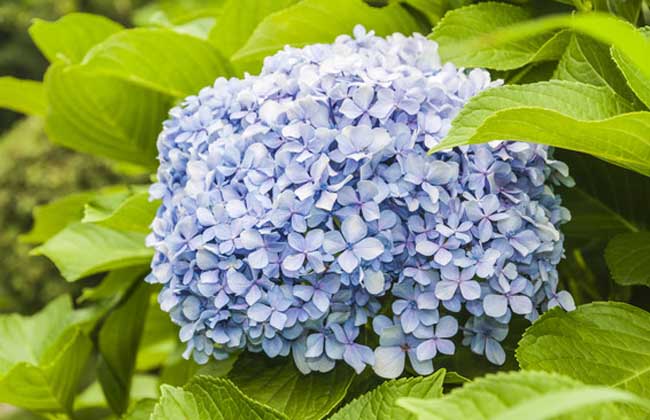
Do you know why hydrangeas do not bloom? The hydrangea, also known as the big-leaf hydrangea, and also called ziyang flower or shade hydrangea, usually blooms from June to July. When the hydrangea has thick stems, large leaves and deep green foliage but does not bloom, there may be four reasons for this. Let us take a look together!
Potted hydrangeas have not been pruned
Usually, after the flowers fade, the branch tips should be cut short in time to encourage new branches to grow. When the new branches reach 8-10 cm, they can be cut back again, which can encourage the lateral buds on them to develop and fill out early; only in this way will flower-bearing branches grow the following year. In other words, pinching the tops suppresses the plant's vegetative growth so as to encourage it to produce more lateral branches and form flower buds.
The fertilizer ratio for hydrangeas is unbalanced
There may be too much nitrogen fertilizer and too little phosphorus and potassium fertilizer, causing excessive vegetative growth, which is unfavorable for flower bud formation and prevents the plant from blooming normally in the second and third years.
It may be because too much water is given
After the plant's new shoots have grown to a certain length, it should be given appropriate “water withholding” to suppress its vegetative growth and promote flower bud differentiation.
The light duration is not controlled appropriately
The hydrangea is a short-day plant. Maintaining darkness for more than 10 hours per day for about 6 weeks is required for flower buds to form. For plants grown for forcing, after going through a cool period of 6-8 weeks (5-7°C), the plants should be placed under a temperature of 20°C to force flowering. When the inflorescence becomes visible, lower the temperature to about 16°C, and after maintaining this for about 2 weeks, they will bloom.