What are the flower language and legends of the cactus?
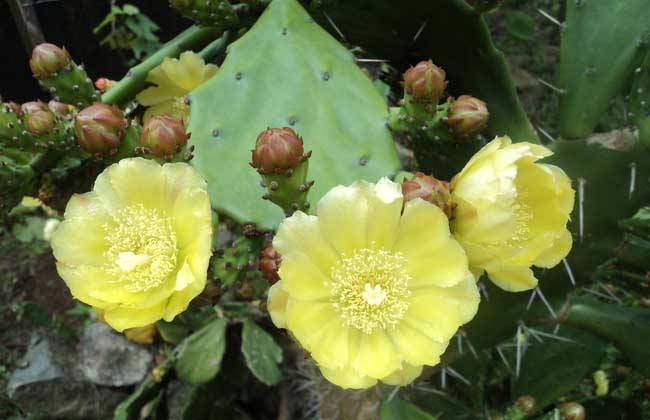
The cactus is supported by being a “desert sweet spring,” with a strong ability to resist drought and scorching sun, and even under such harsh conditions, the cactus can still bloom. It is precisely because of this perseverance and tenacious vitality of the cactus, but do you know what the flower language of the cactus is? Let's take a look together below!
The flower language of the cactus
The flower language of the cactus is strength.
Cactus legend one
The cactus has a heart that is tough outside but soft inside. At the beginning of creation, the cactus was the most delicate thing in the world. She was as tender as water, and a light touch could take her life. God could not bear it, so He added a suit of armor to her heart, as hard as iron, and covered with sharp steel thorns that could wound. From then on, no one could see the cactus's heart anymore, and any creature that came near her would be covered in blood. Long afterward, a brave man wanted to destroy this evil thing. As the sword came down, the cactus split into two halves, and from within came a green liquid. It turned out that this was the sealed heart of the cactus. Because no one understood its loneliness, it turned into drop after drop of tears. The green teardrops made the delicate cactus emphasize her strength even more. So the flower language of the cactus is ---- strength.
Cactus legend two
The cactus was once very charming and stunning. When the Queen Mother ordered the hundred flowers to bloom in winter, the one who refused was not only the peony, but also the cactus. But why was the cactus not mentioned? It is said that at that time the cactus's beauty was not inferior to the peony, and everyone mistook her for a peony.
Therefore the Queen Mother exiled her to the desert and made her a plant unknown to anyone. So day after day the wind and sand eroded her beautiful face, and a thousand years of drought cracked her skin that was like congealed cream. Apart from wind and sand, what accompanied her was still wind and sand. Day after day under the scorching sun, she lost her former beauty. Having lost her delicacy and charm, she was reborn in the harsh environment. The thick leaf pads grew fine, dense thorns. Those flowers returned to the immortal garden for certain reasons. Only the cactus, now completely changed beyond recognition, remained in the desert silently probing the cruel ways of the world.
Several thousand years passed, and the cactus finally had a chance to be reborn. This time, after reincarnating as a human, the cactus was born into a happy and complete family, but perhaps because of habits from several thousand years, she would always, intentionally or unintentionally, reveal some cactus traits in life, such as tenacious vitality, cherishing every drop of water and nutrient, and always warily rejecting new things from outside. These were all traits she had not changed since reincarnating as a human. Of course, her greatest traits still lay in her charming face and kind heart. As the saying goes, rivers and mountains are easy to change, but one's true nature is hard to move!
Cactus legend three
Long ago, at the foot of Luofeng Mountain east of Yangshan City, there lived a rich man. This rich man had a daughter who was born with a beauty that outshone fish and geese, and put flowers and the moon to shame; everyone who saw her loved her. At that time, there was a lecher. Although he was nearly sixty years old, he did not conduct himself properly and liked to frequent brothels. Although he already had one wife and ten concubines, because he had money in hand and was fond of the new and tired of the old, when he heard there was such a peerless beauty, he could not help but drool. So he sent people with silver to the foot of Luofeng Mountain to seek marriage. That rich master, because of his greedy nature, was blinded by money, and his mind was obsessed with wealth, unexpectedly ignoring his own daughter's happiness and agreeing readily. When the girl heard this, she refused no matter what. But with the command of parents and the words of a matchmaker, what could she do? “Of the thirty-six stratagems, running away is the best!” She fled her home that very night. The sky was vast, the earth was vast, where could she hide? But she could not care about that much. She only knew to walk and walk, and finally arrived at the Fengping Pass. She was both hungry and tired, and truly could not walk anymore. At this time, she found a thatched hut by the roadside, so she went up and called at the door, planning to rest for a while and decide what to do after dawn.
The one who opened the door was a young man. By the light of the pine torch, the girl saw clearly that she knew this young man; he often came to her home to sell firewood. When the young man looked, was she not the daughter of the rich man at the foot of the mountain? What was she doing here alone in the middle of the night? The girl tearfully told the young man the reason and course of her running away, and the young man deeply sympathized with the girl's misfortune. He lived alone, and in the thatched hut there was only one bed, so what could he do? He gave the bed to the girl and spread some grass on the ground for himself to sleep on. Lying in the bed, the girl thought: after dawn, where should I go? This young man is so kind-hearted, why not entrust my whole life to him? The girl revealed her true feelings to the young man and expressed her wish. The young man had cold hands but gained a hot fried cake; a beautiful wife had flown to him out of nowhere, so how could he not be happy? So with heaven as matchmaker and earth as guarantor, they bowed to heaven, to earth, and to each other, and formed a union for a hundred years.
One day, the young man returned home with a face full of worry. His wife asked him what was troubling him. He said: “Your father knows you married me, so he makes things difficult in every way and firmly refuses to buy my firewood. If the firewood cannot be sold, what will I use to buy rice?” His wife said: “Do not worry! When I ran away, I brought a golden bowl. Take it and exchange it for rice.” When the young man saw the golden bowl his wife brought out, he said: “There is one of these bowls in the deep mountains too.” “Really?” “It is even bigger.” “Take me quickly to see it.” So the two went into the deep mountains. This place was where the young man often sharpened his knife. That bowl was indeed even bigger than a basin, shining brightly and dazzling the eyes. After the wife saw it, she was very happy and said: “With this divine bowl, there is even less fear of having no rice.” At this time, the golden bowl suddenly spoke: “I am a divine bowl. What do you want?” Husband and wife said together: “The people regard food as heaven; having rice is enough.” “Good! I will give you another bag of seeds as well. Once planted, there will surely be a good harvest.” From then on, the young couple rose early and worked late, opened wasteland and planted fields, raised pigs and chickens, and their days gradually improved. They built a new house, and around the front and back of the house they also planted quite a few fruit trees.
When the rich man at the foot of Luofeng Mountain heard that his son-in-law had a divine bowl, he wanted to go up the mountain to seize it. When he led his servants to Fengping Pass, a clear breeze suddenly blew, lifting the young couple onto the clouds, and they were received into the heavenly palace by immortals. Just as the rich man was astonished, a great wind arose, and that divine bowl unexpectedly turned into a giant hand, blotting out the sun and sky, and in an instant pressed the rich man and the servants he had brought all beneath a great rock, and they could never come out again. From that time on, on this great rock six or seven chi wide, over a zhang long, and more than a zhang high, there remained a handprint more than a cun deep, with palm and fingers clearly distinguishable. Therefore, the common people called it “immortal's palm,” and men of letters listed it among the “Ten Scenic Spots of Yangshan,” with the name “Immortal Handprint on the Stone Palm.”