How to Grow and Care for Potted Gardenia
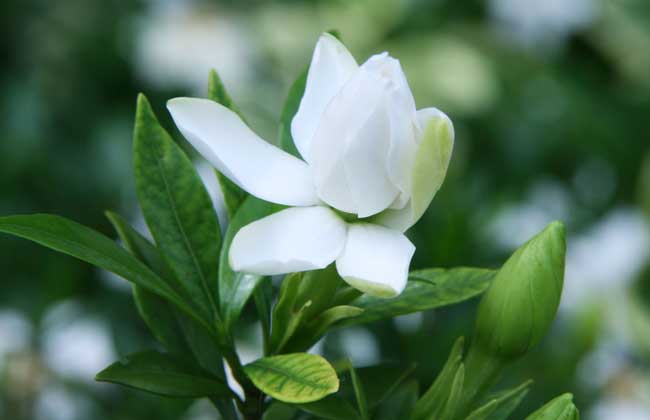
How do you grow a potted gardenia? Gardenia (Gardenia jasminoides) likes a warm, humid environment with plenty of sunlight. It is fairly cold-tolerant, tolerates partial shade, and fears waterlogging. It requires loose, fertile, acidic sandy loam. The gardenia has lush branches and leaves, keeps its foliage evergreen all year round, and bears fragrant, elegantly simple flowers. It is an important ornamental plant for courtyards. Let's take a look at how to grow a potted gardenia below!
How to Grow a Potted Gardenia
1. Choose suitable potting soil: The gardenia is an acid-loving flower, with a suitable pH of 5 to 6. If the soil acidity is unsuitable, all future care will take twice the effort for half the result. For the growing medium, you can choose leaf mold, peat soil, or composted sawdust plus half garden soil. Do not use old wall soil or coal cinders. Using commercially available Clivia soil is more convenient and practical.
2. Fertilize sensibly: The gardenia loves fertilizer. You can add 3% decomposed cake fertilizer to the growing medium as a base fertilizer. During the growing season, water once a week with alum fertilizer water made by composting cake fertilizer and ferrous sulfate, or use a 0.1% humic acid complete-nutrient organic liquid fertilizer. At the bud stage, water once to twice with a 0.1% potassium dihydrogen phosphate aqueous solution, which can make the flowers larger and the fragrance stronger. Stop fertilizing during the hot summer period when the temperature is above 35°C and in autumn when it is below 15°C.
3. Water scientifically: The gardenia likes moist soil and relatively high air humidity. During the growing period from April to September, keep the potting soil moist. Water whenever the surface of the potting soil looks dry, and in the evening you can use a spray bottle to sprinkle water on the leaves. If it dries out completely and wilts, it will be bad for growth. For plants that grow too vigorously with longer internodes, do not water in the evening; water again after the sun comes up in the morning. In northern regions with alkaline water, tap water should be left to stand for two days before use. Every three to five days, water thoroughly once with an aqueous solution containing 0.5 g citric acid and 1 g ferrous sulfate per liter, which can make the leaves glossy and emerald green.
4. Give it plenty of sun: The gardenia loves light. It can also grow in partial shade for a long time, but the flowering branches will be longer and the flowers fewer. Apart from needing shade from the strong midday sun from July to August and during the winter dormancy period, it generally needs to be kept in the sun for care, so that it can have abundant flowers and lush leaves.
5. A good winter dormancy: In the Qinling area of China, the gardenia can overwinter outdoors, but after a harsh winter a potted gardenia's root system will be damaged, and it recovers slowly in spring. Overwintering indoors with heating avoids frost damage, but with insufficient light the plant grows weak and spindly, most of the young buds formed in autumn drop off, and flowering is late the following year. A better method is to place the potted plant in a cold room at around 5°C to let it go dormant, or wrap the flower pot well with foam plastic or other insulating materials, protect the root system, and overwinter it in a windproof, sunny spot, so that it recovers quickly in spring and blooms early.
6. Prune appropriately: For large-flowered gardenia seedlings, pinch off the growing tip at a height of 20 cm on the main trunk, leaving 3 to 4 branches; when the branches have 2 pairs of leaves, pinch off the growing tips again to encourage branching, after which they can be allowed to grow freely. Small-leaf gardenias do not need tip pinching. After flowering each year, prune lightly, cutting out inner branches and diseased or weak branches, and shorten individual leggy branches. For large-flowered gardenias, when the crown width becomes too large after 4 to 5 years, heavy pruning can be done after flowering; generally leave 2 pairs of leaves on the upper branches and cut them back, and after budding, remove the buds growing inward and the buds on the lower part of the main trunk, and the plant shape will become more compact and attractive. Remember that gardenias must not be cut back at the branch tips in spring, otherwise they will not bloom that year.
7. Repot in good time: Use a small pot for seedlings and gradually move them into larger pots. When the crown width is 2 to 3 times the pot's diameter, it is time to repot. Repotting can be done at any time during the growing season. After knocking the plant out of the pot, plant it in the new pot together with the root ball; a diameter about 5 cm larger than the original pot is suitable. For home potted plants, once the pot reaches about 28 cm, generally no more repotting is done, only the potting soil is replaced. Replacing the soil in March of spring is better. After knocking the plant out of the pot, cut off some old roots, shake off half the old soil, plant it in the pot with new soil, then water thoroughly, place it in a warm, partially shaded spot, and move it into the sun for care when new buds begin to sprout.
Precautions for Potted Gardenia
1. After planting the gardenia, water it thoroughly and place it in a partially shaded spot outdoors. Pay attention to watering and spraying the leaves normally. After about 15 days, once it has settled in, move on to normal care.
2. Topdress in time in May, applying 1 to 2 times a nitrogen-phosphorus compound fertilizer. At the same time, be careful not to let the potting soil be too wet, and avoid poor drainage or waterlogging after rain, otherwise it will cause leaf drop or rotting of the flower buds and no flowers will open.
3. The gardenia likes partial shade. Potted plants should be placed in a partially shaded spot for care, and must never be exposed to the blazing summer sun.
4. In winter, take appropriate freeze protection and warmth measures, and overwinter it on a south-facing, windproof, warm balcony or in a warm shed.
Overwintering Care for Potted Gardenia
According to the gardenia's growth habits, it enters dormancy in winter. During dormancy, it does not matter if the gardenia's leaves all drop or if it stops growing. When overwintering the gardenia, it is best to put it in the coldest room, where it can get diffused light; the temperature should not exceed 12°C, with 6—10°C being most suitable. During the gardenia's overwintering period, water once a month, or according to the dry and wet conditions at home, water again once the potting soil has dried out. Be careful not to let the gardenia freeze in winter.
In short, when overwintering, the gardenia should not be placed somewhere too warm, nor should it be allowed to freeze. It should not be placed in a spot with plenty of sunlight, nor should it be kept out of the light. It should not be watered too much, nor should it be allowed to die of drought. If the gardenia continues to grow in winter, it will only waste nutrients in vain, which will affect flowering the following year. The correct method is to let the gardenia be in a natural dormant state in winter, and wait until April of the following year, then cut off all the old branches 2 cm above where the gardenia branches out, and then move it outdoors to let it be exposed to wind and sun. If conditions at home do not allow a gardenia room, placing it a little farther from the window and keeping it ventilated will also do.