How to grow Gardenia in water? Learn the correct water cultivation method
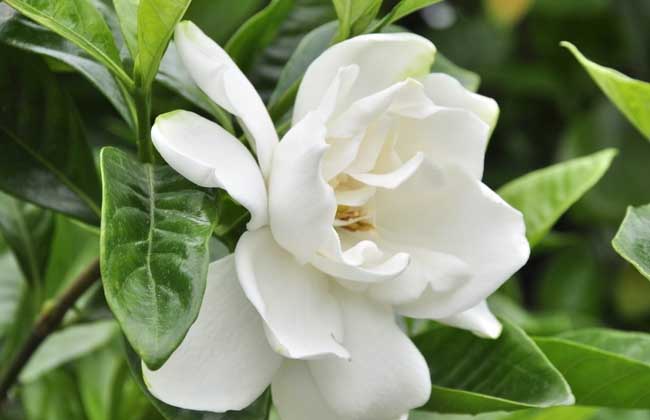
With its pure white flowers, emerald green leaves and rich fragrance, the Gardenia is one of the most attractive flowering plants of early summer. Gardenia is a common flowering plant for courtyards and indoor decoration, so besides soil cultivation, can Gardenia be grown in water? Below, the editor will introduce the water cultivation method for Gardenia.
Can Gardenia be grown in water?
Gardenia can be grown in water. Gardenia prefers a warm, humid environment with plenty of light and good ventilation, and it dislikes intense direct sunlight. Gardenia is suited to living in slightly shaded spots, tolerates partial shade, and fears waterlogging. Gardenia is very well suited to water cultivation; water-grown Gardenia roots very quickly and is highly adaptable.
Growth habits of Gardenia
Gardenia prefers a growing environment with humid air, plenty of light and good ventilation. In summer, direct sunlight should be avoided; it is suited to living in slightly shaded spots, tolerates partial shade, fears waterlogging and is fairly cold-tolerant. Its most suitable growing temperature is around 16 degrees, and in winter the temperature must not fall below 0 degrees; if it is too low, it will enter a dormant period. In the Northeast, North China and Northwest China, it can only be grown as a potted greenhouse flower.
Gardenia is best planted in loose, fertile, well-drained, slightly clayey acidic soil; it is a typical acid-loving flowering plant.
Water cultivation method for Gardenia
1. Select robust branches. The quality of the branch directly determines how well the plant will grow. For water-grown Gardenia, choose a branch with a thick main stem and more than three small branches growing from that one main stem; such a Gardenia is easy to keep alive in water and has a beautiful plant shape. Because Gardenia branches may carry insect eggs, to avoid insects appearing during water cultivation, first wash the Gardenia branch clean, taking care not to damage the outer skin. For water cultivation, the branch needs to have overly dense foliage and insect-bitten leaves trimmed off, and larger leaves cut horizontally by more than half, to prevent water from evaporating too quickly and causing the Gardenia leaves to wilt and dry up.
2. Cut the tip of the Gardenia branch into a horse-ear shape, and soak it in a 0.1% potassium permanganate solution for 4-6 hours, then take it out and insert it into clean water, with the submerged length being 1/3 of the total length of the cutting.
3. For water-grown Gardenia, use a brown bottle as the container, and change the water once every 1-2 days. Alternatively, drill small holes in a wooden board or foam board, insert the cuttings into the holes, and then let it float on the water surface, with 2/3 of the cutting length needing to remain above the floating body and 1/3 inserted into the water. After the water-grown Gardenia grows new roots, it needs to be moved from a dark place to a bright place. When the roots have grown to 1.5-2 cm and a single plant has 6~7 roots, it can be transplanted into a pot or planted in the ground.