What are the propagation methods for gardenia? A few common propagation techniques taught to you
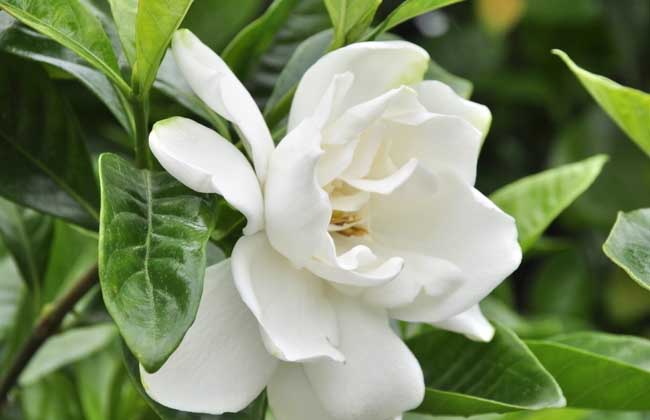
Gardenia can be propagated by various methods, both sexual and asexual. Generally, cutting and layering are mostly used, and division and sowing can also be used, but they are rarely adopted. Generally, potted plants in the north are not easy to set seed. Let's take a look at the propagation methods for gardenia below!
Gardenia cutting propagation
The cutting method can be divided into spring cuttings and autumn cuttings. Spring cuttings are carried out in mid-to-late February, and autumn cuttings from late September to late October. There are slight differences between the north and the south, but the survival rate is highest mostly between summer and autumn. For the cuttings, select healthy 2-3 year old branches, cut 10-12 cm, remove the lower leaves, keep the top two leaves and cut each in half, first dip in vitamin B12 injection, then insert obliquely into the cutting bed, leaving only one node above, and pay attention to shading and maintaining a certain humidity.
Generally, roots can form in 1 month. Under conditions of 80% relative humidity and a temperature of 20-24°C, it takes about 15 days. If soaked in 20×10(-6th power) to 50×10(-6th power) indolebutyric acid for 24 hours, the effect is even better. When the rooted seedlings begin to grow, transplant or pot individually, and they can bloom after 2 years. In the south, water cutting propagation is also used, that is, inserting the cuttings into a round disc woven from reed stems, letting it float on the water surface so that the lower part roots in the water, and then transplanting for cultivation.
Gardenia layering propagation
It is generally carried out around Qingming in April or during the plum rain season. In April, select 1-year-old robust branches 25-30 cm long from a 3-year-old mother plant for layering, pull them to the ground, and wound the part of the branch that goes into the soil. If the wounded part can be dipped in 200 ppm powdered sodium acetate, then covered with soil and pressed firm, rooting is even easier. If there is a three-forked branch, then at the fork opening, three seedlings can be obtained at one time. Generally, roots can form after 20-30 days. After rooting in June, it can be separated from the mother plant, and by the next spring it can be planted separately with soil or potted individually.
For transplanting seedlings or potting, spring is better, carried out during the plum rain season, and a soil ball is needed. During the growing period, keep the soil moist, and water more during the flowering period and midsummer. Apply fertilizer once a month, and add one application of phosphorus and potassium fertilizer before flowering. In early spring of the following year, prune and shape, and promptly cut off dead branches and leggy branches.
Gardenia sowing propagation
Generally, select plump, dark red mature fruits, dry them in the shell under the sun or in the shade for seed. Before sowing, use scissors to cut open the seed fruit skin, dig out the seeds, rub them apart in hot water, remove floating seeds or impurities, then scoop out the sunken plump seeds, spread them on a bamboo mat, and place them in a ventilated place to dry off excess moisture. Generally, choose a sunny hillside or soil plot, with deep, loose, fertile sandy loam for sowing. Land at field edges and corners can be used for planting, or intercropping and relay intercropping with legumes can be used. Before planting, plow the land 1-1.5 chi, remove miscellaneous tree stumps, and make beds according to a bed surface width of 4-5 chi (the distance can be larger if the soil quality is good, otherwise smaller), with a bed height of 6 cun. Farmyard manure, green manure, or human and livestock manure water can be applied as base fertilizer, for example, applying 20-30 loads of human excrement and urine per mu. After the soil dries, shallowly rake the clods and level the bed surface. On the bed surface, open sowing furrows at a row spacing of 6-7 cun, with a furrow depth of about 1 cun, ready for sowing.
Gardenia can be sown in spring or autumn, generally mostly in spring. Spring sowing is done around Yushui, and autumn sowing around Qiufen. When sowing, mix the seeds with wood ash and evenly sow them in the sowing furrows, then cover and level the sowing furrows with fine soil or burned soil, cover with grass and sprinkle water, and often keep the soil moist to facilitate emergence. Use 4-6 jin of seed per mu. After emergence, pay attention to removing the covering grass in time. During the seedling stage, weeds should be removed frequently, and care should be taken not to damage the roots of the seedlings. After weeding, diluted human excrement and urine water needs to be applied as a top dressing. After one year of seedling cultivation, they can be transplanted. If transport is relatively far, it is advisable to coat the roots with yellow mud slurry, cover with grass to retain moisture, plant one plant per hole, then cover with soil, press firm, and sprinkle water. After planting, carry out one intertillage, weeding, and top dressing each spring and summer every year. Applying human and livestock manure, stable manure, compost, cake fertilizer, etc. is all fine. Before flowering in summer, it is better to apply fertilizer with relatively high phosphorus and potassium content. Fertilization is generally carried out after weeding and loosening the soil.
Gardenia water cutting rooting propagation
Take 10-12 cm long 1-year-old branches, keep 2-4 leaves. Cut the tip of the branch into a horse-ear shape, and soak it in 0.1% potassium permanganate solution for 4-6 hours, then take it out and insert it into clean water. The submerged length is 1/3 of the total length of the cutting. Use a brown bottle as the container, and change the water once every 1-2 days. Alternatively, drill small holes in a wooden board or foam board, insert the cuttings into the holes, and then let them float on the water surface, where 2/3 of the cutting length needs to remain above the floating body, and 1/3 is inserted into the water.
After the gardenia grows new roots, move it from a darker place to a bright place. When the roots grow to 1.5-2 cm and a single plant has 6-7 roots, it can be transplanted into a pot or planted in the ground.