What are the propagation methods for pothos? Sharing common propagation techniques
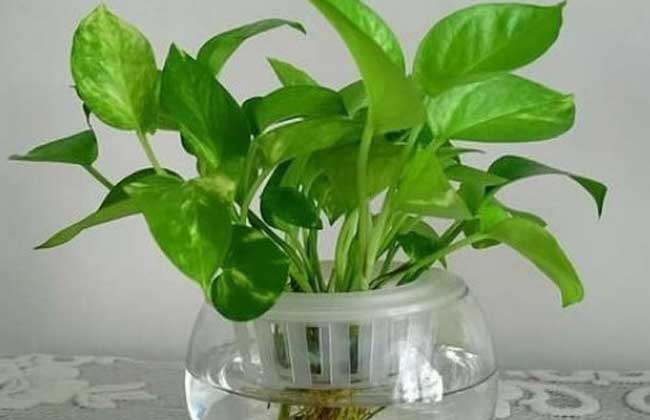
Pothos grows in tropical regions, often climbing on rocks and tree trunks in rainforests. It has strong twining ability and well-developed aerial roots, and can be grown in water. The propagation method for pothos usually uses cuttings. Let's take a look at the propagation methods for pothos below!
Pothos layering propagation method
Pothos layering propagation is the method with the highest success rate. Press the creeping stems of pothos into the soil, and after aerial roots grow, they can be cut off and divided.
Pothos water cutting propagation method
Pothos can also be propagated by water cutting terminal buds. First cut a tender and sturdy stem vine 20-30cm long as a section, insert it directly into a bottle filled with clean water, change the water once every 2-3 days, and roots can form and it can survive in about 10 days. Because potted pothos is limited by the potting soil, after being cultivated for too long, the plant is prone to aging, and the leaves become smaller and fall off. Therefore, after 2 to 3 years of cultivation, repotting or pruning and renewal is required.
Pothos cutting propagation method
Pothos propagation usually uses the cutting method. In late spring and early summer, select a healthy pothos vine, cut a 15 cm to 30 cm branch, remove the leaves from 1 to 2 nodes at the base, be careful not to damage the aerial roots, then insert it into plain sand or coal cinder, with a depth of 1/3 of the cutting. Water thoroughly and place it in a shaded place, spray water on the leaf surface every day or cover with plastic film to retain moisture. As long as the environment is kept no lower than 20°C, the survival rate is above 90%.
1. Cutting selection and treatment: For cuttings, it is best to choose semi-lignified branches that grow vigorously and are free of pests and diseases, cut them into 10-13 cm lengths, cut the lower incision into a slanted cut, keep 2-3 leaves at the upper end, and cut the leaves in half to reduce water evaporation and help the cuttings survive.
2. Cutting substrate: The cutting substrate requires loose, breathable, well-drained loam or sandy soil with high humus content. Vermiculite is best, as it allows fast rooting and a high survival rate. Before inserting, disinfect the soil with 2% formalin or 5% potassium permanganate.
3. Cutting method: Quickly dip the lower end of the prepared cutting in ABT rooting powder or indolebutyric acid, then insert it into the prepared substrate, with 1/2 of it in the soil, water thoroughly so that the cutting is in close contact with the substrate, and then cover with plastic film.
4. Management after insertion
① After insertion, pay attention to keeping the soil moist and the air temperature relatively high. Soil humidity is preferably around 50%, while air humidity is best at 80%-90%.
② In the early stage of cutting, keep the shade degree of the shade shed at about 80%. This can prevent direct strong sunlight and also ensure sufficient scattered light, so as to facilitate photosynthesis of leafy cuttings and help rooting.
③ Through the above treatment, roots generally form basically after 20 days. The film can be removed to increase light. At the same time, on sunny days in summer, still pay attention to leaf spraying and shading, and in winter pay attention to cold protection. About 10 days after rooting, they can be moved into pots for normal management.