How to grow Alocasia macrorrhizos (giant taro)? Detailed guide to cultivation methods and precautions
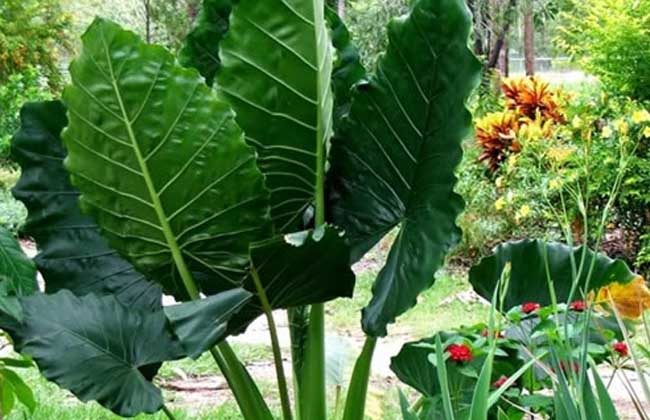
Alocasia macrorrhizos is a common indoor plant, a perennial herbaceous plant with relatively thick stems, and it has a noticeable effect on removing dust. However, during cultivation we should pay attention to the toxicity of Alocasia macrorrhizos. If there are children at home, special care is needed. Now let us take a look at the cultivation methods and precautions for Alocasia macrorrhizos!
Cultivation methods for Alocasia macrorrhizos
1. Growing temperature: 20-25°C is the most suitable growing temperature for Alocasia macrorrhizos. When the room temperature is below 18°C, Alocasia macrorrhizos will enter a dormant period and stop growing. Alocasia macrorrhizos likes a warm, humid, semi-shaded environment. During cultivation, special attention must be paid to seasonal changes. Especially now that summer is about to begin, particular care should be taken to place Alocasia macrorrhizos in a semi-shaded, ventilated place, and the leaves need to be sprayed with water multiple times to maintain air humidity. Avoid excessively high temperatures causing abnormalities in Alocasia macrorrhizos. Alocasia macrorrhizos is not very cold-resistant, and depending on the temperature differences between north and south, it needs to be moved indoors in autumn and winter.
2. Correct fertilization: The fertilization cycle for Alocasia macrorrhizos is once a month, and it must be given an additional application once every 2 weeks, and the potting soil of Alocasia macrorrhizos needs to be moistened. A thin liquid fertilizer based on nitrogen fertilizer mixed with phosphorus and potassium fertilizers should be used as a supplement. When topdressing, avoid pouring the fertilizer water onto the leaf sheaths, as this will cause Alocasia macrorrhizos to rot. If you want the leaves of Alocasia macrorrhizos to be large and green, applying some ferrous sulfate can achieve this. If you want Alocasia macrorrhizos to look beautiful and attractive, avoid a lack of fertilizer. Once a fertilizer deficiency occurs, the stem of Alocasia macrorrhizos will shrivel and become bare.
3. Timely watering: In summer, Alocasia macrorrhizos can be watered more. People often say that the stems of the Alocasia macrorrhizos they grow rot, which is caused by water accumulation. If Alocasia macrorrhizos is given too much water, this situation will occur, so the degree of watering must be controlled. In winter, Alocasia macrorrhizos will enter a long dormant period, so watering should be controlled in winter and fertilization should be stopped.
4. Lighting issues: For plants that like semi-shade, direct sunlight is the biggest taboo. When the leaves of a cultivated Alocasia macrorrhizos droop, it may be due to fertilizer deficiency. At this time, some liquid fertilizer needs to be added for Alocasia macrorrhizos. When Alocasia macrorrhizos enters its flowering period, it is necessary to ensure 3-5 hours of light every day. Otherwise, the flower buds will remain green and the leaf stalks will elongate, affecting its appearance.
5. Summer care: In summer, the flowerpot should be placed indoors in a ventilated place without direct light, and water should often be sprayed around it and on the leaf surface to increase air humidity, lower leaf temperature, and keep the leaves clean. But watering must not be excessive, otherwise the tubers will rot. Alternating dry and wet conditions, with no water accumulation, is best.
Precautions for Alocasia macrorrhizos
The white sap in the stem of Alocasia macrorrhizos is toxic. Accidental contact with or ingestion of its sap will cause discomfort in the throat and mouth, and in severe cases can also cause suffocation, leading to cardiac paralysis and death. Skin contact with its sap will cause itching or strong irritation, and eye contact with the sap can cause severe conjunctivitis, or even blindness. Therefore, contact with Alocasia macrorrhizos should be minimized, and households with children had best not grow it. However, Alocasia macrorrhizos does not belong to the carcinogenic plants.
Winter care for Alocasia macrorrhizos
1. Alocasia macrorrhizos enters a dormant state when the room temperature is 8°C, and its leaves begin to turn yellow when the room temperature is 5°C. Therefore, the overwintering temperature for Alocasia macrorrhizos should preferably be above 10°C. In this way, its leaves can be guaranteed to remain green throughout the winter. If the room temperature cannot be guaranteed, then simply let the leaves of Alocasia macrorrhizos wither and turn yellow, and let it overwinter in a slightly dry dormant state.
2. In late autumn and early winter, the leaves of Alocasia macrorrhizos begin to turn yellow and shrink. At this time, simply use scissors to cut off all the leaves from the stem, stop watering, clean the surface of the potting soil, and place the whole pot with the Alocasia macrorrhizos in a corner or on a shelf. Throughout the winter, it only needs to be watered once a month, and normally the potting soil only needs to maintain 10% moisture. Because its rhizome is toxic, it will not be damaged by insects or gnawed by mice. As long as the room temperature does not fall below 0°C, it will not suffer frost damage. After Qingming Festival the following year, take the Alocasia macrorrhizos plant out of the original potting soil, remove dead roots, old soil, and tiller buds, replant it in a prepared growing medium, water it thoroughly, and place it indoors in a sunny spot. In about 10 days, buds and leaves will sprout again.
Common problems in growing Alocasia macrorrhizos
1. What causes the leaves of Alocasia macrorrhizos to turn yellow?
The potting soil of Alocasia macrorrhizos has been too wet or too dry for a long time, and it has not been watered as soon as it dries. Watering with “half water”, that is, watering not thoroughly, without water seeping out from the bottom of the Alocasia macrorrhizos pot. Subjected to cold in winter, the root system of Alocasia macrorrhizos has already suffered frost damage. The leaf surface of Alocasia macrorrhizos has not been sprayed and cleaned for a long time, allowing dust to accumulate and hindering photosynthesis. After overwintering, Alocasia macrorrhizos is in a hurry to be moved outdoors and placed in a warm place to bask in the sun, and temporarily cannot adapt to the sudden climate change. Alocasia macrorrhizos has been placed in an environment with poor ventilation for a long time.
2. What should be done if poisoned by touching the sap of Alocasia macrorrhizos?
It is recommended to use vinegar for detoxification. Rinse with plenty of clean water. The toxic components are calcium oxalate and saponin. After skin contact with the sap, itching occurs. Contact with the eyes causes blindness. Folk remedy: boil vinegar with a small amount of ginger juice, and take it orally or use it as a gargle to detoxify. If the poisoning symptoms are obvious, it is recommended to go to the hospital for medical treatment.
3. What should be done if Alocasia macrorrhizos has root rot?
Alocasia macrorrhizos easily suffers root rot in summer, mainly caused by potting soil that is too wet. Pull up the Alocasia macrorrhizos, cut off the rotten roots, and wear rubber gloves when cutting the roots (Alocasia macrorrhizos is toxic! Those with skin allergies should be careful.), and cut off a little of the healthy tissue near the rotten part. Let it dry, and plant it again after the wound heals. Plant it in plain sand, or in sandy soil, and do not water it for the time being. Wait until the potting soil is completely dry before watering. Do the same afterward: do not water until dry. In addition, it should be placed in a ventilated place.
4. Why does Alocasia macrorrhizos drip water in the morning?
Under conditions of warmth, humidity, and sufficient soil moisture, Alocasia macrorrhizos will drip water downward from the leaf tips or leaf edges. If the air humidity is too low, the water that comes out will immediately evaporate. Because the temperature is lower at night, there is no sunlight, and the air humidity is high, the water dripping phenomenon is obvious in the morning. Therefore, water droplets generally appear more often in the morning.
5. How should Alocasia macrorrhizos be grown in water?
Hydroponic requirements: diffused light, and sufficient light in winter. The water in the container should be changed frequently, and when changing the water, clean the container and the plant roots. Note that it is best to rinse with tap water, and if conditions permit, it can be disinfected with potassium permanganate solution. The temperature should preferably be kept above 12°C. Since it is hydroponic, air humidity generally can meet the requirements. When growing in water, do not submerge too much; it is enough for half of the lower root system to be in the water.
6. What is the problem if Alocasia macrorrhizos falls over?
Because ordinary watering is generally only poured at the roots, the water cannot reach the leaf parts, so it falls over. It is recommended to put clean water in a spray bottle and spray it on the leaves. After a few days, there will be an effect.
7. How should Alocasia macrorrhizos be cared for?
In winter, its transpiration will decrease. If it is a newly transplanted young seedling, after the original soil it came with is moistened, it is enough to keep the environment around the young seedling moist. Use a spray bottle to moisten the surrounding environment. If it is an old plant, feel the surface soil with your hand, and water only when it is dry, but do not water too much, because when the temperature is below 18°C, Alocasia macrorrhizos goes dormant, grows very little, and does not need much water; otherwise the roots will rot.
8. What should be done if Alocasia macrorrhizos is too tall?
By spraying the whole plant with a 2% paclobutrazol solution, in the later growth process of Alocasia macrorrhizos it will be found that the growth height of Alocasia macrorrhizos will not exceed 40cm. If Alocasia macrorrhizos continues to grow, the whole plant can be sprayed again. Generally, spraying once about every half a year can achieve the effect of controlling height.
All right, that is all from the editor about the cultivation methods and precautions for Alocasia macrorrhizos. The editor also reminds everyone once again here that Alocasia macrorrhizos is toxic, and if there are children at home, special, extra care is needed.