How to grow Alocasia macrorrhizos hydroponically? A detailed guide to the care method
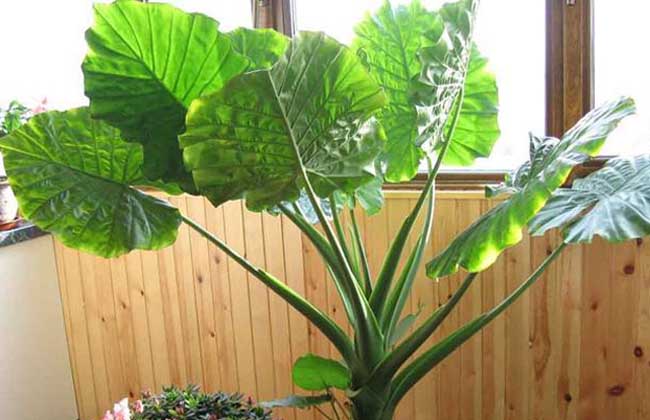
Nowadays, when decorating their homes, many people like to choose plants, and more and more people are choosing hydroponic plants. Hydroponic plants are not only relatively simple to grow, but also more distinctive. Do you know about hydroponic plants, and do you know how to grow Alocasia macrorrhizos hydroponically? Let's take a look together at how to grow Alocasia macrorrhizos hydroponically!
The growing environment of hydroponic Alocasia macrorrhizos
1. Temperature: Alocasia macrorrhizos is an understory plant of tropical rainforests, so its growth requires high humidity, and diffused light is best. As a shade-tolerant plant, it likes a semi-shaded environment, and should be placed in an environment that is both shaded and ventilated. In summer, when temperatures are high, as long as the soil is kept moist, water is sprayed frequently, and shade is provided, it can still grow normally. In winter, room temperature must not be too low.
2. Humidity: Hydroponic Alocasia macrorrhizos especially loves moisture. During the growing season, it requires not only moist potting soil, but also air humidity of no less than 60%. In summer, when temperatures are high, spraying should be increased to create a relatively cool and humid environment for it. If it is placed in an indoor air-conditioned hall, the potting soil must be kept moist, and the leaves should also be sprayed with water from time to time.
3. Fertilizer: It is relatively fond of fertilizer. From March to October, a liquid fertilizer should be applied once every half month, and the proportion of nitrogen can be appropriately increased. If a little ferrous sulfate can be added, so much the better, as the leaves will then grow as large as lotus leaves, smooth and lovely. When the temperature is below 15°C, fertilization should be stopped.
How to grow hydroponic Alocasia macrorrhizos
1. When changing a soil-grown plant into a hydroponic plant, the roots should be washed carefully, and please try not to damage the tuber and root system. At the same time, rotten roots and already aged roots should be cut off. If the tuber has no roots, it should first be placed in a shaded place to dry for 2-3 days, and after the wound has dried, it can be immersed in water. After 2-3 days, new roots can be seen emerging.
2. Note that in the early stage of hydroponics, the water should be changed once every 2-3 days, and the water depth should preferably submerge 2/3 of the root system. After a week, new roots can grow. After 3 weeks, once the hydroponic plant has adapted to the hydroponic environment, switch to nutrient solution culture. After that, change the nutrient solution about once a month.
3. Because the stem tissue of Alocasia macrorrhizos is relatively loose, if the water quality is poor, it is easily contaminated and causes root rot and stem rot. Therefore, the water in the bottle must be kept clean. At the same time, when changing the water or nutrient solution, the slime on the tuber and roots should also be cleaned off, and rotten roots should be cut away.
4. In hot summer, the frequency of water changes should be increased, and air humidity should be no less than 60%. Spray water frequently to create a relatively cool and humid environment for it. In winter, to keep its leaves dark green, generally spray warm water once a week.
5. It is enough for the water level to cover 2/3 of the root system. Clean the inner wall of the container frequently to prevent moss from growing.
6. The sap in the stems and leaves of Alocasia macrorrhizos is toxic. During care and management, attention should be paid: it must not be put in the mouth, and contact with the skin will cause itching and redness and swelling. It should be rinsed with water promptly, or wearing plastic gloves makes handling it relatively safe.
How does hydroponic Alocasia macrorrhizos get through winter?
Alocasia macrorrhizos is originally a southern plant. Generally, as long as the winter temperature in the south is not lower than 5°C, Alocasia macrorrhizos will be fine. If the weather is too cold, it can be placed in a warm place indoors. However, hydroponic flowers generally do not have very good resistance. If you want Alocasia macrorrhizos to get through winter worry-free, it is best to plant it in soil.
What should be done if hydroponic Alocasia macrorrhizos has root rot?
For hydroponic Alocasia macrorrhizos, do not put the rhizome in the water; instead, put the roots in the water. In addition, some roots should be left out so they can come into contact with the air, which helps the roots breathe. The rhizome of Alocasia macrorrhizos is outside, and half of the roots it produces are in the water and half in the air, which is beneficial for root respiration.
For hydroponic Alocasia macrorrhizos that already has root rot, the gardening enthusiast should cut off the rotten part, then, if conditions permit, disinfect it with something such as potassium permanganate; wood ash can also be used. After disinfection, let the wound dry in a cool place, then plant it in soil. After the plant returns to normal (has grown roots), grow it hydroponically again. If it is grown hydroponically directly after cutting the roots, root rot is still likely. Gardening enthusiasts can weigh whether to plant it in soil first and then grow it hydroponically, or to continue growing it hydroponically.