When Is the Best Time to Plant Mung Beans? A Complete Guide to Sowing Times
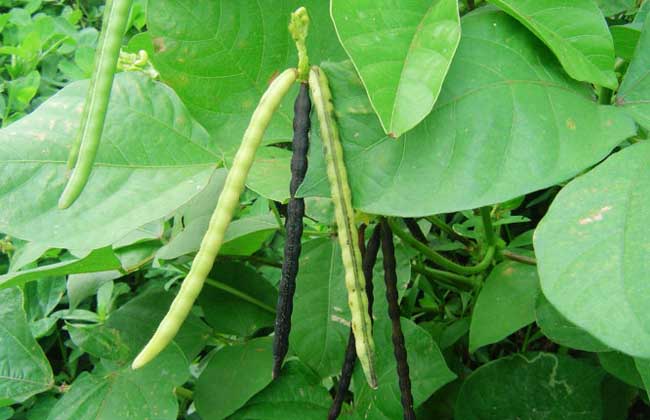
The mung bean is an annual herbaceous plant in the genus Vigna of the Fabaceae family, with a growth cycle of about 60-65 days. It has broad adaptability and strong stress resistance, tolerating drought, poor soil and shade. Its growth period is short, and it has the ability to fix nitrogen symbiotically and enrich the soil. It is often used as an excellent crop for replanting, catch cropping and famine relief, and has very high planting prospects. Let's take a look below at when mung beans should be planted!
Mung Bean Planting Time
The mung bean has a short growth period and a long suitable sowing window, and in many places it can be sown in either spring or summer. Generally, sowing can begin once the soil temperature reaches 16-20°C. In most plots with irrigation conditions, the sowing period for mung beans is from May 15 to 30; on sandy ridge plots without irrigation conditions, sowing is mostly done from June 12 to 15. Generally, spring sowing is from mid-to-late April to early and mid-May, and summer sowing is from late May to early and mid-June. In the north, the suitable sowing window is short: the spring sowing period for a single annual crop is from early May to the end of May, and the summer sowing period is from late May to early June. In Northeast China, spring sowing is in mid-May and summer sowing is in mid-to-late June. Note that the mung bean is a warmth-loving crop; if spring sowing is too early, individual development will be poor, the growth period will be prolonged and yields will drop. For summer-sown mung beans, earlier sowing is better: the seedlings grow robustly, and the flowering and pod-setting stage falls in a hot, rainy period, which favors flower and pod formation, resulting in more pods, more seeds, heavier seeds and higher yields.
Mung Bean Sowing Methods
1. Fine land preparation: The mung bean is a dicotyledonous plant with large cotyledons, and its seedlings are weak at pushing through the soil. Therefore, the land must be finely prepared before sowing, achieving level ground and fine soil with a loose surface and firm subsoil through plowing, harrowing and rolling. Where irrigation is available, moisture should be built up in the soil; where it is not, the land should be prepared early and sowing should wait for rain. Land preparation is generally done in early to mid-April.
2. Seed treatment: Before sowing, remove diseased, mixed and hard seeds to ensure seed purity and germination rate. Select seeds by winnowing, water selection or machine selection, removing shriveled grains, small grains, impurities and grass seeds, and keeping clean, large seeds for sowing. On a sunny day, spread the seeds thinly on a mat and turn and sun them for 1-2 days to enhance seed vigor and improve germination energy. Lightly rub the dark, rough-skinned, poorly water-absorbing "iron mung beans" that are difficult to germinate, so that the seed coat is slightly damaged, making them easier to germinate and emerge. Sprinkle a small amount of water on the seeds, scatter the inoculant onto the wet seeds and mix well, using it as soon as it is mixed. Rhizobium fertilizer must not be mixed with chemical fertilizers or fungicides. A commonly used nitrogen-fixing bacterial preparation contains 300 million rhizobia per gram of inoculant, with a dosage of 125 grams per mu. Alternatively, treat the seeds with a coating agent, a drought-resistance agent, or microelement fertilizers containing molybdenum, boron, etc.
3. Sowing methods: Mung beans can generally be sown once the soil temperature reaches 16-20°C. Spring sowing is in May; for summer-sown mung beans, the earlier the sowing, the higher the yield. Drilling is the most common method, though hill sowing and broadcasting are also possible. With drilling, avoid covering the seed too deeply, sowing too densely and missing rows. Intercropping, relay intercropping and scattered planting mostly use hill sowing. The sowing depth is generally 3-5 cm. The seeding rate is 1-2 kg per mu, less on fertile land and more on poor land.
Field Management of Mung Beans
1. Pressing and replanting: After sowing, plots with poor soil moisture should be pressed in a timely manner, pressing as you sow, so that the seeds make close contact with the soil, surface moisture increases, and seed germination and development are promoted for early and complete emergence. After the mung beans emerge, if gaps or missing rows are found, replanting should be completed within 7 days.
2. Thinning and final singling: To ensure good individual development of the seedlings, thin and then finalize the stand. When the mung bean seedlings reach the two-leaf-one-heart stage, remove clustered seedlings. At the 4-leaf stage, finalize the stand, with a plant spacing of 13-16 cm and a row spacing of about 40 cm for sole cropping. According to the established density, remove weak, diseased, small and off-type seedlings and weeds, keeping the strong ones. Keep a single plant per position to favor robust plant growth.
3. Cultivation and weeding: This not only eliminates weeds but also breaks up soil compaction, loosens the soil, reduces evaporation, raises soil temperature and promotes rhizobium activity, making it a measure for increasing mung bean yields. Generally, after the first compound leaf of the mung bean unfolds, a first shallow hoeing is done together with thinning; after the second compound leaf unfolds, the stand is finalized and a second cultivation is carried out; at the branching stage, a third deep cultivation is carried out along with earthing up around the roots. Cultivation should continue until the rows close. The cultivation depth should follow the principle of shallow-deep-shallow.
4. Irrigation and waterlogging prevention: The mung bean is a crop that needs a fair amount of water but is not tolerant of waterlogging and fears flooding. The seedling stage is fairly drought-resistant and needs little water, while the flowering and pod-setting stage is the peak water-demand period. At this time, if drought occurs, irrigate promptly. However, the mung bean also fears waterlogging and flooding. If there is too much water at the seedling stage, root diseases will worsen, causing root rot and seedling death. If waterlogging occurs later, plants grow poorly, show premature aging, shed flowers and pods, and yields decline. Therefore, during the rainy season, mung beans need drainage to prevent waterlogging.