Detailed Guide to Cultivation Techniques for Potted Aglaonema in the Guangdong Region
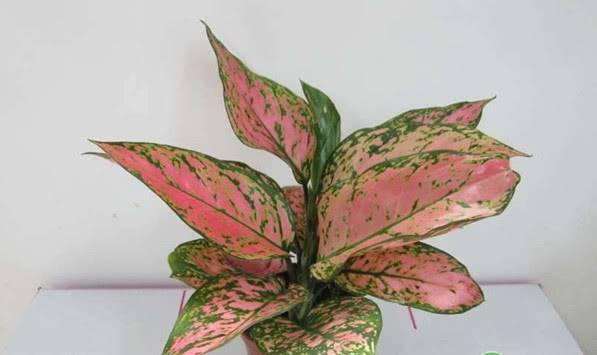
Aglaonema, also known as Guangdong evergreen and Chinese evergreen, has a moderate plant form and a long ornamental display period. It can be widely used to beautify office and living spaces, and is an excellent indoor foliage plant with colorful leaves, deeply loved by people. This article formulates key cultivation techniques for Aglaonema according to the climatic characteristics of the Guangdong region, providing a reference for large-scale industrialized cultivation of potted Aglaonema, and also providing a reference basis for cultivation in other provinces in southern China.
1 Environmental Conditions
Potted Aglaonema prefers a warm and ventilated climate environment, tolerates high temperatures, and is not cold-tolerant. The suitable growth temperature is 27-32°C, the relative air humidity is 60%-80%, and the light intensity is 17000-30000 Lux. If the temperature remains below 20°C or above 36°C for a long time, the plants will show slow growth or even stop growing. If the overwintering greenhouse remains below 15°C for a long time, the old leaves will gradually turn yellow, wilt, and fall off, the growth point will necrose, and even the entire plant may die. Large-scale cultivation requires protective facilities that can retain heat, add heat, and control light, generally steel-frame film greenhouses, 2 layers of shade nets (each layer with a shading rate of 70%), water curtain fan cooling systems, heating facilities, etc., so as to meet the cultivation needs of more Aglaonema varieties.
2 Substrate Requirements
The substrate is required to have good drainage and air permeability, while also having the characteristics of water and fertilizer retention and being not easily decomposed, with an EC value of less than 0.8 ms/cm and a pH value of 5.8-6.5. Generally, imported peat soil is relatively safe to use, and coconut coir and domestic peat soil can also be used, but attention should be paid to adjusting the EC value and pH value properly. For the medium seedling stage, peat soil with a specification of 10-30 mm can be selected, and for the finished product stage, peat soil with a specification of 20-40 mm can be selected. When mixing, 10% perlite can also be added.
3 Cultivation and Planting
3.1 Seedling Selection
There are generally 2 types of seedlings: cuttings and tissue-cultured seedlings. In order to ensure the stability of large-scale cultivation, it is recommended to use tissue-cultured seedlings. Seedling selection standards: good leaf color gloss, complete leaves without damage, no diseased leaves, many roots, root color white or yellow-white, no rotten roots, good growth, moderate seedling height, with a height of 7-10 cm.
3.2 Potting and Planting
When potting, first fill the bottom of the pot with substrate 2-3 cm thick, hold the seedling with the left hand and fix it in the center of the pot, fill the substrate with the right hand until the pot is full, press the substrate firmly with slight force, and keep the substrate about 1 cm below the pot rim. Divided by pot diameter specifications, Aglaonema planting specifications can be divided into 90#, 120#, 150#, and other small, medium, and large specifications. For 90# planting, plug seedlings are used, with 1 plant per pot; for 120# planting, 90# pots are directly repotted, with 2-3 plants per pot; for 150# planting, 120# pots are directly repotted or 2-3 plants
are directly repotted from 90#.
4 Cultivation Management
4.1 Water Management
In the hot summer, potted Aglaonema should keep the potting soil moist, and the amount and frequency of watering can be appropriately increased. In the cold winter, the potting soil should be kept on the dry side, and fertilizer and water management should follow the principle of drying and wetting alternately. At night, the leaves should also be kept dry to improve cold resistance and avoid cold damage.
4.2 Fertilizer Management
4.2.1 Fertilizer Ratio
The fertilizer ratios applied during the growth period are: N-P 2 O 5 -K 2 O=20:10:20 and N-P 2 O 5 -K 2 O=15:10:30, and it is suitable to apply them alternately. Usually, it is suitable to apply N-P 2 O 5 -K 2 O=20:10:20 twice and then apply N-P 2 O 5 -K 2 O=15:10:30 once in an alternating manner.
4.2.2 Fertilization Method
Root-zone irrigation is usually adopted, fertilizing once every 5-7 d. The pH value of the water-fertilizer mixture is 6.0-7.0. The fertilizer concentration should be regulated according to plant size and fertilization cycle, and the EC value is preferably 1.0-1.5 ms/cm.
4.3 Temperature and Humidity Regulation
The suitable daytime temperature for the growth of potted Aglaonema is 27-32°C, the nighttime temperature is 20-22°C, and the relative air humidity is 60%-80%. Temperature and humidity should be regulated well according to different seasons. For example, during the high-temperature period in summer, the main regulation goal is cooling, which can be achieved by opening skylights and movable shade nets to discharge hot air and provide shade cooling, and water curtain fans can also be turned on for cooling. For example, during the low-temperature period in winter, the main regulation goal is heat preservation and heating, which can be carried out by sealing the film around the greenhouse and turning on heating equipment. The regulation of indoor temperature and humidity is directly related to ventilation conditions, light intensity, and greenhouse sealing degree, and various equipment and facilities should be comprehensively used for scientific regulation.
5 Prevention and Control of Major Pests and Diseases
5.1 Prevention and Control of Major Diseases
5.1.1 Root and Rhizome Rot
Damage symptoms: In the early stage of the disease, only individual branch roots and fibrous roots are infected, and it gradually spreads to the main root. After the main root is infected, the plant does not show symptoms in the early stage. Later, as the degree of root rot intensifies, the function of absorbing water and nutrients gradually weakens. Because the aboveground part has an insufficient supply of nutrients, the new leaves first turn yellow, and then the whole plant gradually turns yellow and wilts. This disease can be caused by infection by multiple pathogens such as Pythium, Fusarium, and Phytophthora. The pathogen overwinters in the soil or on diseased residues and becomes the main primary infection source in the following year. The pathogen invades from wounds at the root and rhizome or roots, and spreads and expands through rainwater or irrigation water. Control measures: Try to avoid root damage when repotting, and it is best to drench with fungicide after repotting for prevention. Suitable agents include: 70% thiophanate-methyl 1000 times, or 50% carbendazim 800 times, 99% hymexazol 4000 times, or Liangdun 3000 times, etc.
5.1.2 Anthracnose
Damage symptoms: It mostly occurs on leaves. In the early stage, round or oval reddish-brown spots appear on the leaves, gradually expanding into dark brown lesions. The center of the lesion then changes from grayish-brown to grayish-white, and the edge of the lesion has a yellow halo, with or without concentric rings; in the late stage of the disease, there are many small black spots on the lesions, and when humidity is too high, pale yellow or yellow mucus appears on them. High temperature and high humidity are the main reasons for the occurrence of this disease. Control measures: Strengthen cultivation management, frequently ventilate and provide light transmission, and remove diseased leaves in time. Spray fungicide in time for control in the early stage of the disease, once every 7 d, rotate agents every 2-3 weeks, and spray 3-4 times continuously. Suitable agents include: 10% difenoconazole water-dispersible granules 1500-2000 times, or 25% prochloraz 2000-2500 times, or 40% chlorothalonil 600-800 times, or 50% Tanteling 2000-3000 times, etc.
5.2 Prevention and Control of Major Insect Pests
5.2.1 Spodoptera litura
Damage symptoms: It damages leaves, mainly biting and feeding on tender leaves, causing varying degrees of notched damage to the leaves and seriously affecting ornamental value. It mostly damages at night. Control measures: Spray insecticide in time for control in the early stage of occurrence, generally spraying at 4:00-5:00 in the afternoon, once every 5 d, rotating agents every 2-3 weeks, and spraying 2-3 times continuously. Suitable agents include: 48% chlorpyrifos 1200-1500 times, fipronil 2000-3000 times, 5% emamectin benzoate 12000-15000 times, etc.
5.2.2 Red Spider Mite
Damage symptoms: It damages leaves, mainly sucking sap through its mouthparts on the underside of old leaves. On the upper side, the color also appears dull and faded yellow, and tiny red dots can be seen crawling on the underside; these are red spider mites. In the later stage, dense white spider silk spots can be seen on the leaf underside, which can cause leaves to fall off. Control measures: Spray insecticide for control in the early stage of damage, rotating the following agents every 1-2 weeks, spraying continuously 3-4 times, and when spraying, try to spray both the leaf surface and leaf underside thoroughly. Suitable agents include: 30% pyridaben 2000-3000 times, or 34% spiromesifen 4000-5000 times, or 3% abamectin 10000-12000 times, etc.
5.2.3 Thrips
Damage symptoms: It damages leaves, mainly gathering on young leaves, petioles, and spathe bracts, sucking tissue sap through its mouthparts. The damaged parts show brown rough stripes, and in severe cases, the leaves and spathes shrink or become deformed.
Control measures: Spray insecticide for control in the early stage of damage, spraying once every 4-5 d. Each agent should not be used continuously for more than 3 times. When spraying, try to spray both the leaf surface and leaf underside thoroughly. Suitable agents include: 30% imidacloprid 5000-6000 times, or 3% abamectin 10000-12000 times, or 3% acetamiprid 3000-4000 times, or 22.4% spirotetramat 4000-5000 times, or 6% spinetoram 5000-6000 times, etc.