How to grow Chinese honey locust thorns? A detailed guide to high-profit Chinese honey locust thorn-harvesting plantation cultivation techniques
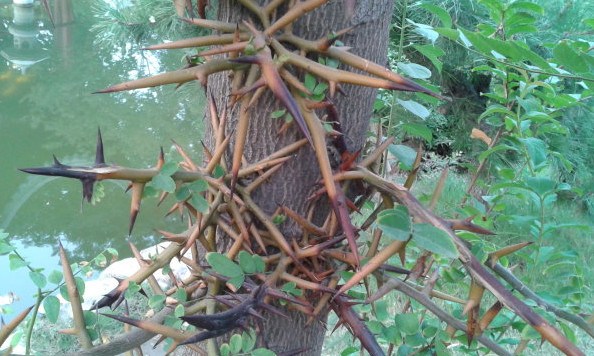
Chinese honey locust thorn harvesting is an economic crop with very high medicinal value, and can fight cancer and reduce swelling. Market demand is particularly large, and wild resources are currently scarce. In order to meet market demand, people cultivate it artificially. Below are the detailed high-yield, high-profit cultivation techniques for Chinese honey locust thorn harvesting.
1 Site selection
Chinese honey locust prefers warmth and light, is not tolerant of shade, and is suitable for areas with a frost-free period of no less than 180 d, sunlight of no less than 2,400 h, an annual average temperature of 10.0-17.5 °C, and an extreme minimum temperature not lower than -20.0 °C. Chinese honey locust is drought-tolerant and water-saving, with a well-developed root system, and is suitable for areas with rainfall above 300 mm. Generally, when the altitude is below 600 m, sunny slopes and semi-sunny slopes should be chosen for planting. In addition, Chinese honey locust has no strict requirements for soil, as long as drainage is good; it prefers fertile, deep soil layers and can also grow on lightly saline-alkaline land.
2 Key points of afforestation techniques
2.1 Afforestation density
2.1.1 Conventional close planting. The plant-row spacing is 1.50 m x 2.00 m. This model is currently adopted in most places. In the first 3-5 a, yield increases slowly, but peanuts and legumes can be intercropped.
2.1.2 Planned close planting. The plant-row spacing is 0.75 m x 2.00 m, and the planting density is 444 plants/667 sq m. The advantages of this method are as follows: First, yield increases quickly, and early economic benefits are good; in the second year, the output value is above 3,000 yuan/667 sq m. Second, in the fourth or fifth year, the Chinese honey locust trees generally reach a diameter at breast height of 5.0 cm. As landscaping nursery stock, each plant is worth about 100 yuan, so 50% of the plants can be removed every other plant and sold as landscaping nursery stock. The output value of landscaping nursery stock is above 20,000 yuan/667 sq m, and they can also be transplanted to establish a plantation. Third, during transplanting, plants with lower thorn yield can be eliminated, retaining more superior plants, which helps the retained plants further increase yield. Fourth, the row spacing is relatively wide, making fertilization, spraying, and pruning convenient.
2.1.3 Super-dense Chinese honey locust plantation model. The plant-row spacing of a super-dense Chinese honey locust plantation is (0.50-0.80) m x 1.00 m, and the planting density is 840-1,334 plants/667 sq m. A clump-shaped tree form is mostly used, retaining about 10.0 cm for stumping every year, and using the new branches of the year to harvest Chinese honey locust thorns.
2.1.4 Field ridge planting model. Planted on the outer edge ridges of terraced fields in hills and mountainous areas, with a plant spacing of 2.00-3.00 m.
2.1.5 Orchard shelterbelt model. Planted in double rows around the outer perimeter of the orchard at a plant-row spacing of (1.00-1.50) m x (2.50-3.00) m, balancing protection and thorn production. This model mostly uses a clump-shaped tree form.
2.1.6 Chinese honey locust and medicinal herb intercropping model. It can be intercropped with Chinese medicinal herbs such as honeysuckle and peony.
2.2 Land preparation methods
For cultivation plantations, trenching land preparation can be used, that is, digging planting trenches along contour lines. For "four-side" and scattered planting, large-hole land preparation can be used, that is, the length, width, and depth of the planting trench are all 1.00 m, dug in winter and backfilled in early spring. General afforestation uses small-hole land preparation. After planting, water, seal the soil, tread firm, and cover with film to ensure survival.
2.3 Planting
2.3.1 Seedling selection. Grade I and Grade II seedlings are required for out-planting and afforestation. Generally, Grade I seedlings have a ground diameter above 0.8 cm, and Grade II seedlings have a ground diameter above 0.6 cm. Generally, the seedling stem is retained at about 30.0 cm for truncated-stem planting, which can significantly improve the survival rate. It is best to plant by grade. Seedlings must maintain an intact root system, be free of pests and diseases, free of mechanical damage, and not dehydrated.
2.3.2 Planting season. From late October each year (after leaf fall) to before bud break in March of the following year. Planting on cloudy days is preferable, but severe winter planting should be avoided. Planting from late October to November, because soil moisture is relatively sufficient and the root system recovers early, is conducive to survival and improved growth.
2.3.3 Applying base fertilizer. Apply 10.00-20.00 kg of fully decomposed barnyard manure and 0.25 kg of calcium magnesium phosphate fertilizer into each hole, then backfill with topsoil.
2.3.4 Planting method. Before planting, properly prune the seedling root system. Soak the seedling root system in clean water or rooting powder water for more than 12 h to promote full water absorption by the seedlings. When planting, hold the seedling upright, bury soil to the root collar, gently lift the seedling by hand to spread the root system, then tread as firm as possible. After planting, water thoroughly to settle the roots, cover with loose soil, and then preferably cover with funnel-shaped plastic film.
2.4 Tending management
2.4.1 Young plantation tending. Within 3 a after afforestation, young plantations should retain a 1 sq m tree plate. Young plantation tending mainly consists of weed control and soil mounding. Weed control is carried out in June-July each year, and cultivation and tending in October. Cultivation and tending should not be dug too deep to avoid damaging the young tree root system.
2.4.2 Fertilization. Twice a year, the first in mid-March and the second in early to mid-June. Organic fertilizer is the main type, and nitrogen-phosphorus-potassium compound fertilizer can also be applied. The annual fertilization amount converted to compound fertilizer is 0.25-0.50 kg/plant. Within 1-3 a after afforestation, apply in furrows 30.0 cm away from the young trees; after 3 a, apply in furrows along the projection line of the young tree canopy.
2.4.3 Intercropping and relay cropping. On young plantation land with gentle slopes or sloping cultivated land used for afforestation, nitrogen-fixing economic crops or green manure such as peanuts and legumes can be intercropped. A distance of 100.0 cm should be maintained between the crops and the Chinese honey locust.
2.4.4 Water management. During the rainy season, pay attention to timely drainage and strictly prevent waterlogging. If conditions permit, appropriate irrigation can be carried out during drought.
2.5 Pruning and shaping
2.5.1 Tree form. First, the short-trunk form. This is a suitable tree form for thorn-harvesting plantations. Ultimately, the trunk height is retained at about 100.0 cm, with no main branches retained. All branches are harvested and sold every year, and they can recover in one growing season. After 5 a, each plant can yield 70-200 thorn-bearing branches per year, 1.50-3.60 kg. This tree form makes thorn harvesting convenient, but the disadvantage is that transplanted trees cannot be sold as landscaping trees.
Second, the tall-trunk form. It is suitable for thorn-harvesting plantations that also aim to cultivate large landscaping seedlings. Ultimately, the trunk height is retained at 200.0-300.0 cm. The trunk is truncated every year, with no main branches retained. In autumn and winter, all branches sprouting from the trunk are harvested and sold. They can recover in one growing season. After 5 a, each plant can yield 70-200 thorn-bearing branches per year, 1.50-3.60 kg. The trunk diameter at breast height of a five-year-old tree is 5.0-12.0 cm, and it can be used as high-grade landscaping nursery stock for urban landscaping. Because the trunk is tall, tools such as high-branch shears and step ladders can be used for the upper branches when harvesting thorns. Although thorn harvesting is inconvenient, the transplanted trees can be used as urban landscaping nursery stock, with relatively high economic benefits.
2.5.2 Pruning methods. There are 2 types: thinning and heading back. Thinning, also called branch thinning, thinning out, or removal, is cutting a branch off completely from the base; heading back is cutting off part of a branch.
2.5.3 Pruning key points. In the growing seasons of years 1-3, do not prune, allowing them to grow freely to help nourish the roots. In the leaf-fall season (November to March of the following year), while harvesting thorns, select one upright, thick branch and head it back from a plump bud in the middle as the trunk, and thin out all other current-year branches on site or transport them back to the processing site to cut the thorns for sale. This continues every year thereafter. After winter pruning is completed, the Chinese honey locust trees look just like utility poles in the field. When the trunk reaches the planned retained trunk height, the top is cut back during winter pruning, and thereafter all annual branches are thinned out every year, and the trunk is no longer extended.
2.5.4 Advantages of pruning. First, the tree form is uniform, the pruning technique is simple, there is no need to hire skilled workers, which can greatly reduce pruning labor costs, and mechanical pruning can even be attempted. Second, because annual branches are basically not retained, the amount of thorns directly cut from growing trees is reduced. Third, with no main branches or side branches retained, branches sprout directly from the trunk every year, and a single tree occupies a small forest land area, which helps increase the density of Chinese honey locust trees and the thorn yield per unit area. Fourth, the pruning intensity is high, which helps stimulate the tree's self-defense ability and stimulates more thorn growth and larger thorns. Fifth, with no main branches or side branches retained, branches grow directly from the trunk every year; because the transport distance of nutrients and water is short, branches tend to be vigorous and thorns large.
2.6 Pest and disease control
Adhere to the principle of "prevention first, comprehensive control," apply silvicultural, biological, physical, and chemical control measures according to local conditions, and strengthen pest and disease forecasting. In addition, choose pesticides with high efficiency, low toxicity, low residue, and low lethality to natural enemies, and advocate the use of biological pesticides. Note that different agents should be used reasonably and alternately to prevent pests and diseases from developing resistance; pay attention to spraying quality and control the number of sprayings; spraying pesticides is prohibited 30 d before harvest.
2.6.1 Diseases. There are very few diseases harming Chinese honey locust. Pay attention to observation, identify problems, and use the right medicine.
2.6.2 Insect pests. The main insect pests harming Chinese honey locust include aphids, swallowtail butterflies, scale insects, and longhorn beetles. For aphids, leaves can be washed with water or soapy water, or the damaged parts can be removed; eliminate overwintering pest sources, clear nearby weeds, and carry out thorough field cleaning; during the aphid damage period, spray 5% imidacloprid emulsifiable concentrate at 2,000-3,000 times dilution for control. For the citrus swallowtail, manual capture can be used, or 30 billion/g Bacillus thuringiensis powder can be sprayed at 1,000-2,000 times dilution for control. For scale insects, pay attention to improving ventilation and light conditions; the scale insect's own spread range is very small, so doing quarantine work well and not using infested materials is the most effective control measure; if infestation has already occurred, scale insects can be scraped off with a bamboo stick, or the damaged parts can be cut off, or 25% buprofezin can be sprayed at 1,000-1,200 times dilution. For longhorn beetles, adults can be captured manually; tree trunks can be whitewashed; small cotton balls dipped in fumigants such as dichlorvos can be used to plug insect holes and poison the larvae. For the Chinese honey locust seed weevil, seeds can be soaked in 90 °C hot water for 20-30 s, or fumigated with aluminum phosphide to kill the larvae inside the seeds.
The above are the cultivation techniques for Chinese honey locust thorn-harvesting plantations. In the editor's view, it not only has high medicinal value, but also has large market demand at present, and its planting prospects are very broad. If you want to develop a planting business, you can choose to grow Chinese honey locust thorns.