How to grow Corydalis yanhusuo? Pollution-free cultivation techniques for Chinese medicinal herbs
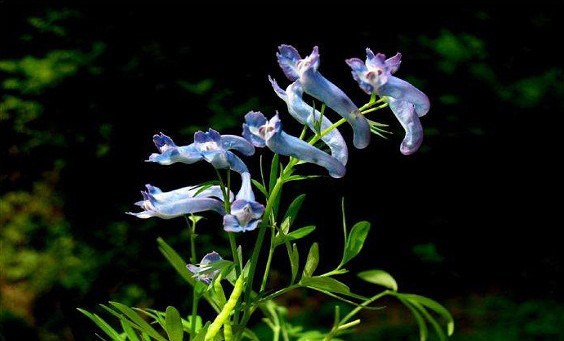
How do you grow the Chinese medicinal herb Corydalis yanhusuo? Corydalis yanhusuo, also known as Yuanhu or Xuanhu, is a plant in the genus Corydalis of the Papaveraceae family. Corydalis yanhusuo is a commonly used Chinese medicinal herb for regulating qi and relieving pain, with its tubers used medicinally, and it has functions such as promoting blood circulation and dispersing stasis. It is used to treat pain in the chest and abdomen and soreness and pain in the lower back, traumatic injuries, irregular menstruation, postpartum abdominal pain and other conditions. Let's take a look below at the pollution-free cultivation techniques for Corydalis yanhusuo.
1. Growth habits
Corydalis yanhusuo is a perennial herb that prefers a warm climate and a sunny, moist environment. It is intolerant of drought. The planting plot is best a loose, fertile, well-drained neutral or slightly acidic sandy loam. Heavy clay soil and low-lying, waterlogged land are not suitable for planting.
2. Land selection and preparation
It is best to choose a sunny, wind-sheltered site with loose soil rich in humus and sandy loam. After selecting the land, plow the soil deeply to 30 cm. Along with land preparation, apply 2000 kg of decomposed stable manure and 200 kg of cake fertilizer per mu (667 sq m, the same below), turning them into the soil as base fertilizer. After leveling and harrowing fine, make raised beds 1.3 m wide with furrows 40 cm wide between beds, and open drainage ditches around the perimeter.
3. Planting
When harvesting Corydalis yanhusuo, select tubers of medium size, uniform, oblate in shape, about 1.5 cm in transverse diameter, pale yellow in color, and free of pests, diseases and scars as seed tubers, and plant them at the proper time in late September. When planting, on the prepared bed surface, open furrows with a row spacing of 20 cm, a sowing width of 10 cm and a furrow depth of 8-10 cm, and place the seed tubers with the buds pointing upward at a plant spacing of 7 cm, arranged in two staggered rows in the furrow. After planting, cover with fertile fine soil until the furrow is full.
4. Field management
Corydalis yanhusuo is a shallow-rooted crop, so intertillage cultivation is not advisable. When the seedlings are 3 cm tall, apply 1500 kg of decomposed human and animal manure water per mu as a top dressing, and weed promptly. In late January, spread a layer of cake fertilizer on the bed surface at 50 kg per mu, then cover with a layer of decomposed stable manure at 2000 kg per mu, and cover with fine soil after fertilizing. When rain occurs, dredge the ditches promptly to drain water, and irrigate during drought. Except for land kept for seed production, when flower buds appear on Corydalis yanhusuo, remove them promptly so that nutrients are concentrated in root growth and yield is increased.
5. Pest and disease control
5.1 Downy mildew
The leaves are affected first, with brown irregular lesions appearing in the early stage. When humidity is high, a white mold layer forms on the underside of the leaves. The affected stems and leaves quickly turn brown and die, and the plant dies. Control methods: first, implement rotation between paddy fields and dry land; second, plant at a reasonable density to improve ventilation and light conditions; third, in the early stage of the disease, spray with a 600-800 times dilution of 25% metalaxyl wettable powder for control, once every 10 days, for 3 consecutive sprays.
5.2 Sclerotinia rot
Yellow-brown or dark brown spindle-shaped lesions first appear on the stem base near the soil surface. When humidity is high, the stem base softens and rots, and the plant lodges. When leaves are affected, water-soaked elliptical lesions appear initially, later turning blue-brown. When the disease is severe, plants die in patches, and the soil surface becomes covered with white cottony mycelium and black sclerotia of varying sizes resembling mouse droppings. Control methods: first, implement rotation between paddy fields and dry land; second, drain field water promptly after rain to reduce field humidity; third, when diseased plants are found, remove them promptly and spread lime powder over the affected area to control spread; fourth, in the early stage of the disease, spray with a 500 times dilution of 65% zineb wettable powder for control.
5.3 Rust
In affected leaves, round or irregular green lesions appear initially, slightly sunken. On the underside of the leaves, the lesions are slightly raised and bear rust-yellow raised gelatinous substances that, after rupturing, release a large amount of rust-yellow powder. Control methods: first, reduce field humidity; second, in the early stage of the disease, promptly spray with a 300 times dilution of 97% nabam for control.
6. Harvesting and processing
Harvest after the aboveground stems and leaves wither. When digging for harvest, first plow shallowly, harvesting while turning the soil, and after finishing, plow deeply once more, pick out all tubers, transport them indoors, spread them out and air-dry. During processing, wash off the soil, grade by size and put into baskets, place in running water, rub the outer skin clean by hand, wash and drain. Then put the tubers into boiling water and boil until the cross-section of the tubers is yellow with no white core, then scoop them out, spread them on bamboo mats and sun-dry. After sun-drying for 4-5 days, bring them indoors to "sweat" so that internal moisture seeps out, then sun-dry again until completely dry, and they become the commercial product. Quality is best when the tubers are large, plump, hard in texture, and yellow in cross-section.