Why can't weak orchid seedlings be fertilized? Read the reasons and you'll understand
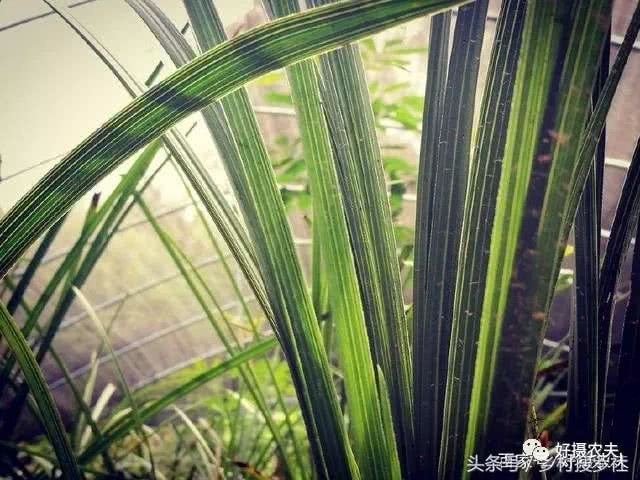
Fellow orchid growers all know that orchids cannot grow without fertilizer. Even for growers like Hao She Nong Fu who don't fertilize their orchids, that's because the potting medium itself carries fertility. If there is no fertilizer at all, the orchid will grow thinner and thinner, and in the end even a broad-leaved orchid will become very narrow and thin.
As the saying goes: watering orchids takes three years of skill. But compared with fertilizing, watering is just the level of a kindergartener entering first grade. There is a great deal of particularity to fertilizing orchids. Starting with the types of fertilizer applied: organic fertilizer, inorganic fertilizer, foliar fertilizer, slow-release fertilizer, and so on. This article will not explain them one by one; it only discusses the points to note when fertilizing orchids.
The most important point in fertilizing orchids is that weak seedlings absolutely must not be fertilized. Some orchid growers, seeing that their orchid seedlings are rather weak, want to fertilize them to make them strong, but the result goes against their wishes, and the orchid seedlings become worse and worse. In fact, it is because they do not understand the relationship between plant roots and fertilizer.
The main components of fertilizer are generally nitrogen, phosphorus and potassium, along with some trace elements. Orchid roots absorb these elements from the soil and transmit them to the plant, while the plant and leaves are like a processing factory, transforming and processing these fertilizers into plant fiber, chlorophyll, and so on. In this process the leaves (orchid seedlings) play a very large role, interacting with sunlight and air to obtain greater processing power.
If the orchid seedling is too weak, its leaf photosynthesis will be very low, so its processing power cannot digest these fertilizers. Fertilizer that cannot be absorbed and used will accumulate in the roots, causing the orchid roots to rot. Once rotted, the orchid roots lose the ability to absorb fertilizer, so the excess fertilizer is trapped in the pot, and the potting soil will deteriorate and worsen. In this way a vicious cycle is formed.
Simply put: the orchid with weak seedlings cannot absorb fertilizer in time, thus causing the accumulation of fertilizer, which then leads to a series of vicious cycles. Therefore, Hao She Nong Fu believes that when fertilizing orchids, one must absolutely avoid seeking quick success and instant benefits; rushing for speed will instead lead to failure.