4 steps for orchid disease prevention and control, just don't get the order reversed
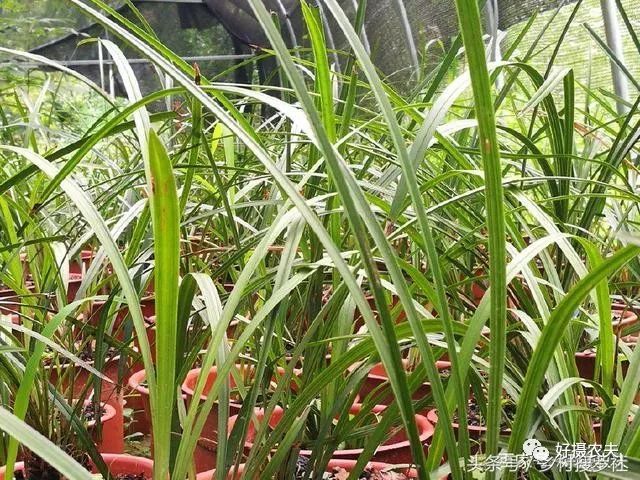
Orchid cultivation often encounters disease outbreaks, especially between May and July each year, when the high temperature and high humidity climate is most likely to breed pathogens harmful to orchids. Many orchid growers often, when they discover signs of disease in their orchids, repot the plants and soak the orchid roots in medicated water, or use a high-concentration medicated solution to drench the roots, but the result they get is often not what they wanted.
Why does this happen? Haoshe Farmer will analyze the causes of orchid diseases with fellow orchid growers, and you may then understand. Like most plants, orchids need water and temperature to grow, and pathogens also need water and temperature to breed. It can be said that orchids and pathogens accompany each other in growth; there is no plant without pathogens, and the key is how to achieve one growing while the other declines, so that pathogen growth is suppressed.
If in spring and autumn orchid diseases are not very obvious, that is because the climate during these periods is suitable for orchids. In these seasons orchids grow vigorously, just like a person with a strong body who usually does not easily catch a cold, so orchid diseases do not break out during this period.
During the plum rain season, the outbreak period of orchid diseases, the temperature and humidity have exceeded what orchids need for growth, so their growth is not as vigorous as in spring and autumn, and pathogens take the opportunity to invade and breed in large numbers. Haoshe Farmer has always emphasized that orchid disease prevention must start before illness occurs, creating a space and environment that pathogens dislike. Dry planting medium, a cool space, and a ventilated environment are all things pathogens dislike. Also, you need sunlight (morning and evening sunlight in summer); the sun is the world's best disinfectant. Doing these things well can prevent orchid disease outbreaks.
Haoshe Farmer divides orchid disease prevention and control into 4 steps:
1. Treat before illness, creating a good environment and space.
2. When a few small disease spots are found, a fungicide can be applied by spot treatment.
3. Medication spraying; during spraying, insect control and foliar fertilizer supplementation can be carried out at the same time to increase the resistance of the orchid plant.
4. This last method is actually the first step many orchid growers take, which is soaking roots in medicated water and drenching roots with medicated water. Whether soaking roots or drenching roots, high-concentration medicated water will come into zero-distance contact with orchid roots. Orchid growth requires a type of fungus, commonly known as orchid probiotics. After soaking in medicated water like this, the presence of orchid probiotics will be greatly reduced; it is equivalent to a chemotherapy process, killing both good cells and malignant cells, and later it will be difficult to restore a strong constitution.
When Haoshe Farmer communicates with netizens, these points are also often mentioned or asked about. Haoshe Farmer always advises them that orchid disease prevention and control must follow the order of these four steps, and not to use the last one as soon as disease spots are found. The result of doing that is that orchids that could have been cured are soaked to death alive.
Netizens, in your experience of growing orchids, have you encountered such cases? You are welcome to share.