What are the control methods for zucchini powdery mildew?
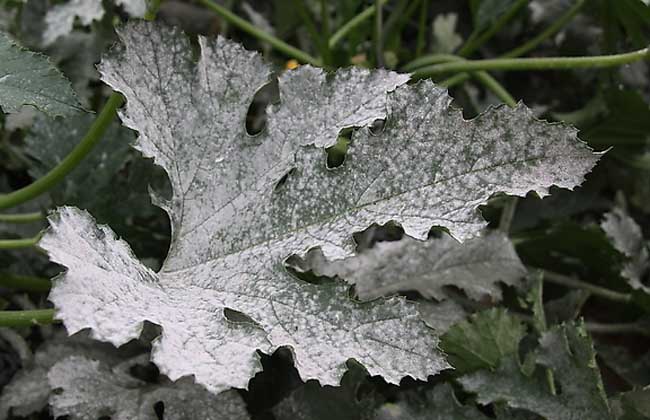
Powdery mildew is a major disease of zucchini and occurs everywhere. It is most common in spring and autumn, with an incidence rate of 30-100%, and it has a clear impact on yield, generally reducing it by about 10% and, in severe cases, by more than 50%. Besides harming zucchini, this disease also harms cucumber, pumpkin, winter melon, luffa, melon and many other cucurbit crops. Let us take a look below at the control methods for zucchini powdery mildew!
Damage symptoms
Zucchini can be infected from the seedling stage to the harvest stage, mainly harming the leaves, followed by the petioles and stems, with the fruit being less affected. In the early stage of leaf disease, small round white powdery spots appear, which then gradually expand into irregular white powdery mildew patches (that is, the pathogen's conidia). The lesions can join together into patches, the affected parts of the leaves gradually turn yellow, and later many yellowish-brown small granular spots (that is, the pathogen's cleistothecia) form on the lesions. In severe cases, the diseased leaves turn brown and die, and the white powdery mildew turns grayish-white.
Occurrence pattern
The pathogen of zucchini powdery mildew overwinters in the soil as cleistothecia with diseased residues, or overwinters while causing damage in protected cultivation areas. In southern vegetable-growing areas, the pathogen overwinters and oversummers on hosts as mycelium or conidia, and spreads through airflow, rainwater and watering. Disease can occur at 10-25°C, and with alternating high temperature and dryness and humidity, the disease develops rapidly. In the late growth period, the plants grow weak and the disease is severe. Overshadowing and lack of fertilizer during the growth period also lead to more severe disease.
Control methods
1. Seedling-stage prevention: Use chlorothalonil, carbendazim or thiophanate-methyl in rotation and spray once every 7-10 days. This prevents many diseases and has a good effect.
2. Ventilation and light penetration: Remove old leaves, yellow leaves and diseased leaves from the lower part of the plants in good time to increase ventilation and light penetration. This can greatly reduce the incidence of powdery mildew and at the same time increase the rate of flowering and fruit setting.
3. Chemical control: In the early stage of disease, evenly spray a formula of tetraconazole + Zhantou + Baifei, or a formula of Xingnong 50% sulfur suspension concentrate at 250 times + Zhantou + seaweed extract. If growth is excessively vigorous, use the formula of Guanxin + Shigao + Zhantou + Baifei for control.