What are the control methods for tomato gray mold?
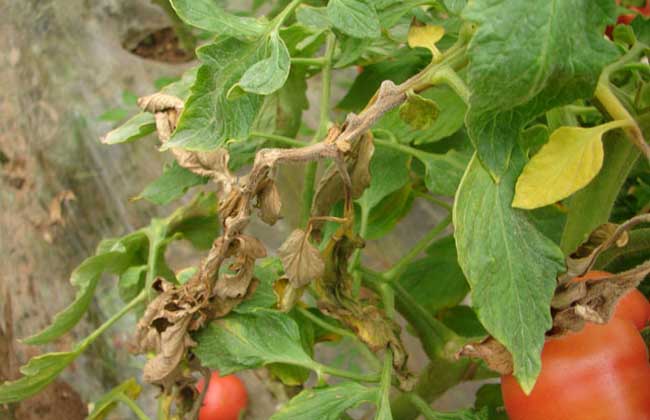
Gray mold is a serious and common disease of tomatoes, and it is also an important disease of greenhouse-cultivated tomatoes. It occurs in all vegetable-growing areas. Besides harming tomatoes, it can also harm more than 20 crops such as eggplant, pepper, cucumber and bottle gourd. In years with low temperatures and much continuous rainy weather, the damage is severe. Let's take a look below at the control methods for tomato gray mold!
Damage symptoms
Tomato gray mold can harm stems, leaves, flowers and fruits, but it mainly harms the fruits, and usually the disease is more severe on green fruits. When the stem is infected, it first shows small water-soaked spots, which later expand into long round or irregular shapes, light brown; when humidity is high, a gray mold layer grows on the surface of the lesions, and in severe cases the stems and leaves above the diseased part wither and die, leading to wilt disease. Leaf disease mostly starts from the leaf tip, extending inward between the lateral veins in a “V” shape; it is initially water-soaked, and after unfolding becomes yellow-brown, with irregular edges and alternating light and dark concentric rings; the boundary between diseased and healthy tissue is obvious, and a small amount of grayish-white mold layer grows on the surface. When the fruit is infected, the remaining stigma or petals are often infected first, then it spreads to the fruit or fruit stalk, causing the fruit skin to become grayish-white and grow a thick gray mold layer, showing a watery rot.
Disease patterns
The pathogen of tomato gray mold is a weak parasite that can live saprophytically on organic matter. Under conditions of insufficient light, when air humidity is above 90%, disease can occur from 4-31°C, but the optimum temperature for development is 20-23°C, with a maximum of 32°C and a minimum of 4°C. It has strict humidity requirements: disease begins when relative air humidity reaches 90%, and when high humidity lasts a long time, the disease is severe. Insufficient light, suitable temperature (around 20°C) and high relative humidity (above 90%) favor the disease. When the host grows weakly, the disease is easily induced. The infection period of the pathogen on tomatoes is the flowering and fruit-setting stage, and the pathogen spores lurk inside the pathogen body for a long time. If the tomato has already become rotten, that is, the infecting spores of gray mold have already invaded the fruit interior from the style or petals, rot is bound to occur, and applying chemicals at this time is already too late.
Control methods
1. Agricultural control: The most important measure for controlling tomato gray mold is to do everything possible to improve ventilation, light transmission and humidity reduction in the greenhouse, but at the same time keep the temperature from being too low. Second, strengthen fertilizer and water management to make the plants grow vigorously and prevent premature aging and wounds caused by various factors. Diseased plants and diseased fruits should be removed and destroyed in time, and after harvest the greenhouse should be thoroughly cleaned and the soil turned and sun-dried, which can reduce the source of the pathogen.
2. Chemical control: 50% procymidone wettable powder 1500-2000 times liquid, or 40% sulfur-carbendazim suspension 400 times liquid, or 50% iprodione wettable powder 1000-1500 times liquid, or 70% thiophanate-methyl 800-1000 times liquid, etc., sprayed once every 7-10 days, for 3-4 consecutive sprays. Note that the pathogen easily develops resistance, so the same agent must not be used within one growing period; instead, the above agents should be used in rotation.