How to prevent and treat ginger leaf blight? A detailed guide to practical methods
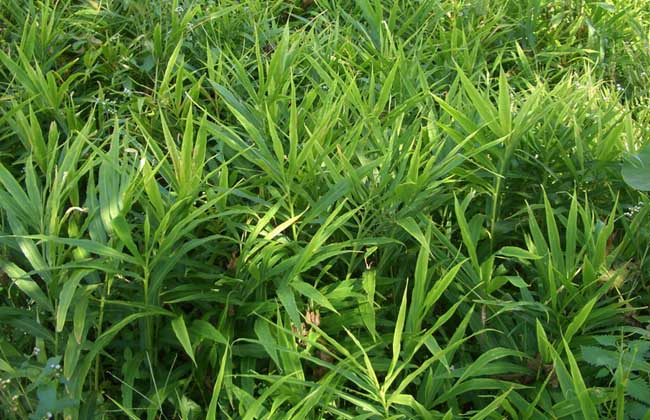
Ginger leaf blight is a fungal disease that occurs sporadically across the country and does not spread widely; except in a few areas, it is generally mild, but in regions throughout the Yangtze River basin it causes severe damage when it strikes in July and August. High temperature and high humidity make it easy for the disease to develop, and it is severe in continuous cropping fields, where plants are growing too densely, where ventilation is poor, where nitrogen fertilizer is excessive, and where plants grow excessively tall. Let us take a look below at the prevention and treatment methods for ginger leaf blight!
Damage characteristics
In the early stage of ginger leaf blight, the leaves appear dark green, gradually become thicker and glossy, and yellow spots appear between the veins and gradually expand until the whole leaf turns yellow and withers, with the surface of the lesions showing small black granular dots. It mainly damages the leaves; yellow-brown blight spots first appear on diseased leaves and gradually spread across the entire leaf surface, and the surface of the lesions bears small black granular dots.
Occurrence pattern
The pathogen of ginger leaf blight is Mycosphaerella zingiberis; the fungus overwinters on diseased plant residues, and in spring produces ascospores that spread and proliferate via wind and rain, insects, or farming operations. High temperature and high humidity make it easy for the disease to develop, and it is severe in continuous cropping fields, where plants are growing too densely, where ventilation is poor, where nitrogen fertilizer is excessive, and where plants grow excessively tall.
Prevention and treatment methods
1. Pay attention to a reasonable fertilizer ratio; when applying nitrogen fertilizer, also apply phosphorus and potassium fertilizer, especially potassium fertilizer.
2. For chemical control, use 70% thiophanate-methyl at 1000 times dilution, or 75% chlorothalonil at 1000 times dilution, spraying the whole plant and leaf surfaces at the early stage of the disease, applying the spray once every 7 to 10 days for 3 consecutive sprays.
3. Avoid continuous cropping in production, and where feasible carry out crop rotation of more than 2 to 3 years.
4. It is best not to plant ginger in low-lying land; ginger fields should be chosen on plots with relatively high terrain and convenient drainage and irrigation.