Detailed Explanation of Key Points on Green-stem Loose-curd Cauliflower Cultivation Techniques
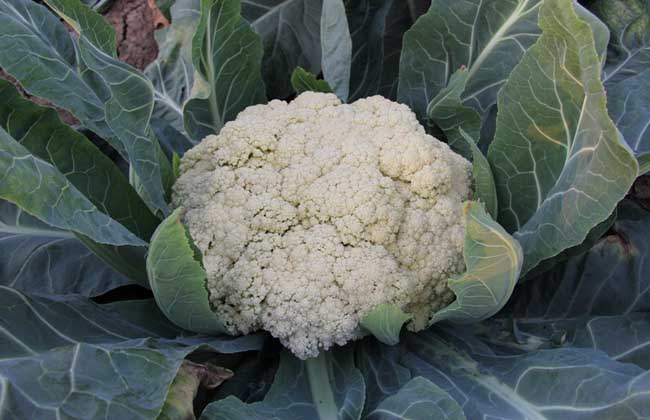
Loose-curd cauliflower is a type of cauliflower in the Brassicaceae family, Brassica genus, also known as loose cauliflower, green-stem loose-curd cauliflower, organic cauliflower, white-faced loose cauliflower, organic cauliflower, etc. It gets its name because its curd branches are relatively long, the curd layer is relatively thin, and the curd is not compact when fully swollen, appearing loose compared to ordinary cauliflower. Let us now take a look at green-stem loose-curd cauliflower cultivation techniques!
Cultivation Characteristics
Loose-curd cauliflower has two notable characteristics. First, it has good boiling tolerance and delicious flavor. The vitamin C and soluble sugar content of loose-curd cauliflower is significantly higher than that of tight-curd cauliflower, making it very popular with consumers. Second, early and mid-maturing varieties have strong heat tolerance and broader adaptability. In suburban areas, "spring delayed" and "autumn advanced" cultivation can be used, and high-mountain cultivation can bring produce to market in summer and autumn, broadening the market supply period for cauliflower.
Field Plot Selection
1. Loose-curd cauliflower field plots should be selected with loose, fertile soil, good soil stability, and strong water retention, water supply, and oxygen supply capacity. The field should have complete water conservancy facilities, capable of both drainage and irrigation. For high-mountain cultivation, low-lying land and sticky, waterlogged land should not be selected for planting cauliflower, otherwise the plants will grow poorly and be prone to black root disease. For early spring planting in plain areas, since temperatures are relatively low and rainfall is relatively scarce, such land can be appropriately selected, but wide-furrow high-beds should be made and plastic film mulching should be used to prevent moisture and dampness.
2. For continuous cropping land, pest and disease control should be strengthened and trace fertilizers supplemented. Sloping dry land such as sweet potato fields has poor water retention capacity and is prone to drought. For high-mountain cultivation, it can still be used in the first half of the year, but for planting in the second half of the year, if there are no irrigation conditions, it generally cannot be selected in normal years. For high-mountain cultivation, an altitude between 600 and 1,200 m should be chosen. For planting high-mountain cauliflower in zones below 800 m altitude, the high-temperature season should be avoided, or more heat-tolerant varieties should be selected, such as "Qingnong 70-day Green-stem Loose-curd Cauliflower," etc.
Cultivation Season
1. Cultivation in low-mountain areas below 350 m altitude: For spring planting, sow from late December to early January, raise seedlings with insulation in greenhouses with small arched sheds inside, and transplant from late February to early March with plastic film mulching plus small arched sheds. If sowing from late February to early March, raise seedlings with insulation in greenhouses or small arched sheds. Open-field transplanting can be done from late March to early April. Harvest and market can be done from April or mid-May to early June. For autumn planting, sow from mid-June to July, raise seedlings under shade, transplant from early July to August, and harvest and market from late August to early November.
2. Cultivation in high-mountain areas at 800-1,200 m altitude: Sow from mid-February to mid-March, with a seedling age of about 30 days, transplant from mid-March to mid-April, and harvest from mid-May to June. Qingnong 65-day: sow from late March to July, with a seedling age of 20-35 days, transplant from late April to mid-August, and harvest from late May to early November. High-mountain seedling raising all uses protected facilities (mostly small arched sheds). In spring, this provides insulation and cold protection, and in summer and autumn, it achieves rain protection and moisture retention.
Topdressing Fertilizer
1. During the seedling stage of loose-curd cauliflower, nitrogen fertilizer is mainly used, applied in thin doses and frequently to promote rosette leaf development. Before and after budding, phosphorus and potassium fertilizers are mainly used, with heavy application of bud fertilizer, generally applied by mixing fertilizer with water. This can prolong the bud-swelling period and promote curd development and expansion. Under high-temperature and drought conditions, insufficient soil moisture commonly hinders nutrient uptake by plants, so fertilization must be organically combined with water supply. Applying fertilizer mixed with water can improve fertilizer use efficiency and enhance quick availability.
2. During the growth process of loose-curd cauliflower, medium and trace fertilizers such as boron, molybdenum, magnesium, and sulfur should also be added to correct nutrient deficiencies in the plants. Among these, boron has a very significant effect on curd yield and quality and must be applied as a foliar topdressing 2-3 times, especially indispensable during the curd swelling period. During mid-to-late stage topdressing, the use of ammonium bicarbonate or fertilizers containing ammonium bicarbonate must be avoided to prevent hairy curds.
3. Loose-curd cauliflower fertilization is mainly based on decomposed manure and urine water, combined with quick-acting chemical fertilizers for balanced fertilization. The amount and frequency of fertilization should be determined according to plant growth and target yield. Generally, topdressing is applied once each after transplanting and establishment, at the early stage of rosette leaf formation, at the late stage of rosette leaf formation, and at budding, for a total of 3-4 times. At the same time, medium and trace element fertilizers such as magnesium, boron, and molybdenum should be applied. Within 20 days before product harvest, no chemical fertilizer may be applied.
Hilling Soil and Banking Roots
1. The root system of loose-curd cauliflower originates from the main stem and is layered. During growth, deep roots continuously age, while new roots continuously form on the stem near the soil surface. The overall distribution is relatively shallow, with fibrous roots mainly distributed near the main stem. Observations show that in cool seasons the root system is distributed deeper, while in warm and hot seasons it is very shallow, which may be related to the tropism of root growth toward soil temperature. On the other hand, during farming operations, most base fertilizer and topdressing are applied relatively shallowly, which also promotes root growth toward the soil surface. Therefore, cauliflower production generally requires hilling soil. Through hilling, adventitious roots are promoted, the soil environment for root growth is stabilized, and plant growth and lodging resistance are enhanced.
2. When high-mountain cauliflower suffers from waterlogged roots during excessive rain and from high-temperature drought, the effect of hilling soil is especially obvious, enhancing stress resistance and significantly increasing yield. During the growth process, hilling should generally be combined with weeding, loosening soil, and fertilization, 1-3 times. For cauliflower that is not hilled, at the very least deep planting should be used. In production, cauliflower that is neither hilled nor deeply planted has poor growth and yield. The method of hilling is to place soil from the furrow and soil previously piled in the middle of the bed onto the planting holes and between plants, ultimately forming an evenly rounded, turtle-back-shaped bed surface. The practice of forming two small beds on one bed after hilling is incorrect; in the field, this situation often occurs when hilling is done on overly shallow planting holes.
Water Management
1. Loose-curd cauliflower has many and thin leaves, reaching 17-23 leaves in the mid-to-late growth stage, 6-8 more than ordinary cauliflower varieties, with high transpiration. Wilting due to water loss often occurs in the field, especially after continuous overcast and rain when it suddenly clears, after heavy rain when it clears, or under high-temperature, drought, and strong light conditions, when wilting is particularly obvious. Therefore, the soil in loose-curd cauliflower fields should be neither too wet, which causes waterlogged roots, nor too dry, which causes water deficiency.
2. In general production, methods such as clearing furrows for drainage, timely watering, hilling soil and banking roots, cutting grass for mulching, and plastic film mulching are used to promptly adjust soil moisture conditions, strive for balanced water supply, and keep the soil moist and loose. During drought, flush irrigation and watering should be used; flood irrigation is prohibited. After rain, drainage should be timely; standing water in the field is prohibited. For summer transplanting before establishment, if drought occurs, water once every evening, and shading is best under high temperature and strong light.
Tying Leaves to Protect the Curd
1. Whether in spring or midsummer, loose-curd cauliflower curds turn yellow when exposed to sunlight, and under strong light in summer and autumn the discoloration is even deeper. This change not only affects commercial appearance but also affects the tender quality of the curd. Therefore, curd care is an important part of high-mountain loose-curd cauliflower production. Unlike curd care for ordinary cauliflower, loose-curd cauliflower mostly uses leaf tying to protect the curd rather than leaf folding to cover the curd, especially in production processes focused on sparse planting to cultivate large curds. Because its curd is fluffy and large, the inner leaves have poor overlapping and enclosing ability, and the curd develops while leaves continue to emerge, folded leaves used to cover the curd are often displaced by curd expansion and inner leaf growth, resulting in poor shading.
2. The specific method of tying leaves to protect the curd in loose-curd cauliflower is: when the curd grows to the size of a fist, pull 4-5 large alternate leaves near the curd toward each other and overlap them without breaking them, then use 1-2 small bamboo skewers, small grass stalks, or small twigs 2-3 mm thick and 7-10 cm long as fixing connectors, piercing and threading the overlapping leaf tips and securing them at the midrib. The threaded and fixed leaves are tied up in a lantern shape, covering the entire curd, so that the curd is protected from direct sunlight during subsequent growth while leaving enough space for development and expansion.
3. The stricter the shading and curd protection for loose-curd cauliflower, the better. Tight leaf tying to protect the curd can completely prevent sunlight from reaching the curd. Even in midsummer conditions, it can still keep the entire curd white and tender. Compared with the usual leaf-folding method of covering the curd, leaf tying to protect the curd is completed in one operation, eliminating the trouble of repeatedly folding leaves to cover the curd, saving labor and time, with better results.
Pest and Disease Control
The main insect pests of loose-curd cauliflower include aphids, diamondback moths, leafminers, green caterpillars, imported cabbageworms, tobacco cutworms, beet armyworms, mole crickets, striped flea beetles, tobacco whiteflies, etc. Control should implement the plant protection policy of "prevention first, integrated control," giving priority to agricultural control, physical control, and biological control, scientifically and coordinately using chemical control, strictly controlling the number of pesticide applications, observing safety intervals, keeping pests and diseases below the allowable economic threshold, and keeping pesticide residues within the green food standards stipulated by the state, so as to achieve the goals of safety, high quality, and harmlessness.