How to prevent and control eggplant Fusarium wilt? These methods you need to master
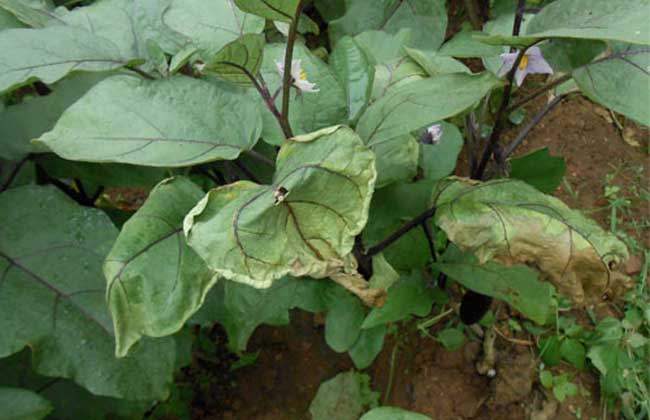
Eggplant Fusarium wilt is one of the major diseases of eggplant. It not only harms Solanaceae vegetables, but also harms many other vegetables such as Cucurbitaceae and Brassicaceae. The leaves of diseased plants gradually turn yellow and wilt from the bottom upward. The symptoms mostly appear on the first and second layers of branches. Sometimes only half of the same leaf turns yellow, while the other half remains healthy as usual. Let us take a look at the prevention and control methods for eggplant Fusarium wilt below!
Symptoms
Eggplant Verticillium wilt occurs less at the seedling stage, and generally begins to occur shortly after eggplant is planted. If planted under low temperature, the disease occurs earlier and more severely, but it mostly occurs after fruit setting. Diseased plants mostly develop from the bottom upward or from one side to the whole plant. The leaves first turn yellow at the leaf margins and between the veins, then develop to half a leaf or the entire leaf turning yellow. In the early stage, diseased leaves appear wilted on sunny days with high temperature, and can still recover in the morning and evening. In the later stage, diseased leaves change from yellow to brown, eventually wilt, droop, and fall off. In severe cases, the leaves of the whole plant turn brown, wilt, and droop until they are completely shed, leaving only the stem. When splitting open diseased roots, stem branches, and leaf stalks, the vascular bundles can be seen turning brown, but there is no milky cloudy liquid exuding. When longitudinally cutting mature fruits of severely diseased plants, the vascular bundles can also be seen turning blackish brown.
Disease conditions
The pathogen prefers warm and humid environments. The most suitable conditions for disease occurrence are a soil temperature of 24-28°C and a soil moisture content of 20-30%. In Zhejiang and the middle and lower reaches of the Yangtze River, the main peak periods for eggplant Fusarium wilt are from May to July and from September to October. The susceptible growth period of eggplant is the flowering and fruit-setting stage. Fields with many years of continuous cropping, poor drainage, water accumulation after rain, acidic soil, severe damage from underground pests, and excessive application of nitrogen fertilizer in cultivation are more severely affected. In years with more rain in spring and summer, the disease is more severe. In years with more rain in autumn, autumn-cultivated eggplant is more severely affected.
Prevention and control methods
1. Disinfect seeds and seedbeds. Before sowing, soak seeds in warm water at 55°C for 15 minutes, and disinfect the seedbed soil. Actively control underground pests and avoid wounds on the root system.
2. Implement a rotation of more than 3 years with non-Solanaceae vegetables. Use red eggplant, Torubamu, etc. as rootstocks for grafted seedlings. Plant at the right time and carefully, control watering appropriately, and strengthen intertillage to promote healing of root wounds.
3. In the early stage of the disease, use 50% carbendazim wettable powder at 500 times dilution, or 50% benomyl wettable powder at 1000 times dilution, or 20% tolclofos-methyl emulsifiable concentrate at 1000 times dilution, or 5% juntoxin aqueous solution at 400 times dilution, or 15% hymexazol aqueous solution at 1000 times dilution for root irrigation, 200 ml per plant.