What are the control methods for powdery mildew in pumpkins?
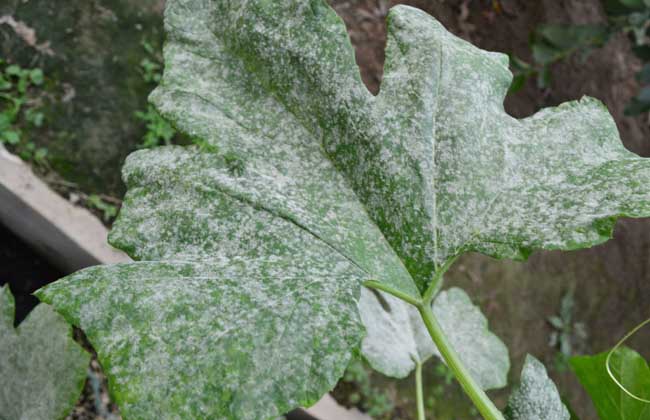
Powdery mildew in pumpkins is the most common and serious disease affecting pumpkins, and pumpkins are also the most severely affected among the cucurbits when it comes to powdery mildew. It mainly damages the leaves. The surface of affected leaves is mostly covered with a powdery white substance, which significantly blocks photosynthesis. In severe cases, the leaves turn yellow and even scorch, affecting fruit set in pumpkins. Let's take a look at the control methods for powdery mildew in pumpkins.
Damage characteristics
Plants affected by pumpkin powdery mildew suffer severe damage in the late growth stage. It mainly damages leaves, petioles or stems, with less damage to fruits. Initially, small white mold spots appear on the leaves or tender stems, then expand into mildew patches 1-2 cm in size. When conditions are suitable, the mildew patches expand rapidly and merge together, covering the entire leaf surface with a powdery white substance, causing the leaves to turn yellow, wither or curl but not fall off. In late autumn, the mildew patches turn gray, and small black granules appear on them, which are the cleistothecia of the pathogen.
Disease conditions
Pumpkin powdery mildew peaks when high temperature and high humidity alternate with high temperature and dryness. It is also prone to occur or more severe in fields where large amounts of nitrogen fertilizer such as urea have been applied, where planting is too dense, and where the field is damp. After the production season ends, the pathogen overwinters on old plants and diseased plant debris. A comprehensive survey of resistance among varieties is still lacking. Currently it is only known that the Fenghuang pumpkin bred in Taiwan, China has strong resistance, and the Tanzi pumpkin from Shashi, Hubei and Jin Pumpkin No. 3 from Taigu, Shanxi are also relatively resistant to powdery mildew.
Control methods
1. Select good varieties: The Japanese Yixiang pumpkin, Jinli pumpkin and Juhong pumpkin, which are currently widely grown, have some disease resistance, but purification and rejuvenation work should be done well, and disease-free seedlings should be selected.
2. Seed disinfection: Before sowing, first sun-dry the seeds for 1-2 days to kill surface bacteria and improve germination vigor. Soak the seeds in warm water at 50-55°C with stirring for 30 minutes, then when the temperature drops to 30°C continue soaking for 8-10 hours, then place them in a 1% potassium permanganate solution for disinfection for 20-30 minutes. After rinsing clean, germinate them at 28-30°C for 48-72 hours, and sow when the radicle emerges.
3. Strengthen management: It is best to practice a 2-3 year crop rotation with gramineous crops. Apply 5000-7000 kg of decomposed farmyard manure, 20 kg of ternary compound fertilizer, 15 kg of potassium chloride and 5 kg of urea per mu. Generally no topdressing is applied during the vine extension stage. During the fruit swelling stage, apply 20 kg of potassium sulfate compound fertilizer per mu as topdressing, and keep the soil moist, clearing ditches and draining promptly after rain. Remove diseased, old and yellow leaves from the base in a timely manner, and bury them deeply or burn them in a centralized way. Strengthen field ventilation and light penetration to enhance plant stress resistance.
4. Spray protective film: Before the onset of pumpkin powdery mildew or in the early stage of the disease, spray 99.1% diethion at 300-500 times dilution on the leaves to form a protective film. Spray once every 5-7 days, for 2-3 consecutive sprays.
5. Chemical control: Apply pesticides at the appropriate time from late April to July. Before the disease occurs, 53.8% Keshade 2000-type at 1000 times dilution can be used. In the early stage of the disease, 10% difenoconazole at 1500 times dilution, or 40% flusilazole at 8000 times dilution can be used, and baking soda at 600 times dilution can also be used for control. Start spraying when 1-2 lesions appear on individual leaves, spray once every 3-4 days, for 4-6 consecutive sprays. Baking soda can both prevent disease and promote growth, and increase pumpkin yield by 10-20%. When spraying, try to use a small-aperture nozzle to reduce leaf surface humidity.