Detailed Explanation of Baby Bok Choy Cultivation Techniques and Management Points
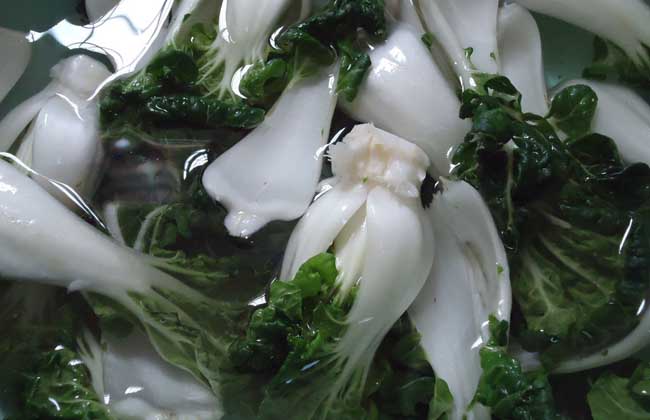
Baby bok choy is a type of non-heading Chinese cabbage (common bok choy, baby bok choy, green bok choy, rapeseed) with a medium-short, plump plant type and wide, thick leaf stalks. It is a biennial or annual herbaceous plant of the Brassicaceae family, Brassica genus, and is widely cultivated in Guangdong. It has very high nutritional value and possesses effects such as clearing heat and detoxifying, and promoting bowel movements. Let's take a look at the cultivation techniques for baby bok choy!
Growth Habits of Baby Bok Choy
Baby bok choy is native to southern China and prefers a cool climate. It grows best under average temperatures of 18-20°C and sufficient sunlight, and can tolerate short periods of -2 to -3°C. Dark green varieties are not heat-tolerant. Baby bok choy has a shallow root system with weak absorption capacity, requires continuous supply of fertilizer and water during the growing period, and is not tolerant of waterlogging.
Seedling Raising Techniques for Baby Bok Choy
1. Planting time: For open-field cultivation in the Beijing area, baby bok choy can be cultivated from spring to autumn during the frost-free period, mainly for harvesting young plants. When spring temperatures are relatively low, it takes about 40 days to harvest; from summer to autumn, it can be harvested in 22-28 days. In cold seasons, it can be cultivated in protected areas for year-round production to supply the market.
2. Sowing and seedling raising: For harvesting large plants, baby bok choy is raised by seedling transplanting, with a seedling period of 20-25 days, planting spacing of 15×15 cm, and 30 days from transplanting to harvest. Due to the large day-night temperature difference in the Beijing area, which is quite suitable for the growth of baby bok choy, and the short growing period, direct sowing is mainly used, or after direct sowing, overcrowded seedlings are removed and transplanted to another location. Drill sowing is better, with row spacing of 12-15 cm, and plant spacing of 10-15 cm when thinning. The seeding rate is 400-500 grams per mu.
Field Management of Baby Bok Choy
1. Reasonable fertilization: Baby bok choy has a short production cycle, so it is advisable to apply more organic fertilizer as base fertilizer, and appropriately apply chemical fertilizer as top dressing during the growing period, or combine with sprinkler irrigation for foliar fertilizer top dressing. Top dressing should mainly use quick-acting nitrogen fertilizer. The method, timing, and amount of fertilization should be determined based on seedling conditions, soil, weather, and other factors, with the principle of thin fertilizer applied frequently.
2. Cultivation and watering: For directly sown baby bok choy fields, herbicides should be used at sowing to eliminate weeds, and weeding during the seedling stage should be combined with thinning. Watering is generally done together with top dressing. Transplanted seedlings must not lack water within 3-5 days after transplanting. After transplanting in summer and early autumn, watering is needed every morning and evening for 3-4 consecutive days.
3. Pest and disease control: Common diseases of baby bok choy include viral disease, downy mildew, and white spot disease, which can be controlled through comprehensive agricultural measures, such as avoiding continuous cropping or planting adjacent to other cruciferous vegetables, reasonable irrigation and drainage, and increasing phosphorus and potassium fertilizer to improve plant resistance. For chemical control, fungicides such as chlorothalonil can be sprayed. The main pests include cabbage aphids, stem borers, cabbage white butterflies, and striped flea beetles. They should be detected and controlled early, with control methods the same as for general cruciferous vegetables.
4. Timely harvesting: The harvesting of baby bok choy is mainly determined by market demand. The standard for harvesting mature plants is when the leaf rosette shifts from vigorous growth to closed growth, and the heart leaves extend to be level with the outer leaves. At this point, the single plant weight is about 275 grams, with a yield of 1000-1600 kg per mu. The catering industry generally requires small plants, with a single plant weight of 50-100 grams, a growing period of about 20-plus days, and a yield of 600-800 kg per mu.
5. Seed retention and collection: Seed production of baby bok choy should be strictly isolated from other cabbage-type vegetables, and also from other cultivated crops in the Brassica genus with a chromosome base number of X=10. The spatial isolation for foundation seed fields should be at least 2000 m or more, and the isolation distance for commercial seed production fields must not be less than 1000 m. Commercial seed production is mostly carried out in northern agricultural areas, using the small-plant seed production method to produce seeds.