Detailed Explanation of Purslane Planting Techniques and Field Management Key Points
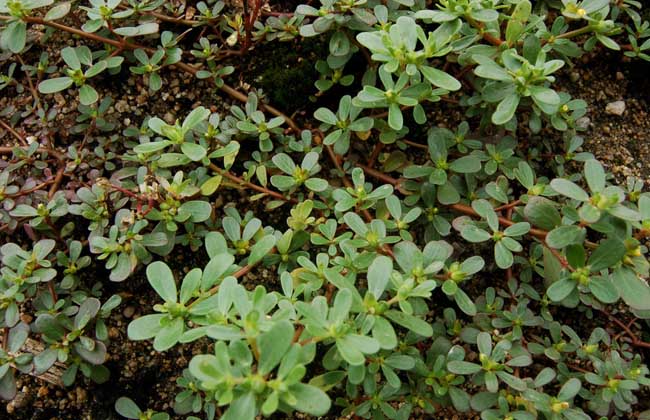
Purslane, also known as purslane, five-element grass, longevity vegetable, five-direction grass, pig fat vegetable, purslane grass, etc., is an annual herbaceous plant of the Portulacaceae family, Portulaca genus. It grows in sunny places such as fields, roadsides, and garden ruins. The whole plant is used medicinally, with effects of clearing heat and promoting diuresis, detoxifying and reducing swelling, anti-inflammatory and diuretic. The tender stems and leaves can be eaten as vegetables. Let's take a look at purslane planting techniques together!
Purslane Growth Habits
Purslane prefers high humidity, is drought-tolerant and waterlogging-tolerant, and is heliotropic. It is suitable for cultivation in various fields and sloping lands, with neutral and slightly acidic soil being better. Its germination temperature is 18°C, and the most suitable growth temperature is 20-30°C. When the temperature exceeds 20°C, it can be sown in stages and marketed successively. Protected cultivation can achieve year-round production.
Purslane Propagation Methods
1. Seed propagation: The seeds used for seed propagation of purslane are all seeds collected from the wild or retained from cultivation in the previous year. Its seeds are extremely small, so land preparation must be fine. After sowing, keep the soil moist, and seedlings will emerge in 7-10 days.
2. Cutting propagation: Cuttings are collected from seedlings sown in the current year or wild seedlings, preferably from strong plants with many branches and vigorous growth, and each segment should have 3-5 nodes. Before cutting, prepare the soil finely, and apply sufficient fully decomposed farmyard manure in combination with land preparation. Cutting density (plant-row spacing) is 3*5 cm, and the cutting depth is about 3 cm. After cutting, maintain certain humidity and appropriate shade, and they will survive after one week.
Purslane Planting Techniques
1. Land preparation and fertilization: After sowing or cutting, purslane can be transplanted to the field for cultivation in 15-20 days. When the cultivation area is small, it can also be directly cut into the field. Before transplanting, plow the field soil, and apply 1500 kg of fully decomposed human manure or 15-20 kg of ternary compound fertilizer per mu in combination with land preparation.
2. Bed opening and transplanting: After land preparation and fertilization, open beds at a width of 1.2 m, and plant at a plant-row spacing of 12 cm × 20 cm. After planting, water thoroughly to set the roots. To ensure the survival rate, transplanting is best done on cloudy days. If transplanting on sunny days, shade measures should be taken within 2 days after planting, and water once every evening.
3. Field management: When transplanting purslane, after applying sufficient base fertilizer as required, no additional fertilization is needed in the early stage. After that, apply a thin human and livestock manure water once every 1-2 harvests. Flower buds that form should be removed promptly to promote the growth of vegetative branches. In drought, water appropriately to resist drought. During the entire growth period, pests and diseases are very rare, and generally no spraying is needed.
4. Timely harvesting: The harvest standard for commercial purslane is tender branches 10-15 cm long before flowering. If harvested too late, not only will the tender branches become old and poor in edible value, but it will also affect the growth of the next branches and the annual yield. After one harvest, it can be harvested again after 15-20 days, and this can continue until mid-to-late October. In production, staged and batch-by-batch rotational harvesting is generally used.
5. Seed retention and collection: The plot for seed retention of purslane should be set aside from the plot for commercial vegetable production from the beginning. The cultivation and management measures are the same as those for commercial vegetable production, except that the seed retention plot does not harvest commercial vegetables and allows them to branch, flower, and set seed naturally. After 25-30 days of flowering, when the capsules turn yellow, the seeds are already mature and should be harvested promptly, otherwise they will scatter on the ground.