How can pepper powdery mildew be controlled effectively?
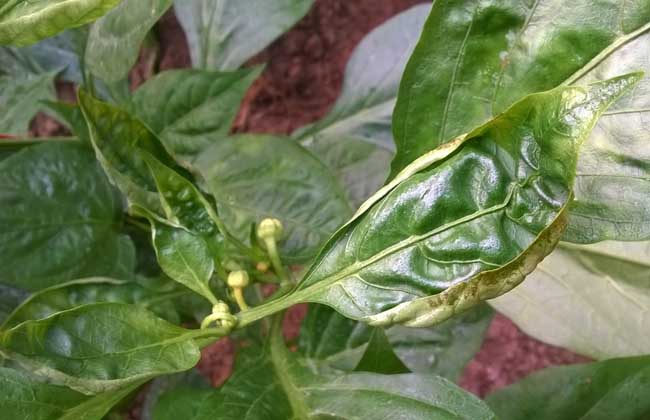
Pepper powdery mildew mainly damages the leaves; both mature and young leaves can be affected. The pathogen is Leveillula taurica. During the vegetative growth stage, the hyphae remain hidden inside the leaf tissue, and only when reproductive bodies are produced do they extend out onto the leaf surface, so it is often difficult to detect early. Once it is detected, chemical control becomes difficult. Let's take a look below at how to control pepper powdery mildew.
Symptoms of pepper powdery mildew
Pepper powdery mildew mainly damages the leaves. Initially, round white powdery mildew spots appear on the front or back of the leaves, gradually expanding and soon merging into one patch. In the later stages of the disease, the entire leaf is covered with white powder, which later turns grayish-white; relatively speaking, the disease is more severe on the back of the leaves. What is produced on the back of the leaves in pepper powdery mildew is a white powdery substance, not a mold layer, and the diseased spots are densely distributed. In severe cases, the entire leaf turns yellow and falls off, seriously affecting the yield and quality of peppers.
Occurrence pattern of pepper powdery mildew
The pathogen overwinters as cleistothecia on diseased leaves on the soil surface. After overwintering, it produces conidia, which spread through airflow. It generally occurs more often in the middle and late growth stages. In open fields, it tends to become epidemic from mid-to-late August to early September when the weather is dry. It takes about 20-plus hours for the pathogen to go from spore germination to invasion, so the disease develops very quickly and often becomes epidemic over a large area within a short period. The pathogen can be active at 10-30°C, with the optimum temperature being 20-25°C. It develops quickly at a relative humidity of 45-75%; even below 25%, conidia can still germinate and cause disease, while above 95%, the disease is significantly suppressed.
How do you control pepper powdery mildew?
1. For agricultural control of pepper powdery mildew, disease-resistant varieties can be selected, and planting should be done on higher terrain with good ventilation and drainage. Increase the application of phosphorus and potassium fertilizers, and avoid applying too much nitrogen fertilizer during the pepper growing period.
2. In the early stage of the disease, promptly use chemical control. For chemical control, you can spray 25% ethirimol 1000-fold solution, or 30% kresoxim-methyl aqueous solution 1000-1500-fold, or 47% kasugamycin copper hydroxide wettable powder 600-fold. Spray once every 7-10 days for 2-3 consecutive sprays.
3. When the disease is severe, you can use 50% chlorobromoisocyanuric acid mixed with flusilazole for spraying, combined with ethirimol-azoxystrobin smoke agent for greenhouse fumigation, which gives very good results. When using chemical prevention and control, attention should be paid to details such as spraying time, chemical selection, and reasonable water use to improve the control effect.