The Planting Method and Key Cultivation Techniques for Kan Gua (Cut-and-Grow Squash)
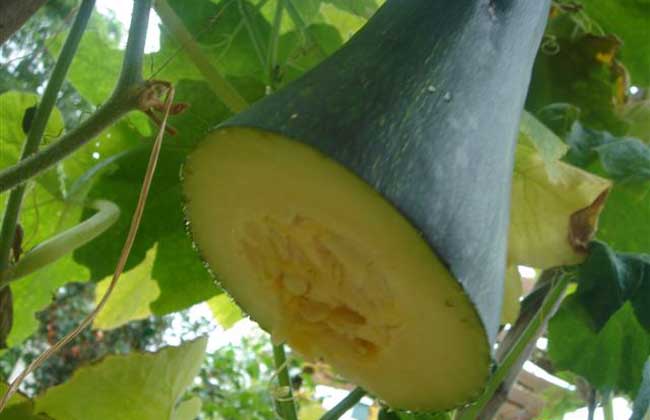
Kan Gua is a variety of Chinese squash (Cucurbita moschata), a new squash variety of the Cucurbitaceae family, genus Cucurbita, that can be cut and eaten at any time and regenerates rapidly. In China it is distributed in Hubei, Hunan, Shandong, Henan, Guangdong, Guangxi, Hainan and other places. Its growth characteristics and cultivation techniques are basically the same as those of ordinary squash, and it has low requirements for the natural environment and soil. It can be planted in both spring and summer. Let's take a look at the planting method for Kan Gua below!
The Planting Patterns for Kan Gua
Kan Gua can be planted on a large scale in open fields, or intercropped with spring greenhouse cucumbers or greenhouse cabbage, or planted scattered around houses. Kan Gua has a long growth and harvest period, and only one crop is planted per year. Because its fruits are slender, uniform and ornamental, Kan Gua can be grown in pots. For pot cultivation, a large pot with a diameter of more than 1 m should be chosen.
The Growth Habits of Kan Gua
1. Temperature conditions: The suitable temperature for Kan Gua seed germination is 25-30°C. Germination is slow at 15°C, and fastest at 30-35°C, but the young sprouts are weak. The suitable daytime temperature for stem and leaf growth is 23-30°C, and the nighttime temperature is 15-18°C. Growth is slow when the temperature is above 35°C or below 15°C. The suitable temperature for young fruit growth is 25-30°C during the day and about 15°C at night.
2. Light requirements: Kan Gua is a short-day crop and is not very strict about light requirements. Medium-intensity light conditions are most suitable. Under weak-light conditions in a winter greenhouse, it can still flower and set fruit and grow well. Under short-day conditions of less than 12 hours per day, it is conducive to the early formation of female flowers and an increase in their number, and the node position is lowered. Excessive light in late spring and summer is also unfavorable for growth and development, and easily causes plant wilting and the occurrence of viral diseases.
3. Moisture conditions: Kan Gua has a well-developed root system and strong drought resistance, but because its leaves are relatively large and transpiration is vigorous, it needs to absorb a large amount of water. During the young fruit expansion period, it should be watered in time to meet the needs of growth and development. However, from the seedling stage until the first young fruit sets, if the soil moisture is too high, it easily causes excessive vegetative growth of stems and leaves, leading to flower and fruit drop.
4. Soil nutrition: Kan Gua has strong adaptability to soil, and it is best to plant it in loose, fertile loam with good drainage and irrigation. It has a relatively high fertilizer requirement. Using nitrogen, phosphorus, potassium and trace elements in combination gives high yield and good quality. In addition, an appropriate amount of trace elements such as calcium, magnesium, sulfur, copper, iron, zinc and manganese is also needed. If too much nitrogen fertilizer is applied, it will cause excessive vegetative growth of stems and leaves, leading to flower drop, fruit drop and poor product quality, and it will also be more susceptible to pests and diseases.
The Seedling-Raising Techniques for Kan Gua
1. Seed soaking and germination: Kan Gua is generally directly sown in the open field, but to bring it to market earlier, seedling transplanting can also be used. Before soaking the seeds, sun-dry them for 2-3 hours, then scald them with hot water at 55°C for 2 minutes. Stir continuously while scalding. After the water temperature drops, change to clean water and soak the seeds for 8-10 hours. During this period, scoop them out and rinse once, then change to clean water and soak again. Then place them in a 28°C constant-temperature chamber to germinate before sowing.
2. Preparing nutrient soil: The formula ratio for the nutrient soil used for Kan Gua seedling raising is 5 parts fertile, pest- and disease-free garden soil, 3 parts fully decomposed compost, and 2 parts fine sand or peat, thoroughly mixed evenly. Add 100 g of Lüheng No. 3 and 100 g of trichlorfon per 1 cubic meter, cover with plastic film and pile up to ferment for 2 days. After filling the pots, arrange them neatly and water thoroughly. Place 1 germinated seed flat in each pot and cover with 0.8 cm of fine soil.
3. Seedling-stage management: Cover the Kan Gua seedling bed with plastic film to retain warmth and moisture. Before emergence, the temperature should preferably be kept at 25-30°C. After emergence, remove the film according to the temperature, keeping the daytime temperature at 25-30°C and the nighttime temperature at 16-18°C. If the temperature is still low after emergence, replace it with new film with good light transmission. When the daytime temperature meets the requirement, remove the film to let in light, or open both ends for ventilation, and cover it again when the nighttime temperature is low.
4. Disease prevention at the seedling stage: When Kan Gua seedlings grow true leaves, spray with 0.1% potassium dihydrogen phosphate plus 0.05% dichlorvos, once every five days. When the seedlings grow three true leaves, the spraying concentration can be appropriately increased, and 75% chlorothalonil wettable powder 1000-fold solution can be added to prevent and control anthracnose and root rot. After 2 true leaves, the covering can be removed. When the seedlings have 3 leaves and 1 heart, they can be transplanted.
The Planting Method for Kan Gua
1. Land preparation and transplanting: Before transplanting Kan Gua, prepare the land well and apply sufficient base fertilizer. Apply the base fertilizer in furrows. Per mu, 4000 kg of decomposed organic fertilizer can be used, plus 50 kg of ternary compound fertilizer and 30 kg of potassium sulfate. For scattered planting, it is advisable to dig large holes for transplanting, apply base fertilizer, and then transplant. For open-field planting, the density is 100-120 cm between rows and 60-80 cm between plants under a trellis, with 600-1000 plants per mu, depending on soil fertility. Plant more on poor soil and fewer on fertile soil. Water after transplanting.
2. Fertilizer and water management: After transplanting and seedling recovery, apply a seedling-promoting fertilizer once, using an appropriate amount of decomposed manure liquid or cake fertilizer. After the first fruit sets firmly, apply compound fertilizer as a top dressing, 30 kg per mu, and water after fertilizing. After that, apply appropriate top dressing according to growth vigor. During the fruit-setting period, keep the soil moist frequently.
3. Building a trellis: If Kan Gua is cultivated creeping on the ground, the fruit shape becomes curved and harvesting is inconvenient. For high yield and good quality, trellis cultivation is needed. Build the trellis in time when the plants begin to vine and grow. When the vines reach 0.5-0.8 m, set up the trellis. The trellis height is about 2 m. Guide the vines onto the trellis and fix them well with packing straps to prevent them from falling over in windy weather. A horizontal trellis gives high yield and good fruit shape. For scattered planting, a horizontal trellis is better. During planting, pay attention to artificial pollination. Carry out artificial pollination every morning from 6:00 to 7:30 to ensure the fruit-setting rate.
4. Guiding vines and pinching: When the vines are 1 m long, press the vines. Before pressing the vines, remove the side vines below 1 m to prevent competition for nutrients, then guide the vines onto the trellis. Do not pinch the main vine. After the first cluster sets fruit, pinch when there are 5-8 leaves, and keep two side vines per plant. When tying the vines, pay attention to arranging the vines and leaves evenly so that the fruits hang naturally. Properly prune side vines that have already borne fruit to facilitate ventilation.
5. Timely harvesting: Kan Gua does not need to wait until the fruit is ripe before being picked for eating. During the growth period, it can be cut and eaten at any time, cutting as much as you eat, enjoying fresh squash every day. The first cluster of fruits can be harvested when the skin turns golden yellow, which is beneficial to the normal growth of the later Kan Gua. If the fruit skin is not damaged, Kan Gua can be stored for a long time after harvesting.
6. Pest and disease control: Kan Gua has few insect pests and light diseases, but when they occur, they should be actively prevented and controlled.
① Diseases: Kan Gua has strong adaptability to external conditions, and pests and diseases are relatively mild. Common diseases include powdery mildew, viral disease, phytophthora blight, anthracnose and so on, among which viral disease is the most serious and often causes a large number of flower and fruit drops. For control, spray with chlorothalonil 500-600-fold solution, or spray with validamycin 500-600-fold solution plus carbendazim 500-600-fold solution 2-3 times during the growth and development period of Kan Gua, which can prevent the occurrence of diseases.
② Insect pests: The main insect pests of Kan Gua include aphids, red spider mites, white grubs and so on. For control, spray with 90% trichlorfon 1000-fold solution. For underground pests, 90% trichlorfon can be mixed with fried fragrant bait to trap and kill them. In early July, spray acaricide once to control red spider mites. In the rainy season, depending on the situation, spray chlorothalonil or thiophanate-methyl once every 7 days to prevent powdery mildew and downy mildew, and also spray potassium dihydrogen phosphate in combination to protect leaves and promote fruit development. This is a key measure for increasing yield.