How to Prevent and Treat Cucumber Blight? Detailed Practical Methods
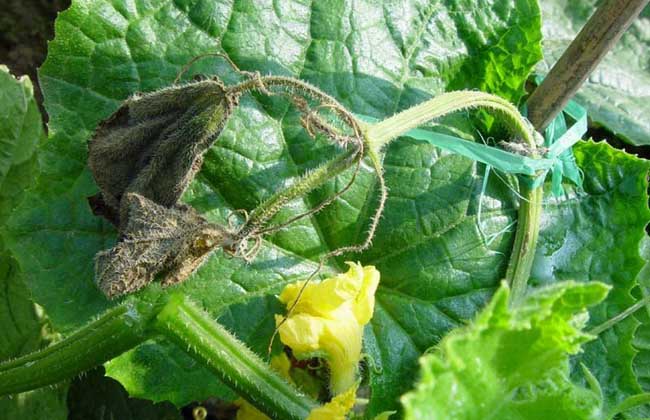
Cucumber blight can infect plants from the seedling stage to the mature plant stage. When seedlings are infected, dark green, water-soaked rot first appears on the tender tips, gradually dries up, and forms bare tips. At the mature plant stage, it mainly affects the base of the stem and the tender stem nodes, starting as dark green water-soaked areas, then becoming soft with obvious constriction, and the leaves above the affected area gradually wither. Let's take a look at the prevention and treatment methods for cucumber blight.
Occurrence Pattern of Cucumber Blight
Cucumber blight is a fungal disease. The pathogen overwinters in the soil or manure with diseased plant residues. In the following year, under suitable conditions, it produces sporangia that spread through wind and rain, irrigation water, and water droplets. The optimal temperature for disease development is 28 to 30°C. Large rainfall amounts, frequent rainfall, or shallow water in large amounts make the disease prone to occur and spread quickly. Therefore, the disease is severe under conditions of low-lying terrain, poor drainage, and high humidity.
Conditions for Cucumber Blight Onset
The pathogen mainly overwinters as mycelium, oospores, and chlamydospores with diseased plant residues in the soil or manure, and spreads through wind, rain, and irrigation water. The optimal temperature for disease development is 28-30°C. Soil moisture is an important factor affecting the epidemic degree of this disease. In years with high summer temperatures, large rainfall amounts, and many rainy days, the disease is prone to become epidemic and cause severe damage. In addition, low-lying terrain, poor drainage, and continuous cropping make plants susceptible to the disease. In protected cultivation, at the turn of spring and summer, after opening the ventilation openings at the front of the greenhouse, the disease tends to develop rapidly.
Prevention and Treatment Methods for Cucumber Blight
1. Agricultural measures: Select disease-resistant varieties, such as Jinchun No. 3, Jinza No. 3, Jinza No. 4, Zhongnong 1101, Longza Huang No. 5, Zaofeng No. 2, etc. Use Yunnan black-seeded pumpkin as rootstock for grafted seedling cultivation. Adopt high-ridge cultivation and cover with plastic film to reduce opportunities for the pathogen to infect plants. Avoid flood irrigation and avoid excessively high soil and air humidity. In open-field cultivation, drain field water promptly during the rainy season, and promptly pull out and remove central diseased plants once found.
remove.
2. Disinfection treatment: An effective method for seed disinfection is to soak seeds in a 800-fold solution of 25% metalaxyl wettable powder for 30 minutes, then promote germination and sow. For soil disinfection of seedbeds or greenhouse rooms, mix 8 grams of 25% metalaxyl wettable powder per square meter of seedbed with soil and spread it on the seedbed. For protected cultivation, spray the ground with a 750-fold solution of 25% metalaxyl wettable powder before planting.
3. Chemical control: The key to controlling open-field cucumber blight is to start spraying one week before the rainy season arrives, once every 7 days, for 3 consecutive sprays. Optional agents include a 600-fold solution of 64% Sandofan wettable powder, a 1000-fold solution of 25% metalaxyl wettable powder, a 1200-1600-fold solution of Yemeishaxing wettable powder, and a 600-fold solution of 50% metalaxyl-copper wettable powder, etc. Practice shows that spraying a 500-fold solution of 70% mancozeb wettable powder or a 1:0.8:200 Bordeaux mixture before disease onset for protective spraying gives very good control efficacy.