How to prevent and control cucumber leaf blight? All the methods are here
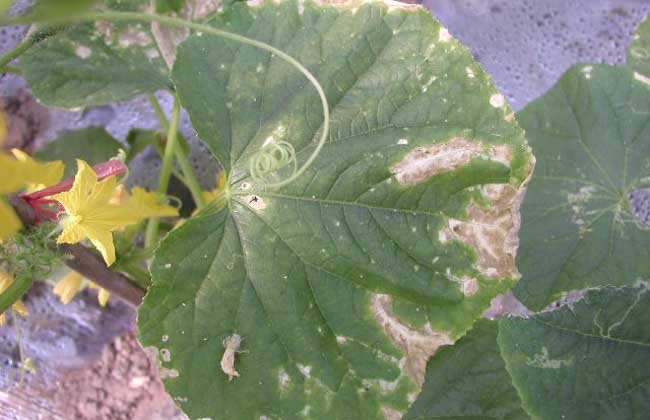
Cucumber leaf blight mainly damages the leaves. Symptoms on young leaves are not obvious. On mature leaves, yellowed areas appear on the leaf surface, followed by deformed water-soaked chlorotic spots that gradually expand into nearly round or polygonal brown spots, 1-2 mm in diameter, surrounded by a chlorotic halo. On the underside of diseased leaves, small sections of clear veins are very likely to appear in the early morning or on cloudy days. Let's take a look at the prevention and control methods for cucumber leaf blight below!
Occurrence pattern of cucumber leaf blight
The pathogen mainly overwinters in the soil as mycelium with diseased plant residues. In the following spring, it produces conidia, which spread through airflow and cause infection. Afterwards, conidia are produced on diseased leaves for secondary infection. Weak plants, waterlogged fields and high humidity easily induce the occurrence of this disease.
Characteristics of cucumber leaf blight occurrence
The pathogen prefers low temperature and high humidity. The suitable temperature range for disease occurrence is 3-30°C, the optimal temperature for disease occurrence is 8-20°C, and the relative humidity is above 95%. The most susceptible growth stages are from the seedling stage to the adult plant stage. The incubation period of the disease is 7-15 days. It occurs only in protected cultivation, usually only during the low-temperature period in early spring. When the greenhouse temperature exceeds 25°C, the disease is inhibited.
Prevention and control methods for cucumber leaf blight
1. Apply sufficient base fertilizer, drain promptly after rain, and ensure ventilation and light transmission between plants and rows.
2. Harvest seeds from disease-free seed-bearing plants and select disease-free seeds.
3. In greenhouses for protected cultivation, clean ditches in time to prevent water accumulation after rain, ventilate in a timely manner, and manage fertilizer and water by applying light and frequent irrigation. Watering and fertilizing should be done in the morning on sunny days, and the greenhouse should be opened in time for ventilation to reduce humidity.
4. Advocate alternating-year crop rotation with non-Cucurbitaceae crops to reduce the source of pathogens in the field.
5. During the peak period of disease occurrence, remove diseased and old leaves in time. After harvest, clean the field, remove diseased residues, take them out of the field for deep burial or burning, and deeply plow the soil to accelerate the decomposition of diseased residues.
6. Before watering or on a sunny morning after rain, choose Bordeaux mixture (1:1:200) for spray prevention, or choose mancozeb for control at the early stage of disease occurrence.