How to prevent and control cucumber powdery mildew? These methods are very effective
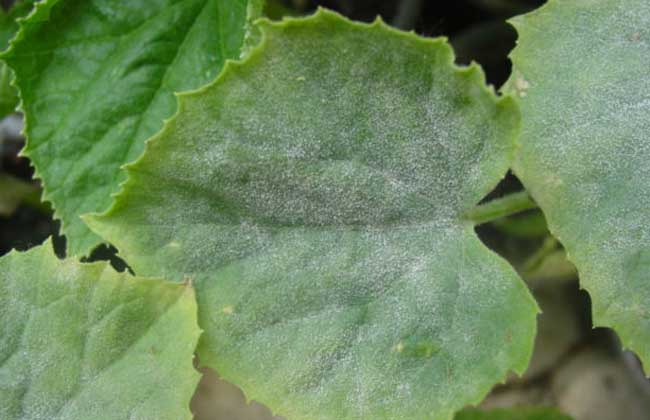
Cucumber powdery mildew is one of the common diseases in cucumber cultivation and occurs all over the country. Because powdery mildew has developed some resistance to chemicals in recent years, and the disease can occur in all four seasons, prevention and control have become somewhat difficult. Therefore, in ordinary years the yield loss is about 10%, and in epidemic years the yield loss is about 20-40%. Let us take a look below at how to prevent and control cucumber powdery mildew!
Symptoms of cucumber powdery mildew
In cucumber powdery mildew, the leaves are damaged most severely, followed by the petioles and stems, and the fruit is generally not harmed. In the early stage of the disease, small nearly round white powdery spots appear on the upper or lower surface of the leaves, gradually expanding into large white powdery areas with indistinct edges, covering the leaf surface as if a layer of white powder had been sprinkled on it. After wiping off the white powder, the leaf surface can be seen to be chlorotic, withered yellow and brittle. When the disease is severe, the leaf surface is covered with white powder and turns grayish white, until the entire leaf dies. After powdery mildew infects the petioles and young stems, the symptoms are similar to those on the leaves, except that the lesions are smaller and there is less powdery material. On the leaves, small yellow spots begin to appear, then expand and develop into round or oval lesions, with a white powdery mold layer on the surface.
Factors causing cucumber powdery mildew
1. High planting density and poor ventilation and light transmission lead to severe disease; applying too much nitrogen fertilizer causes overly tender growth, reduced resistance and easy disease occurrence.
2. Heavy and acidic soil, many years of continuous cropping, many diseased residues in the field, insufficient fertility, extensive cultivation and weed-infested field plots reduce plant resistance and lead to severe disease.
3. Fields are prone to the disease when fertilizer is not fully decomposed, organic fertilizer carries pathogens, or fertilizer is mixed with diseased residues of crops in the same family.
4. Warm climate, dry air, continuous alternation of drought and humidity, and insufficient light make the disease likely to occur; long-term dryness after consecutive cloudy and rainy days also makes the disease likely to occur.
How to prevent and control cucumber powdery mildew?
1. Choose plots with good ventilation, loose and fertile soil, and convenient drainage and irrigation for planting. Appropriately use phosphorus and potassium fertilizers in combination to prevent premature aging due to nutrient deficiency and enhance plant disease resistance. Do not water on cloudy days, and ventilate more on sunny days to reduce the relative humidity in the greenhouse or plastic tunnel and prevent excessively high temperatures, so as to avoid stuffy heat. In the early stage of cucumber powdery mildew or before the disease occurs, mainly use protective agents to prevent infection and disease onset.
2. When symptoms of powdery mildew damage appear on leaves in the field, attention should be paid to using fast-acting therapeutic agents, and an appropriate amount of protective agent should be added and reasonably mixed to prevent the disease from further worsening the damage and spreading. Experience shows that when powdery mildew occurs, watering lightly between cucumber rows can increase air humidity, and combined with spraying, the disease can be controlled at one stroke. Auxiliary measures also include avoiding excessive application of nitrogen fertilizer, increasing application of phosphorus and potassium fertilizers, and clearing diseased residues after vine removal.
3. Spray promptly in the early stage of the disease. You can use 25% azoxystrobin suspension concentrate at 1500 times dilution, or 10% difenoconazole water-dispersible granules at 2000 times dilution for prevention. When it occurs in spots, immediately spray 32.5% difenoconazole · azoxystrobin suspension concentrate at 1500 times dilution, or 25% diniconazole emulsion in water at 3000 times dilution, or 6% fenarimol wettable powder at 1500 times dilution, or 50% kresoxim-methyl water-dispersible granules at 3000 times dilution, or 12.5% diniconazole wettable powder at 2000 times dilution, or 33.5% quinolinone suspension concentrate at 800 times dilution. Or 8% flusilazole microemulsion at 1200 times dilution, or 30% nonyl copper microemulsion at 400 times dilution.