What are the control methods for peanut southern blight?
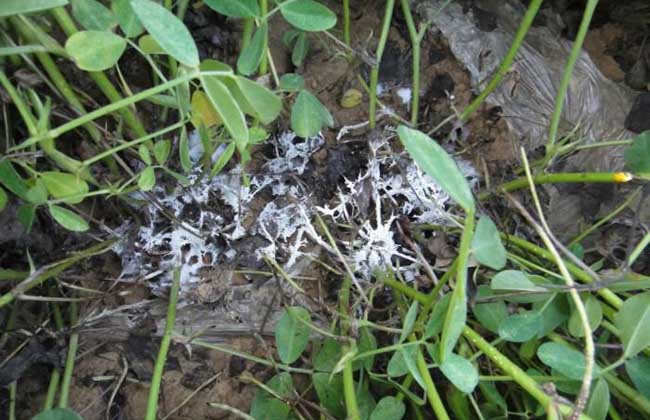
Peanut southern blight is one of the major diseases harming peanuts. After the roots, pods and stem base of the peanut are affected, they initially show brown soft rot, and white silky mycelium appears at the root-stem area of the aboveground part. White silky threads often first form at the stem base near the ground and on the nearby soil surface, and the diseased part gradually turns dark brown and glossy. Let us take a look together at the control methods for peanut southern blight below!
Symptoms of peanut southern blight damage
Under high humidity conditions, the aboveground part of an infected plant can be covered by white mycelial strands, which then spread to the nearby soil surface and infect other plants. In extremely humid environments, the mycelial clusters are not obvious, while the affected stem base is covered by long spindle-shaped lesions with a light brown to red corky raised appearance. Under drought conditions, the lesions on the stem occur below the soil surface, are brown and spindle-shaped, about 0.5 cm long, and have rapeseed-like sclerotia; the stems and leaves turn yellow and gradually die, and the peanut pods rot.
Conditions for the onset of peanut southern blight
The pathogen overwinters as sclerotia or mycelium in the soil or on diseased residues, and can survive for 5-6 years. Most are distributed in the 1-2 cm surface soil layer. The germination rate of sclerotia below 2.5 cm is significantly reduced, and at 7 cm in the soil they almost do not germinate. The following year the sclerotia germinate, produce mycelium, and invade through the epidermis or wounds at the root-stem base of the plant; they can also invade the pegs or pods, and seeds can also carry the pathogen. In the field, the pathogen spreads through running water or insects. High temperature, high humidity, heavy clay soil, poor drainage, low-lying land and rainy years make the disease more likely to occur. If it clears up immediately after rain, diseased plants quickly wither and die. Continuous cropping and early sowing result in severe disease.
Control methods for peanut southern blight
1. After harvest, promptly remove diseased residues and deep plow, and carry out crop rotation with gramineous crops such as rice, wheat and corn for more than 3 years. It is recommended to apply compost fermented with effective microorganisms or decomposed organic fertilizer to improve soil permeability.
2. Sow spring peanuts appropriately late, and clear the seedlings and practice seedling hardening during the seedling stage to improve disease resistance. At the same time, select disease-free seeds and dress them with 50% carbendazim wettable powder at 0.5% of the seed weight. After the disease occurs, use 1 kg of 50% seed-dressing dual powder mixed with 15 kg of fine dry soil to make medicated soil to cover the diseased holes, using 75 g of medicated soil per hole.
3. In the early stage of the disease, spray or drench with Fengqia Genbao at 600-800 times, or 50% benomyl wettable powder, or 50% iprodione wettable powder, or 50% procymidone (Sumilex) wettable powder, or 20% tolclofos-methyl emulsifiable concentrate at 1000-1500 times solution, spraying or drenching 100-200 ml of the prepared solution per plant.