How to grow Hangzhou chili seeds? Detailed growing methods
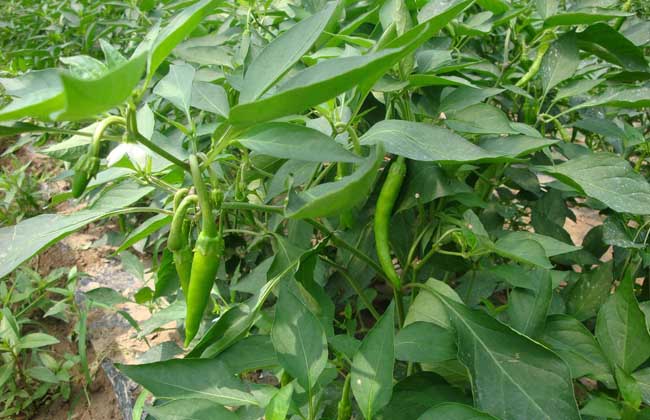
The Hangzhou chili fruit is horn-shaped, about 13 cm long, about 1.4 cm in diameter, with an average single fruit weight of 10 grams. The immature fruit is light green and mildly spicy, while the mature fruit is red with a slightly wrinkled surface and a gradually tapering, slightly curved tip. It is both an excellent seasoning for delicious dishes and a food therapy item that warms the middle and dispels cold, and can be used for poor appetite and other conditions. Let's take a look below at how to grow Hangzhou chili seeds!
Crop rotation arrangement for Hangzhou chili
1. Autumn-winter-spring cultivation: In the Huangshi area, Hangzhou chili is sown in early October, transplanted in early December, and harvested from late March to late June of the following year.
2. Spring-summer-autumn cultivation: Spring-summer-autumn cultivation of Hangzhou chili usually involves sowing and raising seedlings in a hotbed in early January, transplanting in early April, and marketing from mid-June to September.
3. Autumn-winter cultivation: Autumn-winter cultivation of Hangzhou chili usually involves sowing and raising seedlings from mid-June to mid-July, transplanting from mid-July to early August, and harvesting from mid-September to early December.
Sowing and seedling raising of Hangzhou chili
1. Seed treatment: Soak Hangzhou chili seeds in 55°C water for 30 minutes, let cool naturally, then soak for another 7-8 hours; or soak in a 500-fold potassium permanganate solution for 7-8 minutes, wash clean, then soak in clean water for another 7-8 hours, then keep warm at 28-30°C to promote germination. Sow once the seeds show white sprouts.
2. Timely sowing: Choose a greenhouse for the Hangzhou chili seedbed where the previous crop was not solanaceous fruit or cucurbit crops. After watering thoroughly, spread 1-2 cm of 0.5% carbendazim medicated soil, sow, then evenly cover with 0.5 cm of medicated soil, and after sowing cover with film or shade net.
3. Keep warm and moist: Before Hangzhou chili seedlings emerge, keep warm and moist, at 25-30°C during the day. When 60-70% of seedlings have emerged, promptly remove the plastic film or shade net. After emergence, lower the temperature appropriately, to 18-25°C during the day and 12-15°C at night, to prevent cold damage and prevent damping-off and leggy seedlings. Pay attention to ventilation and let in plenty of sunlight.
4. Reasonable watering: After the Hangzhou chili seedlings break their hearts, carry out the first transplanting into 10×10 cm nutrient pots. Do not water too much; keep the seedbed soil moist below and dry on top. When too wet, appropriately scatter dry fine soil or seedling soil. For fertilizing, use “colored water”, applying it when the soil turns white. In summer and autumn, water in the evening to keep the soil moist. In cold winter and early spring, water between 10:00 and 15:00. Keep soil and air humidity on the dry side rather than wet.
Land preparation and transplanting of Hangzhou chili
1. Land preparation and bed making: For Hangzhou chili, usually choose a greenhouse where the previous crop was not solanaceous fruit crops. Before plowing, apply 5000 kg of decomposed barnyard manure per mu. In a 6 m wide greenhouse, make 6 beds, and apply compound fertilizer in the middle ditch of the beds at 50 kg per mu.
2. Mulching for warmth: About 10 days before transplanting Hangzhou chili, for winter-spring cultivation cover the greenhouse and inner greenhouse film plus plastic mulch to raise soil temperature; for autumn-winter cultivation, cover the top frame plus shade net and plastic mulch to lower temperature, so as to help seedlings recover.
3. Reasonable close planting: The planting density of Hangzhou chili is 2 rows per bed, with a row spacing of 40 cm and a plant spacing of 30 cm, planting 5000 plants per mu. For winter-spring cultivation, transplant at noon; for autumn-winter cultivation, transplant in the evening. After transplanting, water thoroughly with dilute human manure to settle the roots.
Field management of Hangzhou chili
1. Fertilizer and water management: After Hangzhou chili seedlings recover, apply 1000 kg of dilute human manure per mu, or 10 kg of diammonium phosphate or 10 kg of NPK compound fertilizer in 1000 kg of water. Until the first harvest of tender chilies, water and fertilize again according to plant growth and soil moisture conditions. Generally, after every 2-3 harvests, apply 15 kg of diammonium phosphate per mu in 1000 kg of water as irrigation. In continuous drought, pay attention to irrigating with “horse-running water”.
2. Flower and fruit retention: After Hangzhou chili plants grow out, promptly remove side branches below the root chili. Although Hangzhou chili has a high fruit-setting rate, factors such as cold damage and weak light easily cause flower and fruit drop. For autumn-delayed cultivation in late September, apply 6-8 grams of Lajiaoling per mu (each 1 gram mixed with 6-8 kg of water). Never spray the solution on growing points and tender leaves.
3. Temperature and light management: Winter-spring greenhouse cultivation of Hangzhou chili uses four layers of coverage: greenhouse, small tunnel, plastic mulch, and straw curtains. For autumn-delayed cultivation from July to early September, cover the top frame with a shade net to lower temperature; in mid-October add skirt film for warmth, with daytime temperature at 25-30°C and nighttime at 12-18°C. Note that on sunny days the greenhouse temperature must not exceed 33°C; promptly remove the skirt film to ventilate and cool down and exchange air. On rainy and snowy days, remove the covers inside the greenhouse to let in light and exchange air.
4. Timely harvest: Hangzhou chili is mainly harvested as tender chilies 5-6 cm long for market. To increase yield, harvest promptly and package neatly for market.
5. Pest and disease control: Seedling-stage diseases of Hangzhou chili are damping-off, Rhizoctonia rot, and Phytophthora blight, which can be controlled by measures such as seed treatment and scattering medicated soil. Gray mold can be controlled with Procymidone medicated soil. Viral disease can be controlled in the early stage with 83 Zeng Kang Ji or Virus A 600-fold solution. Root rot can be controlled with Genfuling 700-fold solution. Noctuid pests can be controlled with 5% Cascade 1000-fold solution, 10% Chujin 2000-fold solution, or Anda 3000-fold solution.