How to Grow Allium fistulosum for High Yield? Detailed Explanation of Key Cultivation Techniques
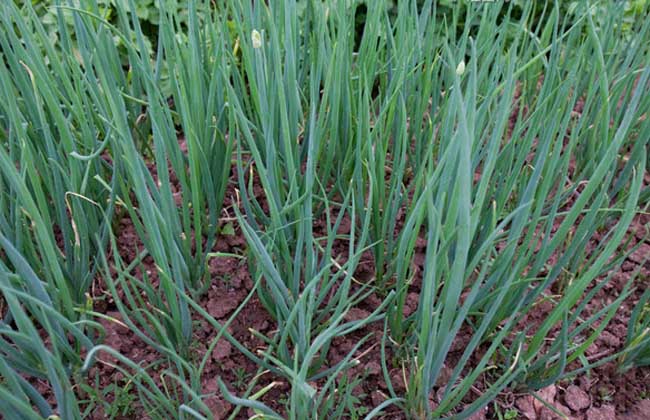
Allium fistulosum is a perennial herbaceous plant in the genus Allium of the family Amaryllidaceae, also known as four-season scallion, large-head scallion, soft scallion, etc. It is a variety of Welsh onion, originally from western China and the Syria area of western Asia, and is now widely cultivated throughout our country. As an indispensable table seasoning vegetable, it has extremely high cultivation value. Let us take a look at the high-yield cultivation techniques for Allium fistulosum below!
Growth Habits of Allium fistulosum
Allium fistulosum prefers cool conditions, has strong cold resistance, and does not demand high light intensity. The suitable growing temperature is 12-23°C. Under high temperatures above 25°C and strong light, aging accelerates, yield is low, and quality declines. At low temperatures below -5°C, growth is slow. In spring and autumn, the plants grow luxuriantly and tiller vigorously. It can grow normally in clay and sandy soil, showing wide soil adaptability. Its root system is shallow and it is not tolerant of drought or waterlogging, so the soil is required to be moist with good irrigation and drainage conditions. As for fertilizer input, apply sufficient organic fertilizer, heavily apply nitrogen fertilizer, and increase potassium fertilizer.
Propagation Techniques for Allium fistulosum
1. Division propagation: The time for dividing Allium fistulosum is from early April to around the end of June in spring and from early August to the end of December in autumn. Division cannot be done in hot or severely cold seasons. Before division, first dig up the old plants from the field, leave them for several days, then divide them into clumps of 7-8 plants each, and plant them in the field at a row spacing of 22 cm and a plant spacing of 12 cm. After planting, water continuously 2-3 times (once a day) to promote establishment.
2. Sowing and raising seedlings: Although varieties of Allium fistulosum that can set seed can also be propagated by division, generally the seeds are first raised into seedlings and then planted out in the field, and after they have fully grown, they are then divided. Spring sowing begins in late March and can be done in batches until late June; autumn sowing begins in mid-August and can be done in batches until late October. Before sowing, finely prepare the land, then broadcast the seed, press down after sowing, and cover with wheat straw to prevent rain from causing soil crusting that affects emergence. The sowing rate is 5 kg per mu. When the seedlings grow to 15-18 cm, they can be planted out.
Cultivation Techniques for Allium fistulosum
1. Land preparation and fertilization: Allium fistulosum requires deep, loose, fertile sandy loam. Deeply plow the land and apply 4000 kg of high-quality farmyard manure per mu as base fertilizer, mix it evenly with the soil, make beds 2 m wide, rake the bed surface level, and open furrows in the beds 6-7 cm deep. For early-maturing cultivation, the row spacing is 20-25 cm; for ordinary cultivation, the row spacing is about 40 cm.
2. Timely planting: Before planting Allium fistulosum, first prepare the bulb seed balls, separate the bulbs one by one, and sun them for 1 day. About 50-60 kg of seed balls are needed per mu. For early-maturing cultivation, plant 2-3 seed bulbs per hole, with a hole spacing of about 15 cm. For ordinary cultivation, plant 3-4 seed bulbs per hole, with a hole spacing of 20-25 cm. Plant them in the furrows, cover with soil after planting, keeping the bulbs 6-7 cm from the soil surface, and water after covering with soil.
3. Field management: Field management of Allium fistulosum mainly consists of topdressing, along with cultivating and weeding, watering and irrigation, and earthing up for blanching. Topdressing is mainly with quick-acting nitrogen fertilizer. Starting when the plants grow to 12-13 cm, apply topdressing once a month, for a total of 3-4 times. Water once a month, and appropriately increase watering frequency during drought. After the second topdressing, begin earthing up, for a total of 2-3 times. Generally, earthing up is done together with topdressing, that is, earth up after topdressing. Each earthing up should not be too deep, and it is best not to cover beyond the white part of the scallion.
4. Timely harvest: Except in the hot summer, Allium fistulosum can be harvested in early summer, autumn, and early winter. The specific harvest time varies with variety and cultivation form. You may harvest only the leaves, and after each harvest, apply 1 topdressing. You may also pull up the whole plant, wash off the soil, tie into small bundles, and sell on the market.
Pest and Disease Control of Allium fistulosum
1. Downy mildew: Use 300 g of "Xin Gao Zhi Mo" emulsion per mu, dilute with 230-250 kg of water, and spray evenly at intervals of 7-10 days, for a total of 2-3 sprays.
2. Black mold: Spray with 50 kg of 0.1% copper sulfate or 1% limewater or 0.1% potassium permanganate solution.
3. Purple blotch: Spray with 0.5% aqueous solution of 80% zineb, or spray with 0.1% aqueous solution of 50% thiophanate-methyl, or spray Bordeaux mixture prepared from copper sulfate, quicklime and water at a ratio of 1:1:200, using 50 kg per mu.
4. Root maggot: Apply 5 kg of methamidophos powder per mu, or 3.5 kg-4.5 kg of 2.5% trichlorfon powder, or apply 2.5 kg of phoxim granules into the soil.
5. Red spider mite: It can be controlled with 3000-3500 times dilution of Manguangling or 2500-3000 times dilution of Hongbaiman Jue.