Detailed Guide to Growing New Zealand Spinach: Management Points from Sowing to Harvest
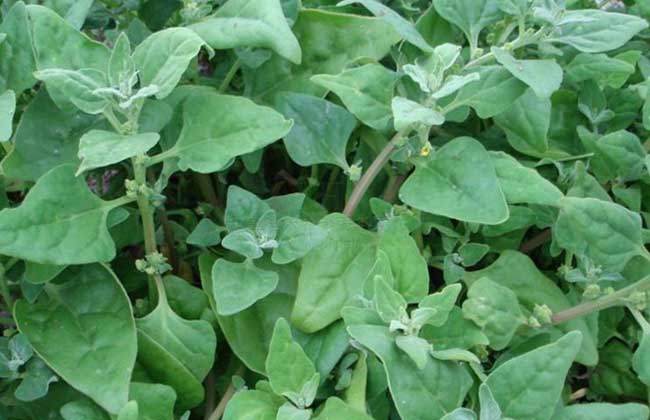
New Zealand spinach, also known as French spinach, New Zealand spinach, and other names, is an annual succulent herbaceous plant of the genus Tetragonia in the family Aizoaceae. It is widely distributed along the southeastern coastal areas. It is rich in iron, calcium, vitamin A, and various B vitamins. It can be used as a vegetable, and can also be used medicinally to clear heat and detoxify, dispel wind and reduce swelling. It has high cultivation value. Let us take a look at the growing techniques for New Zealand spinach!
Growth Habits of New Zealand Spinach
New Zealand spinach prefers warmth, tolerates heat, and resists drought. It is suitable for cultivation in various soils and also grows wild on beaches. It has strong adaptability and tolerates low temperatures and drought, but its aboveground parts are not tolerant of frost. The suitable temperature for growth and development is 20-25°C. It does not have strict requirements for light conditions and grows well under both strong and weak light.
Sowing Techniques for New Zealand Spinach
1. Seed preparation: If New Zealand spinach seeds are plentiful, dense sowing or dense planting may be considered, followed by thinning and harvesting, which can increase early yields. New Zealand spinach can be direct-sown or raised as seedlings and transplanted. If seeds are insufficient, it is best to raise seedlings and transplant. Direct sowing requires 4-5 jin of seed, while seedling raising requires 1.5 kg of seed using plug trays or nutritional pots to reduce root damage. Seedling raising can save seeds and also allow earlier sowing.
2. Land preparation and bed making: Because New Zealand spinach has a long growing period, sufficient base fertilizer should be applied, 10,000 jin of organic fertilizer per mu. When making beds, consider the characteristics of the soil and the fact that New Zealand spinach likes moisture but fears waterlogging. Watering should be convenient, and drainage should also be good. If sprinkler irrigation facilities are available, flat raised beds may be considered, so that both irrigation and drainage can be better handled.
3. Sowing method: Open-field direct sowing can be done at any time from April to May, but earlier sowing can bring greater benefits. Seedling raising can be done in mid-March, with planting in mid-to-late April. For a 4-chi bed, set plants in two rows with a spacing of 30 cm; for a 5-chi bed, cultivate 3 rows with a spacing of 40 cm, leaving 3,000-4,000 plants per mu.
Field Management of New Zealand Spinach
1. Water: New Zealand spinach has a relatively hard fruit skin and emerges slowly, so pay attention to watering during spring drought. When raising seedlings and transplanting, because New Zealand spinach has weak root regeneration ability and recovers slowly, water should also be replenished in time to promote recovery. When sowing or planting is late, light is strong, or drought occurs, water in time to prevent viral disease. To accelerate plant growth, keep the soil moist. When plants grow luxuriantly and branches and leaves are dense, be careful not to let conditions become too wet; it should be dry at times and wet at times. Too wet conditions make rot likely, and in summer pay attention to preventing waterlogging.
2. Fertilizer: Under the condition of sufficient base fertilizer, field management mainly involves topdressing chemical fertilizers. Apply less at the seedling stage, and during vigorous growth, topdress with chemical fertilizers as appropriate.
3. Pruning: New Zealand spinach is originally a crop for extensive cultivation, but under artificial cultivation, due to good fertilizer and water conditions, it grows even more vigorously. However, because of its vigorous growth, its creeping vines are sparse when creeping and upright when dense, and it quickly fills the field. If not harvested in time, it will become too dense, encroach on the harvesting bed ridges, and cause poor internal ventilation. Stepping on stems and vines causes wounds, and poor ventilation leads to rot. Therefore, consider cutting off the stems and vines that creep onto the bed ridges, or thinning the stems and vines between beds to improve ventilation and avoid trampling damage.
4. Harvest: After the plants recover from transplanting, they enter vigorous growth. When the plant height is 20 cm, the tender tips can be harvested, and side branches will grow out in 10-15 days. In open-field cultivation, the old leaves of New Zealand spinach are especially coarse and do not have a smooth, tender feel, so special attention should be paid during harvest. In protected cultivation, because light is weaker, the quality is more tender, and the harvested tender stem tips can be longer. Because New Zealand spinach leaves are very thick, growth is fast, and the harvest period is long, New Zealand spinach is a high-yielding vegetable. Open-field cultivation can be harvested for 5 months, with a yield of 3,000-5,000 kg.
Pest and Disease Control of New Zealand Spinach
1. Cabbage caterpillar: For cabbage caterpillar, use 32% BT wettable powder at 2,000 times dilution, or 10% nicotine emulsion at 500-1,000 times dilution, or 5% chlorfluazuron EC at 2,000-3,000 times dilution for spray control.
2. Fusarium wilt: For Fusarium wilt, use 70% thiophanate-methyl wettable powder at 800-1,000 times dilution, or 50% carbendazim wettable powder at 800-1,000 times dilution for root drenching, once every 5-7 days, for 2-3 consecutive root drenchings. For viral disease at the seedling stage, spray 10% 83 antiviral agent at 100 times dilution 1-2 times, once every 15 days. In the early stage of disease onset, use 20% virus A wettable powder at 500 times dilution, zhibingling at 1,000 times dilution, or 5% xunduqing wettable powder at 300-500 times dilution for control, once every 8-10 days, spraying 3-4 times consecutively.