Detailed Explanation of Key Technical Points for Controlling Early Blight of Tomato
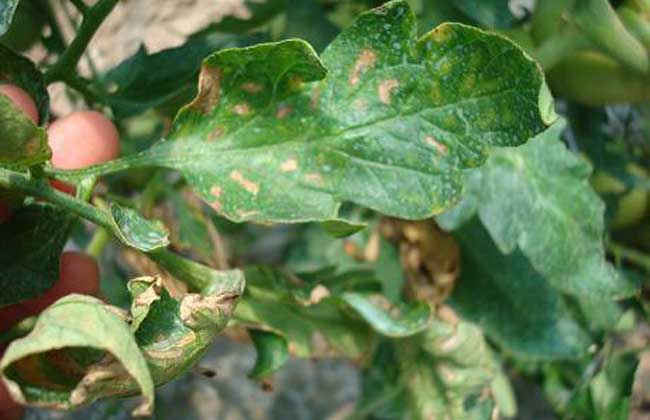
Early blight of tomato occurs in Northeast, North China, East China, Southwest China and other regions of our country. Its most notable feature is that regardless of whether the lesions occur on fruits, leaves or the main stem, they all have obvious concentric rings, so it is also called ring rot. Fruit lesions are often near the fruit stalk, stem lesions are often at the branching points, and leaf lesions occur on the leaf mesophyll. Now let us take a look at the control techniques for early blight of tomato!
Symptoms of Damage Caused by Early Blight of Tomato
Early blight of tomato mainly harms leaves, and can also harm seedlings, stems and fruits. When seedlings are infected, dark brown lesions appear at the base of the stem, slightly sunken with concentric rings. When leaves are damaged at the adult plant stage, it mostly develops from the lower leaves upward. Initially, water-soaked dark green lesions appear, and after expansion they become circular or irregular ring-patterned lesions, with the edges mostly having a light green or yellow halo, and the center showing concentric rings. When humid, black mold develops on the lesions, and in severe cases the leaves fall off. When the stem is infected, the lesions are mostly at the branching points and the base of the leaf stalks, appearing as brown to dark brown irregular circular or elliptical lesions, sunken, with concentric rings, sometimes cracked, and in severe cases causing branch breakage. When green fruits are infected, it mostly starts near the calyx, initially as elliptical or irregular brown or black spots, sunken, and later the fruits crack, the diseased part is relatively hard, and black mold is densely grown. When leaf stalks and fruit stalks are infected, the lesions are grayish brown, long elliptical, and slightly sunken.
Occurrence Pattern of Early Blight of Tomato
Early blight of tomato is caused by infection with Alternaria solani. The pathogen overwinters in soil or on seeds, spreads through wind and rain, and invades through stomata, lenticels, wounds or the epidermis, causing disease. The pathogen can cause multiple re-infections in the field, and the disease is severe during the peak fruiting period. At temperatures of 20-25°C, relative humidity above 80%, or in rainy weather, the disease is prone to epidemic. Fields with continuous cropping, low-lying land, poor soil, excessive watering or poor ventilation have more severe disease.
Chemical Control of Early Blight of Tomato
1. In the early stage of disease, promptly remove diseased leaves, diseased fruits and severely diseased branches, and begin spraying fungicides. To prevent resistance and improve control efficacy, rotation, alternation or compound use is recommended, spraying once every 7 days, for 2-3 consecutive sprays.
2. When the disease is relatively severe, remove the central diseased plants, diseased leaves, etc., and promptly adopt a control method combining Chinese and Western approaches.
Agricultural Control of Early Blight of Tomato
1. Cultivate strong seedlings: properly regulate the temperature and humidity of the seedbed, and transplant seedlings when they grow to two true leaves and one heart leaf, carefully preventing excessive seedling growth. This can prevent disease during the seedling stage.
2. Crop rotation: tomato should be implemented in a three-year rotation system with non-solanaceous crops.
3. Strengthen management: adopt high-ridge cultivation, rational fertilization, and after planting and seedling recovery, promptly close the rows to promote new root development. In greenhouses, temperature and humidity should be well controlled, and ventilation and light transmission management should be strengthened. During the fruiting period, regularly remove lower diseased leaves, and bury them deeply or burn them to reduce the chance of disease transmission.