What are the control methods for tomato leaf mold?
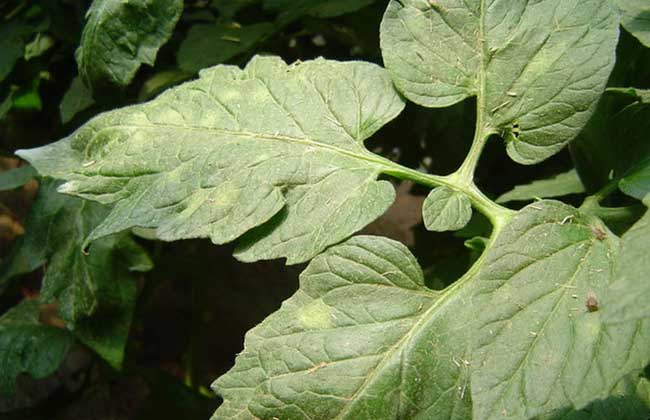
Tomato leaf mold shows symptoms on the leaves, stems, flowers and fruits of tomato, but it most commonly occurs on the leaves. In the early stage, some chlorotic spots appear on the underside of the leaves, and later they become irregular gray or dark purple mold layers. On the upper surface of the leaves, the corresponding areas turn chlorotic and yellow. In severe cases, the leaves often dry up and curl. Let's take a look below at how to control tomato leaf mold.
Damage symptoms of tomato leaf mold
Tomato leaf mold mainly harms the leaves, and in severe cases it also harms the stems, flowers and fruits. When the leaves are affected, yellow-green spots with indistinct edges first appear on the upper surface of the leaves, and a gray-white mold layer appears on the underside of the leaves; later the mold layer turns light brown to dark brown, and when humidity is high, mold can also grow on the lesions on the leaf surface. The disease often starts on the lower leaves first and gradually spreads upward. When the disease is severe, the mold layer covers the entire leaf underside, the leaves curl, and the whole plant's leaves dry up and turn yellow-brown. Similar lesions can also appear on young stems and fruit stalks, and affected flowers tend to drop off. When fruits are affected, black round or irregular patches form near the stem end or on the fruit surface, becoming hardened and sunken, and the fruit is unfit to eat.
Conditions for the occurrence of tomato leaf mold
The pathogen of tomato leaf mold prefers high temperature and high humidity. The most suitable climatic conditions for the disease are a temperature of 20-25°C and a relative humidity above 95%. In Zhejiang and the middle and lower reaches of the Yangtze River, the main disease periods are spring from March to July and autumn from September to November. The susceptible growth period of tomato is the flowering and fruiting stage. Fields with many years of continuous cropping, poor drainage, poor ventilation, overly dense field conditions and high air humidity suffer more severe disease. In years with low temperatures and frequent rain in early spring, continuous rainy days, or rainy plum rain seasons, the disease is severe. In autumn, years with relatively high late-autumn temperatures and frequent rain also have severe disease.
How do you control tomato leaf mold?
1. Reasonable crop rotation: It is best to rotate tomato with non-solanaceous crops for more than three years to reduce the base number of pathogen sources in the soil. At the same time, choose disease-resistant varieties and strictly control the seedling stage. Among the varieties promoted on the market, those with high resistance to leaf mold include Jiafen 15, Jiafen 16, Jiafen 17, Zhongza No. 7, Shenfen No. 3, Jiahong 15, and others, which can be selected for planting according to local conditions.
2. Seed disinfection: Introduced seeds need seed treatment, using warm water soaking. By taking advantage of the difference in heat tolerance between seeds and pathogens, choose a temperature that can kill the pathogens inside and outside the seeds without damaging the viability of the seeds for disinfection. For tomato seeds for greenhouse cultivation, it is advisable to soak the seeds in warm water at 55°C for 30 minutes to eliminate pathogens inside and outside the seeds. After removing them, cool them in cold water, soak them in potassium permanganate for 30 minutes, take out the seeds and rinse them several times with clean water, and finally dry them in the sun, sprout them and sow.
3. High-temperature shed sealing: Choose around noon on a sunny day and carry out a high-temperature treatment of 30-33°C for about two hours, then ventilate and cool down in time, which has a good controlling effect on the pathogen. In the early cultivation period, pay attention to raising the greenhouse temperature, and in the later period strengthen ventilation to reduce humidity. When the disease is developing, you can choose noon on a sunny day, close the greenhouse to raise the temperature to 36-38°C, and keep it for 2 hours to effectively inhibit the development of the disease.
4. Strengthen management: Ventilate in time, control watering appropriately, and ventilate in time after watering to reduce humidity. Using double-ridge film mulching and under-film irrigation can not only increase soil moisture but also significantly reduce the air humidity in the greenhouse, thereby inhibiting the occurrence and re-infection of tomato leaf mold, and plastic film mulching can effectively prevent the spread of pathogens in the soil.