Detailed Explanation of Key Points for Tomato Powdery Mildew Control Techniques
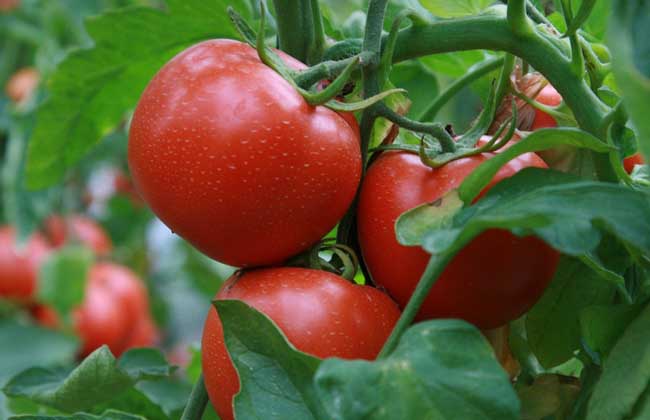
Tomato powdery mildew mainly damages the leaves; leaf stalks, stems and fruits can sometimes also be affected. White mold spots first appear on the leaf surface, scattered, then gradually expand into white powdery patches, and merge with each other into powdery patches of varying sizes. In severe cases, the entire leaf surface is covered by white powder, as if a thin layer of flour had been sprinkled on it. Let's take a look at tomato powdery mildew control techniques below!
Symptoms of Tomato Powdery Mildew
Tomato powdery mildew commonly has two manifestations. One is that small radial powdery patches first appear on the upper side of the leaf, namely mycelium, conidiophores and conidia, which then expand into round powdery patches, and the white powdery substance gradually becomes denser and larger, covering the entire leaf in severe cases. The other symptom is that at first the powdery patches on the upper side of the leaf are not obvious, but there are yellow patches with indistinct edges, and upon careful observation sparse mold layers can be seen; afterward the lesions expand and join together, the white mold layer gradually becomes obvious and covers the entire leaf, and in the later stage the whole leaf turns brown and dies.
Occurrence Pattern of Tomato Powdery Mildew
In northern China, the pathogen mainly overwinters as asexual spores on winter-grown tomatoes. In addition, cleistothecia can also overwinter with diseased residues on the ground. When conditions are suitable, the ascospores released from the cleistothecia spread with air currents, and afterward conidia are produced on the diseased parts; after the mature conidia detach, they carry out secondary infection through air currents. In areas of southern China where tomatoes are planted year-round, the pathogen has no obvious overwintering phenomenon, and conidia are continuously produced, causing damage in successive cycles. The suitable temperature for germination of Oidium lycopersici conidia is 20-25°C, and for Leveillula taurica it is 15-30°C. In open fields it mostly occurs in June to July or September to October, while in greenhouses or plastic tunnels it is mostly seen in March to June or October to November.
Tomato Powdery Mildew Control Techniques
1. Select and breed powdery mildew-resistant varieties, and strengthen the temperature and humidity management of greenhouses. After harvest, promptly remove diseased residues to reduce overwintering sources of inoculum. In the early stage of the disease, greenhouses may use the dust method or smoke method, spraying 10% Duobai dust at dusk, 1 kg per mu each time, or applying 45% chlorothalonil smoke agent, 250 g per mu each time, ignited with a slow fire and fumigated overnight.
2. In open fields or greenhouses, the following may be selected: 15% triadimefon (Fenxiuning) wettable powder 500 times solution, 40% Fuxing emulsifiable concentrate 10000-8000 times solution, 10% Shigao water-soluble granules 1500 times solution, 30% Tefulin wettable powder 1500-2000 times solution, 50% sulfur suspension concentrate 200-300 times solution, or 50% pyrazophos emulsifiable concentrate 500-600 times solution, 2% Wuyi mycin aqueous solution or 2% Nongkang 120 aqueous solution 150 times solution, 25% Tilt emulsifiable concentrate 3000 times solution, 15% triadimefon (Fenxiuning) wettable powder 2000 times solution plus 25% Tilt emulsifiable concentrate 4000 times solution, once every 7-15 d, for 2-3 consecutive applications.