Complete Guide to Growing Ercai (Baby Mustard Greens): From Sowing to Harvest
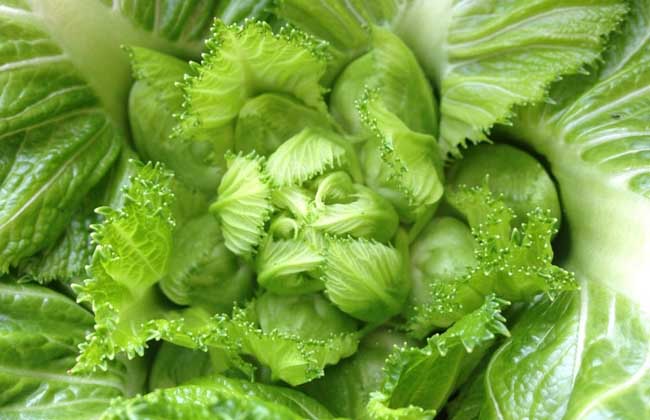
Ercai (baby mustard greens) is a very unusual vegetable. When the seedling grows to a certain stage, buds emerging from the leaf axils keep swelling until they replace the plant with swollen bud clusters. Each bud cluster weighs 100-200 grams, and each plant bears 15-20 bud clusters arranged in a pagoda shape, very attractive, nutrient-rich, tender and fine in quality, and delicious in taste. Let's take a look at the cultivation techniques for ercai below!
Sowing Techniques for Ercai
1. Seed selection: There are many local varieties of ercai. Different varieties differ greatly in disease resistance, appearance and marketability, maturity period, yield and quality. Early-maturing varieties include Jizao Wa, Zao Wa No. 1, etc., while mid-to-late-maturing varieties include Duofu No. 1, etc., which have the advantages of attractive plant shape, high yield and good disease resistance. Early-maturing and mid-to-late-maturing ercai have the same sowing period; they differ only in the length of the growth period and the early or late harvest time.
2. Seedbed: Choose a shaded area for the ercai seedbed. The best soil is loam or sandy loam with deep soil layers, fertile and loose texture, convenient drainage and irrigation, and free of pests and diseases. In early to mid-August, deep-plow the soil to bake it. Spread 15-25 kg of quicklime per mu to disinfect and adjust the soil pH (6.5-8, neutral to slightly alkaline). If only quicklime is spread, the soil will become hard and poor. Add decomposed human and livestock manure plus calcium superphosphate, plant ash, and trace elements such as boron, magnesium and zinc as base fertilizer. Mix well with the seedbed soil, level and finely break up the soil, and make beds about 1.7 m wide for later use.
3. Sowing: To grow ercai well, the choice of sowing period is very important and is the key. Different sowing periods produce completely different results. If sown too early, when temperatures are too high, the plants tend to bolt into a club shape, flower, and form tall stems. If sown too late, there will be few or small bud clusters, forming a pineapple shape, and the plants will be reluctant to form buds and become empty plants, prone to disease, with low yield and loss of quality and marketability.
Seedbed Raising of Ercai Seedlings
1. Sowing: The suitable temperature for ercai seed germination is about 20-28 degrees C. Before sowing, splash decomposed manure water to moisten the bed surface. When sowing, make sure to broadcast evenly (can be mixed with sand). After thin sowing, cover with 0.5 cm of fine sand, stone grains or plant ash. After spraying pesticide, cover with rice straw or shade net. When 75% of the seedlings have flattened cotyledons, promptly remove the rice straw or shade net in the evening to prevent the seedlings from becoming leggy. If there is continuous high temperature and drought and the soil surface cracks, water in the evening and early morning to fight drought and protect the seedlings, and set up small arch sheds with shade netting to provide cooling.
2. Thinning: Thin the ercai seedlings 2-3 times throughout the seedling period and apply light human and livestock manure 2-3 times. When the seedlings have 4 true leaves and are about 25 days old, remove them from the seedbed with soil and prick them out at a spacing of 10 x 15 cm between plants and rows. Water with dilute human and livestock urine to settle the roots. After about 15-20 days of pricking out, once old and sturdy seedlings have formed, they can be planted in the field. Before pricking out, pull out and discard the few unusually large or variant seedlings.
3. Strong seedlings: Seedlings sown before September 10 on the solar calendar must go through pricking out to recover and be cultivated into strong seedlings before field planting. Late-sown seedlings cultivated for about 30 days into old and sturdy seedlings can be planted directly. Ercai is suitable for planting old and sturdy seedlings, not tender seedlings or tall seedlings. Professional seedling raising in nutrient pots or plug trays can also be used, and field planting is done after old and sturdy seedlings form in the nutrient pots or plug trays.
Field Management of Ercai
1. Field planting: Choose sandy loam or loam plots or greenhouses with deep soil layers, sheltered from wind and facing the sun, good drainage and convenient irrigation for field planting. In the south, paddy fields after rice harvest can be chosen for cultivation, using idle winter land to make efficient use of the land. After rice harvest, open ditches in time for drainage and make large beds. Generally, the main ditch is 35-40 cm deep and 30-35 cm wide, and the large bed width is controlled at about 3.5 m. Mechanically cut the harvested rice straw into pieces about 5 cm long and spread them on the field.
2. Land preparation: Plow the field about 20 days before transplanting. Before plowing, spread 50-80 kg of compound fertilizer and organic fertilizer per mu as base fertilizer and deep-plow more than 30 cm. After the land is leveled, make beds 1.8 m wide. Dig planting holes 10 days before field planting, 3 rows per bed. Use decomposed compost mixed with calcium superphosphate as bottom-hole fertilizer, cover with soil, and after covering, spray herbicide to prevent weeds.
3. Transplanting: After 10 days, choose a cloudy or sunny day to transplant with soil. After field planting, water promptly with rooting water. After the plants survive field planting, apply human and livestock manure water 1-2 times to help promote seedling growth. 35-40 days after field planting, around the Beginning of Winter, heavily apply the "open-disc" fertilizer: per mu, apply 2500-3000 kg of human and livestock urine, plus 20-30 kg of urea, plus 20 kg of calcium superphosphate, plus 15 kg of potassium sulfate, as well as a small amount of phosphate fertilizer, boron fertilizer or compound fertilizer. Open a small hole 15 cm from the plant, apply the fertilizer water into it, and cover with soil to protect the roots. About 60 days after field planting, when ercai is at the early stage of rapid swelling, apply human and livestock manure water or biogas slurry plus urea as a top dressing once.
Pest and Disease Control of Ercai
1. After sowing in the seedbed, splashing manure and covering the seed, spray 40% dimethoate, Yashijing, Actara, imidacloprid and other pesticides at 500-800 times dilution on and around the bed surface to kill aphids, ants (to prevent them from carrying away ercai seeds) and related pests.
2. For damping-off disease during the ercai seedling stage, soak seeds with hymexazol, cupprodan or Miaojundi at 300-500 times dilution. For the seedbed soil, mix 20 g of medicinal powder with 10-15 kg of fine soil and spread it as a bottom layer and around the roots, or spray at 600-800 times dilution.
3. For soft rot, at the early stage of disease, spray 14% copper complexing agent aqueous solution at 300 times dilution, 72% agricultural streptomycin sulfate at 2000 times dilution (500 mg/kg), or 3% Zhongshengmycin wettable powder at 1000 times dilution, etc.
4. For viral disease, at the early stage of disease, spray 5% Zhibingling at 300 times dilution, or 5% Junduqing wettable powder at 400 times dilution, or Duba Junba at 500-800 times dilution, etc. If virus-infected plants are found, pull them out with roots, put them in plastic bags, and destroy them outside the field.
5. For downy mildew, use Shuangyiba or Pushuang at 500-800 times dilution, or 58% Ridomil or 70% Baidefu at 500-700 times dilution, and spray on the underside of leaves once every 5-7 days for 2-3 consecutive sprays. Downy mildew is prone to occur when temperatures are slightly high, with sudden heat and cold, and when it is rainy and humid.
6. For flea beetles, use 50-80% dichlorvos emulsifiable concentrate at 800-1000 times dilution, 50% phoxim emulsifiable concentrate at 1500 times dilution, or 40% pyrethroid emulsifiable concentrate at 2000 times dilution, etc., and spray for control during the young larval stage of flea beetles.
7. For root maggots, drench the roots with one tablespoon of 50% isocarbophos at 600-800 times dilution.
8. For aphids, spray imidacloprid or compound insecticidal pesticide at 1000 times dilution, or use yellow sticky boards to trap and kill them, once every 7-10 days. When the condition is severe, it will cause ercai to fail to form buds, or produce few or small buds, or develop bald heads and other deformities, seriously affecting yield and benefits.
Note: Throughout the entire growth period of ercai, never apply urea dry. Fertilization should follow the principle of light and dilute first, then heavy and concentrated, and control first, then topdressing. Excessive use of nitrogen fertilizer must be controlled to prevent the plants from becoming leggy or growing too vigorously and tender, which will delay bud formation, make the buds small and few, make the plants unable to withstand frost, and seriously affect yield and the quality of the marketable vegetable. During autumn drought and early winter drought, frequently apply light manure water to protect the seedlings. If fertilizer and water are lacking during the growth period, if boron fertilizer is lacking, and if harvest is not timely, the top part will show reddening in the later stage. Never deep-cultivate to remove seedlings in ercai, as deep cultivation easily damages roots and spreads disease, inducing disease. Instead, shallowly hoe 2-3 cm on the soil surface or pull weeds by hand. Ercai cultivation land that has grown related mustard crops for 2 or more years should not be replanted continuously, otherwise yield will be low and disease will be likely.