Key Technical Points and Management Methods for Greenhouse Cabbage Cultivation
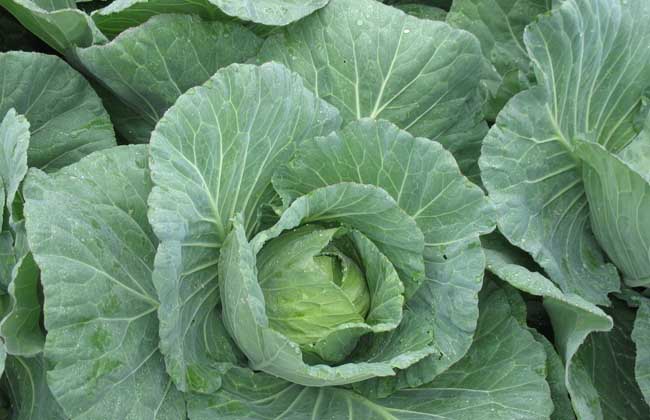
Cabbage is one of the important vegetables in China and also one of the best vegetables recommended by the World Health Organization. It is also known as lotus white, head cabbage, Gaoli cabbage, cole, bao bao cai, round cabbage, etc. It is an annual or biennial herbaceous plant of the genus Brassica in the Brassicaceae family. Except for Chinese kale (Brassica alboglabra), which originated in China, all its varieties originated along the coast from the Mediterranean to the North Sea. Let us take a look at greenhouse cabbage cultivation techniques below!
Land Preparation and Fertilization
For greenhouse cabbage cultivation, generally 5000 kg of decomposed farmyard manure per mu and 50 kg of compound fertilizer of the medium-nitrogen, high-potassium, low-phosphorus type are applied. To improve quality and enhance stress resistance, high-quality calcium fertilizer can be applied in combination, which can help prevent tipburn. Spread the fertilizer evenly in the field, plow and rake level, then make beds.
Timely Transplanting
Greenhouse cabbage cultivation is generally completed by the end of March. If planting is too late, the advantage of early marketing under protected cultivation cannot be brought into play, economic returns are not high, and the significance of early cultivation is lost. Generally, for early and mid-maturing varieties, the density is 2500-2800 plants per mu. If the density is too high, the weight per plant decreases; if the density is too low, the overall yield will also decrease. Choose 3-5 consecutive days of clear, high-temperature weather for transplanting. After transplanting, water each plant with transplanting water; the amount of water should not be too large.
Field Management
Cabbage is a semi-cold-tolerant vegetable. When cabbage has just been transplanted and is recovering from transplanting, it requires relatively high temperatures. The daytime temperature in the greenhouse should be kept at 25-28°C, and the nighttime temperature should not be lower than 10°C, to promote rapid root growth. Generally, the plants recover from transplanting after three to five days. After that, they enter the seedling hardening stage; lower the temperature appropriately, keep it at 20-25°C during the day, control water, and harden the seedlings for about 10 days. When entering the rosette stage, according to soil moisture conditions and seedling growth, apply a small amount of water and topdress with 15 kg of urea to promote rapid leaf growth. When entering the heading stage, the demand for phosphate fertilizer and potassium fertilizer is relatively large, and the demand for water is also relatively large. Topdress with 20 kg of phosphorus-potassium fertilizer. In the field, it is best to alternate between dry and wet; do not apply large amounts of water. The temperature during the heading stage should not be too high. As the outside temperature rises, gradually increase ventilation, and the daytime maximum should not exceed 28°C.
Disease Control
Because of the high humidity in the growing environment, greenhouse cabbage production commonly sees two diseases, namely downy mildew and black rot. The symptoms of cabbage downy mildew are yellow, irregular, angular lesions on the upper side of the leaves, with perforation in severe cases, and a layer of gray mold on the underside. It generally occurs frequently under high-humidity conditions in the middle heading stage. Infinito can be selected for control at the early stage of the disease, with two consecutive applications. Black rot is characterized by rotting leaves at the base of the stem, a foul odor, and black patches. Wanjia can be selected and sprayed twice.
Timely Harvest
The harvest period for greenhouse cabbage is generally in late April and early May. When the top of the cabbage head becomes flat and the head is firm, it can be harvested. For early-maturing varieties, the net weight per head is generally 1-1.5 kg. When harvesting, keep two to three outer leaves at the lower part of the head to protect the head, prevent squeezing and mechanical damage during transportation, and improve the marketability of the head.