How to Grow Colorful Bell Peppers in a Greenhouse? A Full Breakdown of the Key Growing Techniques
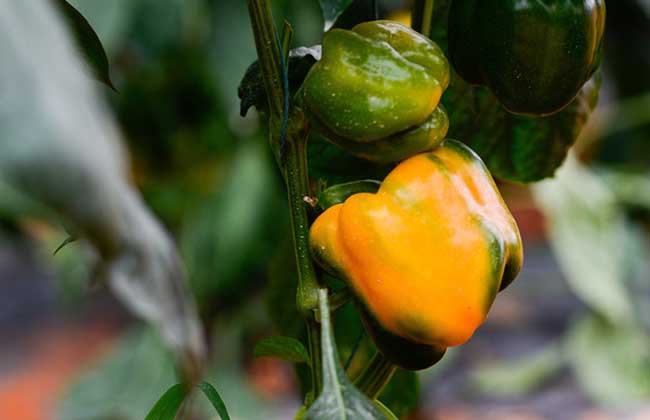
Colorful bell peppers are a very distinctive solanaceous vegetable, named for their bright, multi-colored appearance. Their original range was from Mexico to Colombia and other places, and today they are widely cultivated around the world. They are brightly colored, sweet, crisp, and nutritious, generally well received by the market, and have very high economic value with great yield potential. Let's take a look at greenhouse colorful bell pepper growing techniques below!
Colorful Bell Pepper Variety Selection
For colorful bell pepper varieties, choose greenhouse-specific varieties with an indeterminate growth habit. Currently, the varieties commonly used in production and relatively well established in cultivation include Ousheng Chaomai red colorful bell pepper, Ousheng Huangyongzhen yellow colorful bell pepper, Zigui Ren purple colorful bell pepper, White Princess white colorful bell pepper, Juxiya orange colorful bell pepper, and others. After many years of cultivation and selection in protected northern greenhouses, these varieties have strong adaptability to greenhouse production, great yield potential, and good quality and coloring.
Colorful Bell Pepper Sowing and Seedling Raising
1. Seedling raising time: Colorful bell peppers can be sown in greenhouses in all four seasons, but mid-to-late July to late December is preferable. Sowing too early leads to severe disease, while sowing too late makes it difficult to build up a high-yielding framework before the severe winter, during the period when both light and temperature are relatively good. In addition, colorful bell pepper seeds are expensive, and the seedling period is long; winter seedling raising also falls in the cold, low-temperature season, making seed rot, seedling death, and stunted seedlings very likely. It is required to use heated and insulated seedbeds and nutrient bags for seedling raising inside the greenhouse.
2. Seedling substrate: Use materials with strong fertilizer and water diffusion capacity (such as peat, leaf mold, etc.), add 0.4% compound fertilizer, 1% calcium superphosphate, and 0.01% carbendazim, mix thoroughly, then fill into plastic nutrient bags 8-10 cm in diameter, water thoroughly, and then sow.
3. Seed treatment: Before sowing colorful bell peppers, the seeds must be treated. Soak the seeds in warm water at 55°C for 30 minutes, then wrap them in clean gauze to keep them warm and promote sprouting. During germination, maintain the temperature at 25°C, rinse and turn them with warm water every day, and sow after the seeds show white sprouts. Sow one seed per nutrient bag, and cover with 0.5 cm of soil after sowing.
4. Post-sowing management: Place the nutrient bags on the seedbed inside the greenhouse and maintain 25-30°C. After emergence, maintain 20-30°C during the day and 15-18°C at night. 7-10 days before transplanting, carry out low-temperature hardening: around 20°C during the day and 13-15°C at night. Water the nutrient bags as needed, keeping the substrate alternately dry and moist. At the 2-4 leaf stage, apply compound fertilizer 2-3 times along with watering, 8-10 kg per mu each time, and spray 0.2% monopotassium phosphate as a foliar fertilizer every 3-4 days. During the seedling stage, colorful bell peppers need an environment with ample light; only then will the seedlings be sturdy.
Colorful Bell Pepper Planting Techniques
1. Land preparation and fertilization: Colorful bell pepper roots grow slowly and have poor regeneration ability, so they need a deep, loose, and fertile soil environment. Before land preparation, apply 4-5 tonnes of decomposed farmyard manure per mu, 40 kg calcium superphosphate, 50 kg compound fertilizer, 50 kg potassium sulfate, and 4 kg each of zinc sulfate and borax, and work them into the soil layer through deep plowing, then break up the clods and prepare the land finely.
2. Bed preparation and planting: After the land is leveled, make the bed surface 1.1 m wide, with a required ditch width of 40 cm and depth of 30 cm. Following a double-row planting requirement with a plant spacing of 40-45 cm and row spacing of 80 cm, plant 1500-1800 plants per mu. Transplant after 3 p.m.; when planting, the seedling block should be 1 cm below the soil surface. Plant large and small seedlings separately for easier management.
3. Planting management: After planting, water thoroughly to settle the roots. Within 3-5 days after transplanting, water in the morning and evening to ensure survival. After the pepper seedlings survive, water according to soil moisture conditions. Within 15 days after transplanting, roll up the side films on both sides of the greenhouse every morning after 9 a.m. in time to ventilate and cool down, and after 5 p.m. lower and cover the rolled-up side films to ensure the nighttime temperature can meet the needs of pepper survival and rooting. After 15 days, the rolled-up side films no longer need to be lowered. If the temperature drops, strengthen insulation measures and do not roll up the films on both sides of the greenhouse again, which would cause the temperature inside the greenhouse to drop. It must be ensured that the temperature inside the greenhouse does not fall below 10°C, to meet the needs of colorful bell pepper growth and development.
Colorful Bell Pepper Growing Management
1. Reasonable watering: After the colorful bell peppers survive planting, water moderately. When the first fruit first appears, begin watering and topdressing. During the flowering and fruiting period, keep the soil moist. Depending on how dry or wet the soil is, water once every 5-10 days. When the temperature is low, water in the morning on sunny days; when the temperature is high, switch to watering in the evening. Dry conditions and high temperatures inside the greenhouse will affect flowering and fertilization of colorful bell peppers and cause flower drop. At this time, pay attention to watering to cool down and increase humidity. The relative soil moisture content should be kept at 60-70%.
2. Timely fertilization: During the seedling stage of colorful bell peppers, apply a strong-seedling fertilizer, 5-10 kg of compound fertilizer or urea per mu. During the early fruiting stage, apply a fruit-setting fertilizer, 20 kg of compound fertilizer or urea per mu. After that, topdress about once every 20 days, using 15-20 kg of compound fertilizer per mu each time, diluted with water and applied. In the mid-to-late fruit-picking period, spray a foliar fertilizer of 0.2% monopotassium phosphate plus 0.1-0.2% zinc sulfate once every 7-10 days.
2. Temperature management: The suitable temperature for colorful bell pepper growth is 20-25°C during the day and 15-20°C at night. When the greenhouse temperature is below 10°C or above 35°C, pollination is difficult and flower and fruit drop is likely. The air humidity requirement is 70%. At midday when sunlight is abundant and the temperature is high, cover with a shade net to cool down. When the outside temperature rises, gradually increase ventilation to help the plants pass the summer safely.
3. Pruning and vine hanging: Select and retain 2 strong main branches per plant. Remove the flower buds of the first pepper and the basal side shoots in time. Start retaining peppers from the 4th-5th node onward, mainly letting the main branches bear fruit, and remove side branches in time afterward. Side branches in the middle can be pinched off after retaining 1 fruit. It is required to always keep 2 branches per plant growing upward. Generally no hilling is done; fix each main branch by hanging it with 1 anti-aging plastic string.
4. Flower and fruit thinning: Colorful bell peppers have strong branching ability, so prune branches before flowering, and remove side branches that grow out in time. During the growing period, thin flowers and fruits in time. Do not retain the first pepper; retain fruits alternately, keeping one fruit per fork, and remove all other flowers and fruits, ensuring that each plant bears no more than 6 fruits at the same time to facilitate fruit enlargement. Remove old, yellow, and diseased leaves from the lower part in time, so that nutrients are concentrated and light conditions are improved.
5. Timely harvesting: After the colorful bell pepper fruits stop enlarging and change color, harvest them in time. Harvest in the morning, and when harvesting, pick the fruit together with the entire fruit stalk, without leaving a stalk in the leaf axil.