How to control onion thrips? A few practical methods to teach you
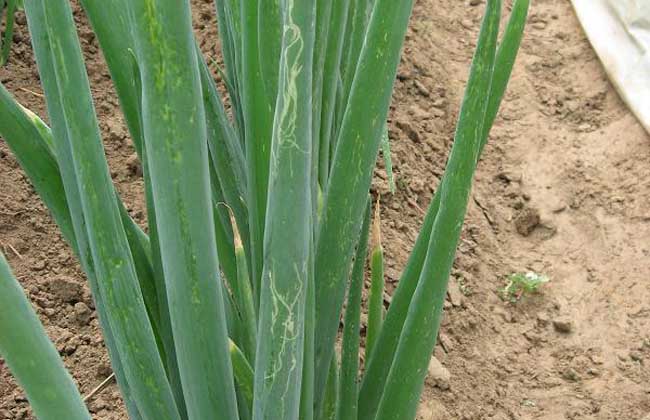
Onion thrips, also known as tobacco thrips, cotton thrips and so on, mainly damages onions, chives, garlic, cucumbers and solanaceous vegetables in vegetable fields. It is mainly distributed in Heilongjiang, Jilin, Liaoning, Beijing, Hebei, Zhejiang, Jiangsu, Guizhou, Guangdong, Guangxi, Hainan, Taiwan, China, Shaanxi, Ningxia, **, Tibet, Inner Mongolia and other provinces and regions. Now let us take a look at how to control onion thrips!
Damage symptoms of onion thrips
Adult and nymph onion thrips damage the heart leaves, tender buds and young leaves of the above hosts. Throughout the entire growing period of onions, insects of all stages are active and feeding, causing continuous silvery-white streaks to form on the leaf surface after the onions are damaged. In severe cases, the leaves become twisted, yellow and withered, and from a distance an onion field looks “drought-stricken”, seriously affecting the quality and yield of onions. In the north, onions are customarily eaten raw, but because onion thrips damage has been severe in recent years, the leaves are covered with feeding marks and can no longer be eaten raw.
Occurrence pattern of onion thrips
In North China, onion thrips produces 8 to 10 generations a year. It mainly overwinters as adults in the leaf sheaths of overwintering onions, Welsh onions and garlic, in soil crevices, or among dead leaves and weeds, and emerges from dormancy when onions and garlic turn green again. Adults are active, can spread with the wind, fear strong light, and mainly feed in the morning and evening, mostly feeding and damaging on shaded sides and between leaf axils. They can reproduce by parthenogenesis, and eggs are laid singly in the stem and leaf tissues of the host. Nymphs are not very active and mostly gather at the base of the leaves to damage them, dispersing to cause damage only when slightly older. After the 2nd-instar nymph matures, it burrows into the soil, molts into the prepupal and pseudopupal stages, and finally emerges as an adult. A generation of thrips takes 20 to 35 days, and this is extended when temperatures are low. The most suitable conditions for its occurrence on onions are a temperature of 23 to 28°C and a relative humidity of 40 to 70%. High temperature and high humidity, and storms, inhibit its occurrence.
Control measures for onion thrips
The main measure for controlling onion thrips is to clean the field. In early spring, clear weeds and leftover plant residues and fallen leaves from onion and garlic fields and their surroundings, and burn them in a concentrated way to eliminate overwintering insect sources. At the same time, strengthen fertilizer and water management. Especially when the weather is dry, attention should be paid to watering to promote plant growth and destroy the ecological environment favorable to the occurrence of onion thrips.
Chemical control of onion thrips
For chemical control of onion thrips, you can choose 3% acetamiprid emulsifiable concentrate at 2000 times dilution, 10% imidacloprid wettable powder at 1500 times dilution, 4.5% beta-cypermethrin at 1000 times dilution, 99% mineral oil at 150 times dilution and other sprays for control. Because onion leaves are relatively smooth, a leaf spreader or neutral laundry detergent can be added when spraying to increase adhesion and improve the spraying effect.