Detailed Explanation of Sprout Vegetable Cultivation Techniques and Management Methods
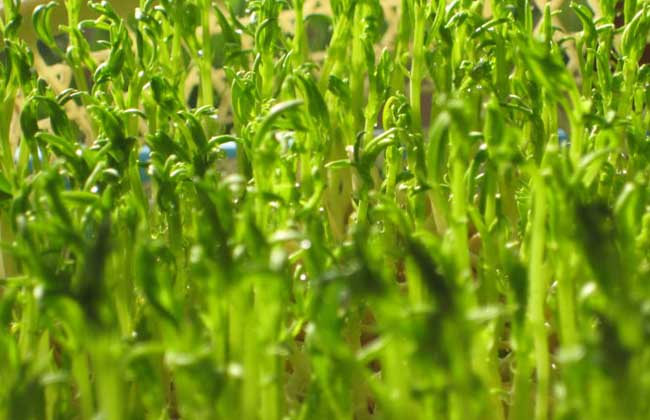
Sprout vegetables are often short for sprouted seedlings and bean sprouts. Common varieties include soybean sprouts, mung bean sprouts, red bean sprouts, peanut sprouts, pea sprouts, radish sprouts, and so on. They are eaten for their tender young organs. Because the seeds suffer little contamination during the cultivation process, grow quickly, and can easily have their environmental conditions regulated, and because the growth cycle is short, both production efficiency and economic returns are very high. Let's take a look at sprout vegetable cultivation techniques below!
Selecting Seeds
You should choose new seeds with a germination rate above 95%, high purity and cleanliness, plump grains, and no contamination. Toona sinensis (Chinese toon) seeds in particular easily lose their germination ability under high-temperature conditions, so even more care should be taken to select new seeds that have not overwintered (rub off the wings before use). Using such seeds to cultivate sprout vegetables results in fast-growing seedlings that are sturdy, slow to form fiber, low in yield, tender in quality, and free of contamination.
Soaking Seeds to Promote Germination
Rinse the selected seeds 2 to 3 times with clean water at 20-30°C, then soak them in water 2 to 3 times the volume of the seeds. The time is slightly longer in winter and slightly shorter in summer; generally 18-24 hours for peas, 12-20 hours for Toona sinensis, 24-36 hours for buckwheat, and 6-8 hours for radish. After soaking, rub off the mucilage on the seed coat, drain off excess water, place the seeds in a flat-bottomed container, cover with a wet towel, and place peas at a constant temperature of 18-22°C and Toona sinensis at 20-23°C to promote germination. After 48 hours for peas, buckwheat, and Toona sinensis, and 24 hours for radish, the sprouts can be sown once they reach 2-3 mm in length.
Sowing Techniques
Wash the sowing trays clean, lay 1-2 layers of white paper (or old newspaper) on the bottom of each tray, and let the paper absorb enough water. Evenly scatter the germinated seeds on the wet substrate. Generally, for a tray of 60×25×5 cm, the sowing amount per tray is 350-400 grams for peas, 150-170 grams for buckwheat, 80-100 grams for radish, and 30-50 grams for Toona sinensis. After sowing, stack the seedling trays neatly together, cover them well with black plastic film, and carry out "stacked-tray germination" for peas at 18-13°C, buckwheat and radish at 20-25°C, and Toona sinensis at 20-23°C. After 2 days, when the sprouts reach 2-3 cm in height, the trays can be "put on the shelves," and at this temperature they begin to grow in the light.
Sprout Management
1. Light: Buckwheat sprouts and doll-tassel radish greens require relatively strong light, Toona sinensis seedlings require medium light, and dragon-whisker peas are more adaptable. Note that during the growth period of the sprouts, the light must not be too strong, otherwise cellulose will form prematurely and affect quality; if the light is too weak or insufficient, the sprouts tend to become thin and weak and may lodge and rot.
2. Water: Because sprout vegetables are themselves fresh, tender, and juicy, water must be replenished frequently, with spraying or misting 2-3 times a day, to the extent that the substrate in the tray is moist without large amounts of water dripping. Spray less on cloudy and rainy days or when the temperature is low, and spray more during high temperatures and dry conditions.
3. Ventilation: Ventilation should be maintained every day to regulate temperature and humidity.
Timely Harvesting
Sprout vegetables use tender stems and leaves as their product. The tissues are delicate and the water content is high, so they are mostly sold as whole live trays. The harvest standards are as follows.
1. Dragon-whisker peas: The sprouts are pale yellow-green, 10-12 cm tall, uniform, with the top cotyledons unfolded, tender, and not yet fibrous.
2. Toona sinensis seedlings: The sprouts are deep green, 8-12 cm tall, uniform, with cotyledons unfolded and plump, the heart leaves not yet emerged, and a rich fragrance.
3. Buckwheat sprouts: The sprout cotyledons are green and the hypocotyl is red, the sprouts are 12-15 cm tall, uniform, with cotyledons flat and fully plump.
4. Doll-tassel radish greens: The sprouts are emerald green, 8-10 cm tall, and uniform. The cotyledons are flat and fully plump.