Key points of zucchini cultivation techniques, explained through the whole process from sowing to harvest
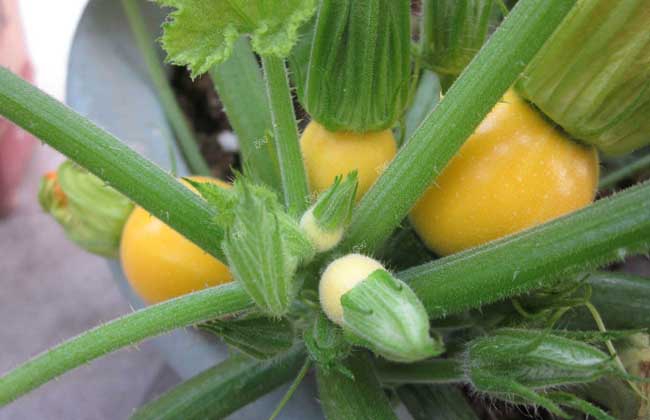
Zucchini, also known as xionggua, baigua, xiaogua, caigua, qiangua, etc., is an annual vining herbaceous plant of the genus Cucurbita in the Cucurbitaceae family. It originated in southern North America, and China began introducing it from Europe for cultivation in the mid-19th century. Its fruit is used as a vegetable and contains relatively large amounts of nutrients such as vitamin C and glucose, giving it extremely high cultivation value. Now let us take a look at zucchini cultivation techniques together!
Zucchini growth habits
1. Temperature: The most suitable temperature for the zucchini growing period is 20-25 degC; below 15 degC growth is slow, and below 8 degC growth stops. Above 30 degC growth is slow and diseases occur very easily. The suitable temperature for seed germination is 25-30 degC; seeds can germinate at 13 degC, but very slowly; germination is fastest at 30-35 degC, but this easily causes leggy growth. The flowering and fruiting period requires relatively high temperatures, generally best maintained at 22-25 degC. The minimum temperature for root growth is 6 degC, and the minimum temperature for root hair formation is 12 degC. When the night temperature is 8-10 degC, fertilized fruits can develop normally.
2. Light: Zucchini has moderate light intensity requirements and is relatively tolerant of weak light, but insufficient light easily causes leggy growth. In terms of photoperiod it is a short-day plant; long-day conditions favor stem and leaf growth, while short-day conditions lead to an earlier fruiting period.
3. Humidity: Zucchini likes moisture and is not tolerant of drought. Under high temperature and drought conditions, viral diseases easily occur, but high temperature and high humidity also easily cause powdery mildew.
4. Soil: Zucchini is not strict about soil requirements; sandy soil, loam, and clay can all be used for cultivation, and deep loam soil easily achieves high yields.
Zucchini cultivars
1. Huaye zucchini: Huaye zucchini is also called Algerian zucchini. It is commonly cultivated in northern China. The vine is relatively short, upright, with fewer branches, and a compact plant shape, suitable for dense planting. The leaves are palmately deeply lobed, narrow and long, with grayish-white mottling near the veins. The first female flower is borne on the fifth to sixth node of the main vine, and a single plant bears 3-5 fruits. The fruit is long oval, the rind is dark green with irregular yellow-green stripes, the flesh is greenish-white, dense in texture, and has few fibers.
2. Seedless zucchini: The seeds of seedless zucchini have no seed coat, and it is a variety grown for its seeds as food. The plant is vining, with vines 1.6 m long. The first female flower is borne on the seventh to ninth node, and afterward one more female flower appears every 1-3 nodes. The fruit is short cylindrical, and the young fruit can be used as a vegetable. The mature fruit rind is orange-yellow, and a single fruit weighs 4-5 kg.
3. Green-skinned zucchini: The vines of green-skinned zucchini are 3 m long and 2.2 cm thick. The leaves are heart-shaped, dark green, with irregular serrations on the leaf margin. The first female flower is borne on the fourth to sixth node of the main vine. The fruit is long oval, with a smooth surface, greenish-white, and has 6 ridges. A single fruit generally weighs 2-3 kg.
4. Long-vine zucchini: The long-vine zucchini plant grows prostrate, with stems and vines about 2.5 m long and moderate branching. The leaves are triangular, shallowly lobed, green, and mostly hairy on the underside. The main vine begins to bear fruit after the ninth node, and a single plant bears 2-3 fruits. The fruit is cylindrical and slightly narrower in the middle.
Zucchini cultivation techniques
1. Land preparation and fertilization: Land preparation and fertilization mainly use organic fertilizer. Generally, per mu apply 2000 kg of decomposed organic fertilizer, 75 kg of cake fertilizer, 40 kg of compound fertilizer, and 80 kg of plant ash. Spread the fertilizer evenly on the ground, deep plow 30 cm, and level the ground.
2. Ditching and bed preparation: Use deep furrows and high beds, with plastic film mulching cultivation. Generally the bed width is 100 cm, the bed height is 20 cm, and the furrow width is 25-30 cm. Before covering the film, level the bed surface again and spray herbicide. When covering the film, it must be pulled tight and laid flat so that the plastic film fits closely against the bed surface, and the edges of the film should be compacted with soil. After land preparation, fertilization, bed preparation, and film covering, before planting fumigate with 45% chlorothalonil smoke agent at 1 kg per mu, close the greenhouse for fumigation and disinfection for about 7 days.
3. Timely planting: Generally plant in mid-March. When the seedlings have 3 leaves and 1 heart or 4 leaves just unfolding, with a seedling age of about 30 days, planting is carried out. Small varieties are planted in double rows at a spacing of 40×40 cm, about 1800 plants per mu. Large varieties are planted in double rows at a spacing of 50×50 cm, about 1600 plants per mu. One day before planting, water the seedbed thoroughly, select strong and good seedlings, and try to transplant with as much soil around the roots as possible. During planting, the root system should be allowed to spread normally. After planting, water to settle the roots, and seal the planting holes tightly with fine soil. Afterward, water once a day until the seedlings survive.
4. Temperature management: During the seedling recovery stage, do not ventilate, and raise the greenhouse temperature to promote root growth. During the day the greenhouse temperature should be maintained at 25-28 degC, and at night at 18-20 degC. On sunny days at noon, when the greenhouse temperature exceeds 30 degC, ventilation may be carried out appropriately. After seedling recovery, control the daytime greenhouse temperature at 20-25 degC and the nighttime temperature at 12-15 degC, which is beneficial for female flower differentiation and early fruit set. After fruit set, maintain the daytime temperature at 22-26 degC and the nighttime temperature at 15-18 degC, with the minimum not lower than 10 degC. Increasing the day-night temperature difference is beneficial for nutrient accumulation and fruit enlargement.
5. Pollination and fruit preservation: When the temperature is low in early spring, artificial pollination must be adopted. Generally before 9 a.m., pick male flowers that opened that day, remove the corolla, and gently smear it on the stigma of the female flower. Alternatively, use plant hormones such as 4-CPA and fruit-setting agents according to the instructions.
6. Fertilizer and water management: Water timely according to soil moisture conditions. If fertilizer is lacking in the later stage, apply 10-15 kg of compound fertilizer per mu by breaking the film, or spray foliar fertilizer.
7. Timely harvest: Zucchini is mainly eaten as young fruit. Harvest when it meets commercial fruit requirements. Plants with vigorous growth should appropriately retain more fruits and larger fruits, while leggy plants should appropriately delay fruit harvest. Weak-growing plants should retain fewer fruits and harvest fruits earlier. When picking, do not damage the main vine, and keep the fruit stalk on the main vine as much as possible.
Summary: Zucchini fruit is cylindrical, relatively small, with a smooth surface, and is harvested as young fruit for vegetable use. It is deeply loved by people for its thin skin, thick flesh, abundant juice, suitability for both meat and vegetarian dishes, and use as both a dish and a filling, and its cultivation prospects are very good. Alright, the editor has introduced zucchini cultivation techniques for everyone here. Next, let us continue to look at zucchini pest and disease control techniques!
The main pests and diseases of zucchini include viral disease, powdery mildew, downy mildew, gray mold, gummy stem blight, and aphids, whiteflies, black cutworm (small cutworm), etc. Using integrated pollution-free control techniques, one should understand the occurrence patterns of various diseases under different cultivation environments, adopt a foundation of disease-resistant varieties and the cultivation of disease-free strong seedlings, pay attention to ventilation and light transmission inside facilities and in the field, reduce air humidity, strengthen fertilizer and water management, and combine biological control with the rational use of high-efficiency, low-toxicity, low-residue pesticides. Continuous cropping should also be avoided; rotating with spinach, Chinese chives, cabbage, etc. can reduce the damage caused by American leafminer.
Cultivate disease-free strong seedlings
1. Variety selection: When cultivating zucchini, one may choose Early Green No. 1, Biyu, PS zucchini, Yu Guanyin, etc., which are relatively resistant to viral disease and powdery mildew.
2. Seed disinfection: For zucchini seed disinfection, soak seeds in 10% trisodium phosphate for 20 minutes, rinse with clean water, and then sow; or soak seeds in 500 times liquid of 50% carbendazim wettable powder for 30 minutes, rinse with clean water, air-dry, and then sow.
3. Soil disinfection: Use disease-free new soil or disinfected soil for raising seedlings in nutrient pots. For seedbed soil treatment, use 50% carbendazim or 50% thiram wettable powder at 5-10 g per sq m.
4. Strengthen management: In summer and autumn, use insect-proof nets or shade nets to cover seedlings to prevent damage by aphids and other pests and the spread of viral disease. Sowing density should not be too high. During the cotyledon stage, divide seedlings or carry out grafting, and ventilate appropriately to prevent leggy growth of seedlings.
Scientific field management
1. Clean up the garden, remove residual branches and fallen leaves, burn or deeply bury them, eradicate weeds at the field edges, and after applying base fertilizer, deep plow the soil 30 cm to reduce sources of inoculum.
2. Adopt high-bed cultivation and cover with plastic film. In winter, use micro-drip irrigation or dark irrigation under the film. For protected facility cultivation, use anti-fog drip-free film, strengthen temperature and humidity regulation in the greenhouse, ventilate in a timely manner, appropriately control watering, and drain moisture promptly after watering, so as to control disease occurrence.
3. Hang vines in a timely manner. Diseased leaves, diseased fruits, and old leaves should be removed promptly and taken outside the field for deep burial. Open-field zucchini should be cultivated and weeded in a timely manner to loosen the soil.
4. For solar greenhouses and large greenhouses, zucchini requires that leaf surfaces do not form condensation or that condensation time does not exceed 2 hours. After sunrise in the morning, control the greenhouse temperature at 25-30 degC, with a maximum not exceeding 33 degC, and humidity at about 75%. Ventilate from before noon to the afternoon, lower the temperature to 20-25 degC and humidity to about 70%, close the greenhouse in the evening, and allow the temperature to drop to 11-12 degC from night to early morning. If the temperature reaches above 13 degC, ventilate all night to reduce humidity in the greenhouse. Watering should be done on sunny mornings; after watering, close the greenhouse and raise the temperature to 35-40 degC, stuffy for 1 hour, then slowly ventilate. In continuous rainy weather, watering should be controlled.
5. In farming operations, diseased plants and healthy plants should be handled separately to avoid spreading the virus, or after handling diseased plants, wash hands with soapy water before handling healthy plants.
Biological control measures
1. Set up yellow boards in protected areas to trap and kill whiteflies, aphids, American leafminer, etc. Encarsia formosa may also be released to control whiteflies.
2. 1% agricultural antibiotic Wuyi mycin at 150-200 times can be used to control gray mold and powdery mildew.
3. Use 2% Ningnanmycin at 200-250 times in the early stage of disease to control viral disease.
4. Use 0.9% abamectin EC at 3000 times to control spider mites and also American leafminer.
5. Use 72% agricultural streptomycin at 4000 times and Xinzhi mycin at 4000 times to control bacterial leaf blight.
Chemical pesticide control
1. For powdery mildew control in protected areas, 45% chlorothalonil smoke agent may be used at 250 g per mu, or 5% chlorothalonil dust at 1 kg per mu. For gray mold control, 6.5% wanmeiling may be used at 1 kg per mu.
2. To control powdery mildew and gray mold, one may use 65% metalaxyl wettable powder at 800 times, 15% triadimefon wettable powder at 1500 times, 40% Fuxing EC at 8000 times, or 28% huimeike wettable powder at 500 times, or 50% procymidone wettable powder at 600-800 times, or 50% iprodione wettable powder at 600 times.
3. When dipping flowers with 4-CPA, etc., adding 0.1% of 50% procymidone or 28% huimeike to the liquid can reduce the occurrence of gray mold.
4. Use 25% qingkuling wettable powder at 500 times to control bacterial leaf blight.
5. In the early stage of viral disease, one may use 1.5% zhibingling at 600 times, or 20% virus A wettable powder at 500 times, or 5% jun du qing aqueous solution at 200-300 times, or potassium permanganate at 1000 times mixed with aiduoshuo at 6000 times for spray control.
6. To control aphids, whiteflies, and American leafminer, one may use 10% dagongchen wettable powder at 1000 times, or 2.5% tianwangxing wettable powder at 2000 times, or 2.5% kongfu EC at 2000 times.
7. To control black cutworm, use 2.5% decis at 2000 times.