A Detailed Guide to Pleurotus pulmonarius Cultivation Techniques: Planting Methods and Management Points
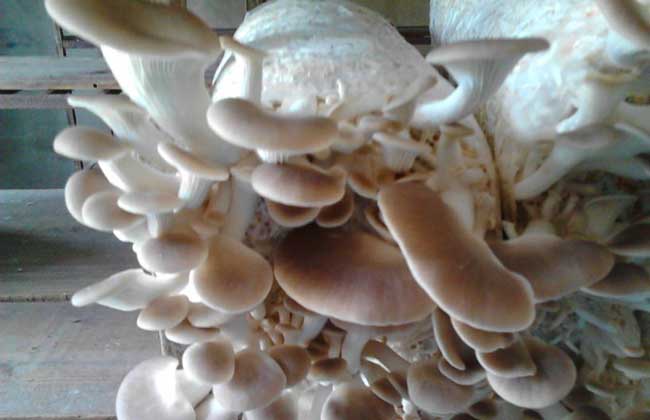
The scientific name of Pleurotus pulmonarius is Pleurotus pulmonarius, a type of oyster mushroom, also known as phoenix-tail mushroom, white oyster mushroom, small oyster mushroom, and Hypsizygus mushroom. In taxonomy it belongs to the phylum Fungi, class Basidiomycetes, order Agaricales, family Pleurotaceae, genus Pleurotus. Because of its pleasing appearance, tender and crisp texture, delicious flavor, and rich nutrition, it is well received by diners. Its nutritional value is equivalent to that of milk, and it has high cultivation value. Now let us take a look at Pleurotus pulmonarius cultivation techniques together!
Temperature
The humidity range for the mycelial growth of Pleurotus pulmonarius is 10-35°C, and the most suitable growth temperature is 25-27°C. When the temperature is below 10°C, the mycelium basically stops growing; below 20°C, the mycelium grows slowly; above 30°C, the mycelium grows sparsely, the color turns yellow, and it is prone to aging; when the temperature is above 37°C, the mycelium stops growing. The temperature range for fruiting body growth is relatively wide, and mushrooms can be produced under conditions of 10-32°C, which is different from other oyster mushrooms.
Humidity
The basic requirement for the growth of Pleurotus pulmonarius mycelium is a water content of 65%. From primordium formation to fruiting body maturity, the required relative air humidity is 85-90%. When the relative air humidity is below 70%, few primordia are produced and the mushrooms tend to dry out and wither. When the relative humidity is above 95%, the fruiting bodies tend to become soft and rot.
Air
Pleurotus pulmonarius requires special ventilation conditions during the mycelial stage, and requires good ventilation conditions during the fruiting body stage. If the carbon dioxide concentration in the air is higher than 0.1%, it is very easy to form deformed mushrooms with small caps and long stipes.
Light
The mycelial stage of Pleurotus pulmonarius does not require light, while the fruiting body stage requires light. Scattered light can induce primordium formation and differentiation, and fruiting bodies cannot be produced without light. Fruiting bodies grow normally between 200-2000 lux of light. Too dark light easily forms deformed mushrooms, while too strong light, especially direct light, easily dries out the fruiting bodies.
pH Value
Pleurotus pulmonarius is suitable for growing in a slightly alkaline environment. Therefore, in production, 3-5% quicklime water is commonly used to adjust the pH value of the culture material, generally adjusted to 7.2-7.5. This can not only promote mycelial growth, but also inhibit the influence of mold during high summer temperatures.
Nutrition
The growth and development of Pleurotus pulmonarius require carbon, nitrogen, and various mineral nutrients. Like other fungi, it does not contain chlorophyll and cannot carry out photosynthesis to produce nutrients on its own, but relies entirely on ready-made organic matter for its livelihood. During its development, the carbon, nitrogen, minerals, and growth factors it needs are all obtained from the cultivation material.
Summary: The cultivation conditions of Pleurotus pulmonarius have been introduced here. Next, let us continue to look at Pleurotus pulmonarius cultivation techniques. Artificial cultivation of Pleurotus pulmonarius has a wide range of raw material sources, and the cultivation process is easy to operate. Sawdust, cottonseed hulls, rice and wheat straw, corn cobs, and other crop stalks can be used for cultivation. Every 100 kg of dry material can produce 80-100 kg of fresh mushrooms. The cycle from cultivation inoculation to the end of mushroom production is 4-5 months, and 2 seasons can be planted per year.
Strain Isolation
The Pleurotus pulmonarius strains used in production come from two sources: one is obtaining pure mycelium by isolating from fruiting bodies, and the other is directly introducing them from scientific research units and strain production units. Scientific research units generally obtain them by isolating, purifying, and rejuvenating from fruiting bodies. Ordinary cultivators, because they do not have the conditions for isolation and strain production, usually introduce them directly from strain production units.
Cultivation Season
According to the fruiting temperature of Pleurotus pulmonarius, spring cultivation is arranged for bag making in February-March, and autumn cultivation is arranged for bag making in May-August. At high altitudes, the bag making time can be arranged earlier.
Cultivation Methods
The cultivation methods of Pleurotus pulmonarius are basically the same as the cooked material cultivation of oyster mushrooms and phoenix-tail mushrooms, but raw material cultivation cannot be used. It can be cultivated indoors or in outdoor shade sheds.
Raw Material Formulas
1. Miscellaneous sawdust 50%, corn cobs 26%, wheat bran 15%, corn flour 5%, sucrose 1%, gypsum powder 1%, lime 2%, potassium dihydrogen phosphate 100 g, magnesium sulfate 25 g.
2. Cottonseed hulls 92%, wheat bran 5%, sucrose 1%, gypsum powder 1%, lime 1%.
3. Sugarcane bagasse 50%, sawdust 32%, wheat bran 15%, gypsum powder 1%, lime 2%, urea 100 g.
4. Cottonseed hulls 90%, rice husks 4%, glucose 1%, peptone 0.5%, glutamic acid 0.5%, wheat bran 4%, a small amount of lime.
Summary: Corn stalks, peanut stalks, peanut shells, rice and wheat straw, etc. can all be used as culture materials. All the above raw materials should be crushed before use. Add water to the prepared materials and mix well, with a water content of 60-65%. In high-temperature seasons, pile the material for fermentation for 4-5 days before bagging and sterilization.
Bagging and Sterilization
Choose high-density polypropylene or polyethylene plastic bags, with specifications of 17*33*0.05 cm or 20*35*0.05 cm. When loading the material, require moderate tightness, with the culture material closely attached to the bag wall as the standard. Sterilize at 100°C for 15-16 hours, and open the pot and take it out when the material temperature drops to 70°C. Move the sterilized material bags to a disinfected and clean inoculation room. When the bag temperature drops below 30°C, close the doors and windows. For every cubic meter of space, use an aerosol disinfection box or Mushroom Protection No. 1 sterilizing agent for 5-6 hours, then inoculation can be carried out in the room. Each bottle (bag) of cultivation spawn can inoculate 20-30 bags. After inoculation, place them in a place at room temperature of 20-28°C for cultivation. After about 30-40 days, when the mycelium has fully colonized the bags, mushroom production can begin.
Fruiting Management
1. After the Pleurotus pulmonarius mycelium has fully colonized the bags, continue culturing for 5-7 days so that the mycelium reaches physiological maturity and accumulates nutrients, then it can be moved to the mushroom house at the fruiting site for mushroom production. The fruiting house should be easy to manage and require ventilation, heat preservation, moisture retention, and cleanliness. There should be no garbage, no feces, and no foul water ditches around the mushroom site. Before the fungus bags are moved in, first spray the entire mushroom house with dichlorvos and omethoate to kill insects, and then spray with 5% formaldehyde aqueous solution for sterilization.
2. Usually after 5 days, the mature fungus bags can be moved in for arranged management and mushroom production. The arrangement methods include shelf stacking (suitable for factory-standard three-dimensional cultivation), floor stacking, standing bags on bed frames, and bag removal and soil covering on bed frames. Regardless of the method, before the fungus bags are moved in, the already disinfected and insect-killed mushroom house (shed) should be pre-moistened first, and a large amount of water should be sprayed on the bed frames, walls, and ground to increase the humidity of the entire mushroom house (shed). Arrange 2-3 insect-killing lamps in the mushroom house (shed) to control insect population density.
3. After the fungus bags enter the house, culture the fungus for 2 days, cut off the plastic bag along the neck ring, scrape off the original old spawn or enlarged primordia, and keep the relative air humidity of the mushroom house at 90%. For 3-5 consecutive days, keep the temperature at 23-25°C and provide a certain amount of diffused light every day. At this time, the mushroom house should be sprayed with water frequently and ventilated slightly.
4. Generally after 3-5 days, it can be seen that the primordia on the surface of the material begin to differentiate and form a large number of mushroom buds. At this time, increase slight ventilation and light time, maintain a suitable carbon dioxide concentration, and keep humidity at 85-90%. At this time, never spray water directly on the mushroom buds, otherwise the mushroom buds are prone to turning yellow, shrinking, and dying. When the caps gradually flatten, a fine sprayer can be used to spray frequently.
5. Under dry weather conditions, mushrooms can be harvested after 1-2 days. After the first flush of mushrooms is completely harvested, it is best to scrape clean the dry old roots on the surface and the dead mushrooms and mushroom buds on the same day. The humidity of the mushroom house can only be maintained at 70-80%, allowing the surface of the culture material to dry a little, in order to prevent mold diseases on the fresh material surface and prevent the hatching of some insect eggs. When the material surface is too dry, a sprayer can be used to spray a little fine mist. Under these conditions, culture the fungus for 6-10 days.
6. After culturing the fungus, before the second flush of mushrooms emerges from the fungus bags, the fungus bags need to be replenished with water, so that each bag gains 30-50 g in weight. For bed cultivation with soil covering, the soil surface should be kept neither dry nor wet. After water replenishment, if conditions permit, give the fungus bags in the mushroom house a low-temperature stimulation below 10°C for 1-2 days, or a day-night temperature difference stimulation of about 10°C for 3 days, while also inhibiting the growth of miscellaneous bacteria. At this time, management is the same as for the first flush, and ventilation and moisture retention are especially important. The management of the third flush, fourth flush, and fifth and sixth flushes is similar to that of the second flush. The key is that the treatment of fungus culturing and water replenishment must be appropriate in order to achieve stable and high yield.
Harvesting and Processing
The sign of a mature Pleurotus pulmonarius fruiting body is that the cap grows to 2-3 cm, the edge of the cap curls inward, and the spores have not yet been discharged; this is the suitable time for harvest. After harvesting, the fresh mushrooms should first be drained of moisture, then placed in a cold storage. When there is enough stock, take them out, trim off the mushroom bases, sort them according to picking grade, package them, and transport them out. If fresh mushrooms cannot be sold for the time being, they can also be pickled or processed into dried mushrooms.
Pest and Disease Control
1. For insect pests, choose high-efficiency, non-toxic broad-spectrum insecticides with a short residual period for spraying, such as pyrethrum, derris, tobacco leaf, cypermethrin, Mushroom Insect Clean, etc. Generally, spray after harvesting when there are no mushrooms, and spray clean water 1-2 times after use.
2. For green mold, use 0.1% prochloraz aqueous solution for continuous spraying 2-3 times for control. For Neurospora (red mold), use 800 times carbendazim plus diesel oil to disinfect the locally infected area. For Mucor (hairy mold), pick it out immediately for disposal. For yellow mold and black root mold, refer to the control method for green mold.