A Detailed Guide to the Cultivation Techniques and Management Methods of Toona sinensis Sprouts
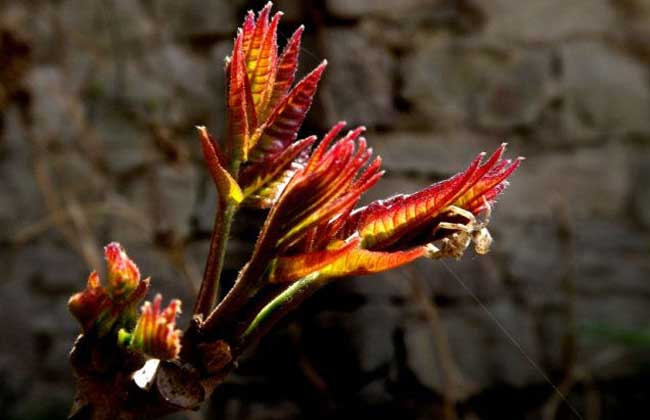
Toona sinensis (Chinese mahogany) is a cultivated variety in the Meliaceae family, genus Toona, grown as a tree for its tender stems and leaves, known as the "vegetable on the tree." It is rich in vitamins and various essential trace elements, has significant medicinal and health benefits, and is delicious and widely loved. In production, Toona sinensis sprouts come in three types: seed sprouts, seedling greens, and body sprouts. Let's take a look at the cultivation techniques for Toona sinensis sprouts!
Toona sinensis Seed Sprouts
1. Seed treatment: It is best to use 'Hongyouchun' seeds, as this variety has a high germination rate and produces good-quality sprouts. Remove the seed wings from fresh Toona sinensis seeds, soak in clean water for 5-6 hours, disinfect by soaking in a 0.01% potassium permanganate solution for 15 minutes, then continue soaking in clean water, rinsing twice with 20-25°C warm water during this period, until the seeds absorb water and swell, then drain well. Wrap the seeds in 3 layers of clean wet cloth, place in a container and germinate in the dark. During germination, rinse with 20-25°C warm water 1-2 times daily. Generally, after 4-8 days the seeds will show white sprouts and are ready for sowing.
2. Timely sowing: Spread a layer of straw paper, non-woven fabric, or gauze evenly in a disinfected seedling tray, then add a 2.5 cm layer of perlite. Scatter the pre-germinated seeds on top, sowing about 150 grams per tray. After sowing, cover the seeds with 1.5 cm of perlite. Finally, spray with 20-25°C warm water to moisten and place on the cultivation rack.
3. Post-sowing management: After sowing, spray with 20-25°C warm water twice daily in the morning and evening, maintaining relative humidity at around 80%, and avoid excessive water retention in the substrate or standing water in the tray. For the first 3 days after sowing, control daytime temperature at 20-25°C and nighttime at 12-15°C. After the sprouts emerge from the substrate, maintain daytime temperature at 18-23°C. When the temperature is too low, growth is slower; when too high, growth accelerates but quality declines and lignification occurs easily. Generally, after 12-14 days, when the sprouts are 5-7 cm long, the cotyledons have not yet unfolded, the sprouts are thick and tender-white, and the root tips have not yet turned yellow, they are ready for harvest.
Toona sinensis Seedling Greens
Toona sinensis seedling greens are edible seedlings obtained by continuing to expose Toona sinensis seed sprouts to light. When the seed sprouts have grown thick, yellow-tender, and the cotyledons have fully unfolded, they can continue to grow under light for greening. Toona sinensis sprouts grow well under low light and scattered light conditions, and shade nets can be used to regulate according to weather conditions. Before harvesting, rotate the trays up, down, left, and right according to seedling color. Generally, after 2-3 days of light exposure, when the sprouts have grown to over 10 cm, the cotyledons are fully unfolded, and true leaves have appeared but lignification has not yet begun, they are ready for harvest and market.
Toona sinensis Body Sprouts
Toona sinensis body sprouts are the tender shoot sheaths of Toona sinensis, commonly known as chun ya (Toona sprouts). Their production process involves cultivating Toona sinensis plants. Toona sinensis can be propagated using branches, suckers, or root segments, but the propagation coefficient is small and seedling uniformity is poor, so seed propagation is generally used in production.
1. Seed sowing: Choose fertile, loose soil with sufficient sunlight as the nursery site. Apply sufficient base fertilizer and water thoroughly before sowing. When the soil surface dries, prepare the land promptly. In the finely leveled seedbed, open furrows at 20 cm row spacing, with a furrow depth of 2-4 cm and a furrow width of 6-8 cm. Sow seeds evenly in the furrows, preferably with one seed every 3 cm. Use 2-3 kg of seeds per mu.
2. Seedling management: After sowing Toona sinensis seeds, cover with 1-2 cm of fine soil, then cover with plastic film. Seedlings begin to emerge in 4-7 days. When the seedlings start pushing through the soil, promptly break the film to release the seedlings and press the openings firmly. When the seedlings have 2 true leaves, combine with intertillage loosening and timely thinning and weeding. After thinning, strengthen water and fertilizer management to cultivate strong seedlings.
3. Timely transplanting: The transplanting period for Toona sinensis is from after leaf drop in winter to before bud break in early spring. Plant about 3,000 plants per mu, and green manure can be intercropped between rows and later plowed under as fertilizer. For seedlings used in winter-warm greenhouses, generally after leaf drop in autumn when the average daily temperature is 3-5°C, lift the seedlings and transplant at high density, planting about 6,000 plants per mu. Water promptly after transplanting.
4. Field management: Apply topdressing during the growth period of new shoots, applying fertilizer after each harvest, and water promptly during drought. To promote earlier budding, spray young buds with 0.01% gibberellin to break dormancy. After 2-3 harvests, carry out dwarfing treatment in mid-July. From mid-to-late July, spray with 15% paclobutrazol at 200-400 times dilution, once every 10-15 days, for 2-3 consecutive sprays, which can control excessive growth, promote earlier terminal bud formation and dwarfing, and increase dry matter accumulation.
5. Plant adjustment: Toona sinensis grown in protected dwarf cultivation requires plant adjustment, pinching the top to promote branching. Newly transplanted seedlings in the greenhouse should not be pinched initially, because nutrients stored in the xylem can support one crop of Toona sinensis growth, allowing it to produce the first crop, improving utilization, and promoting photosynthesis during rapid growth. When harvesting the second crop of Toona sinensis, pinch the top to set the trunk height, and spray paclobutrazol once after setting the trunk height.
6. Bagging optimization: To improve quality, when Toona sinensis sprouts grow to about 5 cm, they can be covered with a double-layer black-red polyethylene film bag to grow in darkness. When they reach 15 cm, harvest together with the bag. The outer bag can be reused.
7. Timely harvest: Harvest when the Toona sprouts grow to 15-20 cm, retaining 1-2 leaves at the base to encourage lateral bud sprouting. In open field cultivation, 2-3 harvests can be made; in protected cultivation, 3-5 harvests can be made.