Garlic chive cultivation methods and key technical points
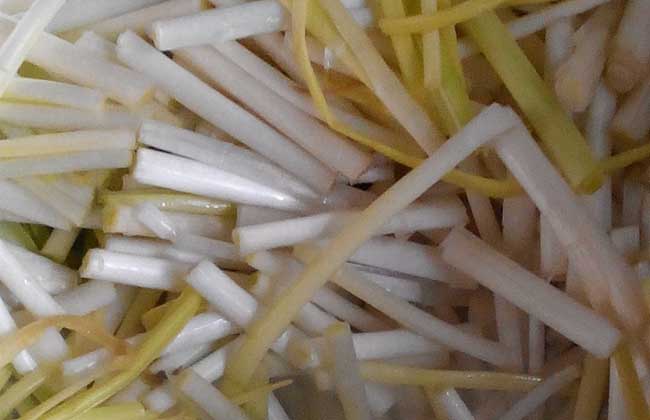
Garlic chives are a widely cultivated and popular vegetable, being the seedlings of garlic, produced by blanching cultivation using garlic bulbs under dark conditions. They are grown throughout China and are relatively inexpensive, priced between 1.0 and 8.0 yuan. With the gradual development of the market, many regions have prospered by cultivating garlic chives. Let us take a look below at how garlic chives are grown!
Preparation for garlic chive cultivation
1. Variety selection: Since garlic chives have a relatively high output value, large-clove varieties should be chosen for fast sprouting, robust growth, and high yield. When selecting seeds, remove frozen, rotten, damaged, and weak garlic cloves.
2. Cultivation site: Garlic chives are mainly cultivated during the low-temperature seasons of winter and spring, and can be grown in any place with a certain temperature condition. Plastic greenhouses with poor insulation, small arch tunnels, windbreak beds, empty rooms, vegetable cellars, or riverside flats with flowing water and spring-water sites are commonly used.
3. Land preparation and bed making: Dig cultivation beds 30-40 cm deep in protected areas, with a bed width of 12-15 m. Indoors, rectangular cultivation pools of 0.5-0.6 m can be built with bricks. At riversides or spring-water sites, cultivation pits 1-1.5 m deep can be dug. Fine sand or sandy loam soil can be used for cultivating garlic chives. Spread sand or soil 3-6 cm in the cultivation bed, then level it flat.
Sowing techniques for garlic chives
1. Sowing time: Garlic chives can be sown and harvested continuously from early October to late March of the following year. Under suitable temperature conditions, it takes about 20-25 days from sowing to harvest. The sowing date can be determined according to the market period.
2. Soaking garlic seeds: On the day before sowing, soak the garlic packed in woven bags in a 20,000-fold gibberellin solution for 3-4 hours. Although the soaking step is simple to perform, it is essential. Otherwise, after sowing and watering, the garlic seeds absorb water and expand, squeezing into clumps on the cultivation bed, which is not conducive to the sprouting and growth of garlic chives.
3. Sowing method: After the garlic seeds have absorbed enough water, arrange the garlic heads tightly one by one in the cultivation pool, trying not to leave gaps. Fill any gaps with loose cloves. Generally, 10-20 kg of garlic seeds are used per square meter. After sowing, cover with fine sand 3-4 cm deep, pat firm and level with a wooden board, then water thoroughly. After the water seeps down, cover with another 1-2 cm layer of fine sand.
Field management of garlic chives
1. Covering with curtains for shading: When most garlic sprouts have emerged, cover the cultivation bed with reed curtains or straw mats for shading, or cover with black plastic film for shading, to blanch the garlic leaves and ensure the quality of garlic chives. If the covering is too late or not tight enough, the garlic seedlings will be exposed to light, causing the leaves to turn green and reducing quality. The covering also helps protect the temperature and humidity of the cultivation bed.
2. Temperature management: From sowing to emergence, use covering measures in the protected area to raise the cultivation bed temperature as much as possible. Maintain 25-28°C during the day, and the night temperature should not be lower than 18-20°C. If conditions permit, a night temperature slightly higher than the day temperature is even better. After emergence until the seedlings reach 10 cm in height, to make the seedlings sturdy, the daytime temperature can be lowered to 20-25°C, with a night temperature of 16-18°C. When the seedlings reach 20-25 cm in height, ventilation should be increased. Maintain 18-20°C during the day and 14-16°C at night to promote sturdy garlic seedlings, high yield, and improved quality.
3. Water management: In garlic chive cultivation, the first watering should be sufficient, definitely submerging the garlic cloves. After that, water once every 2-4 days to keep the cultivation bed constantly moist. Water management should be determined based on the temperature in the protected area and the seedling stage. When the temperature is high, evaporation is large, and the seedlings are large, water frequently and with larger amounts; otherwise, water less. Water 2-3 days before harvesting to keep the garlic seedlings tender.
4. Ventilation management: In the garlic chive cultivation bed, large amounts of carbon dioxide may accumulate, or harmful gases such as carbon monoxide may be released when the protected area is heated. At noon when the temperature is high, ventilation should be carried out to exchange air. For insulation needs, generally excessive ventilation is not necessary. 4-5 days before harvest, increase ventilation as much as possible, maintaining 10-15°C during the day and 10-15°C at night, to prevent seedlings from spindling and lodging.
5. Timely harvesting: Garlic chives can be harvested when they reach about 25-30 cm in height. The knife should be sharp when harvesting, and the cut should not be too deep. It is best to cut close to the ground without injuring the garlic cloves. Do not water immediately after cutting to prevent infection of the cut; water after 3-4 days to promote the growth of the second crop. After about 20 days, the second cut can be harvested. When harvesting the third cut, pull up the cloves together with the roots. For the first cut, each kilogram of garlic seeds can produce 0.7-0.8 kg of garlic chives, and the second cut about 0.4-0.5 kg. After harvesting, the garlic chives should be tied into bundles and placed in the sun for a while, so that the garlic leaves change from yellow-white to golden yellow, which is called “sun-yellowing”. Do not sun them for too long, and take care to prevent freezing.